This is a discuss both sides IELTS Writing Task 2 Sample Answer about the topic of newspapers and media from the real test. I’m a real former British Council IELTS examiner so you can fully trust the answer below to be accurate and the exercises to help you boost your score.
IELTS Examiner Sample Answer from Cambridge 13: Newspapers and the Media (by Dave)
Some people think that newspapers are the best way to learn news. However, others believe that they can learn news better through other media. Discuss both views and give your opinion
Newspapers have been considered the most reliable news source for more than a century but in recent decades newer forms of media have supplanted their influence. Some feel that these new sources of news are better but in my opinion, newspapers are by far better because of the amount of time and research that writers put into their articles.
The main reason that many people prefer newer media outlets is that they deliver news more quickly across a variety of convenient platforms. The most notable example of this is online news. The vast majority of people get their news from Facebook and other social media websites which aggregate articles from various online publishers, including the online version of print newspapers in some cases. The problem here is that websites are solely concerned with increasing traffic and getting news up as fast as possible. It is a common occurrence for a website to publish news quickly in order to beat others to the scoop before it has been properly verified or even thoughtfully analysed. The result is hordes of people clicking on links to amuse themselves for a minute without casting a critical eye over the veracity of the news. These articles are then shared online or by word of mouth and false information spreads rapidly.
Despite the conveniences of online media, the news that is printed in newspapers has been better researched and verified in most cases. Newspapers frequently devote entire departments to long-term investigative journalism. A standout example of this would be the Boston Globe’s years long investigation into sexual abuse by the Catholic church. They carefully interviewed victims and put together a convincing case which led to long-lasting reforms and convictions of some individuals. They also published stories on the topic for over a year which allowed for detailed and thoughtful analysis of the problem, suggestions for solutions, and articles on wider societal implications. This type of reporting is anathema to the fervent pace of online media.
In conclusion, even though newspapers are a dying industry I think they are more informative and trustworthy than the largely online institutions that are replacing them. This trend is irreversible and will have consequences for the future of democracies around the world as people become less informed.
IELTS Examiner Sample Answer Analysis
1. Newspapers have been considered the most reliable news source for more than a century but in recent decades newer forms of media have supplanted their influence. 2. Some feel that these new sources of news are better but in my opinion, newspapers are by far better because of the amount of time and research that writers put into their articles.
1. In your first sentence just restate the topic quickly – this sentence is not that important so write it as fast as you can!
2. The second sentence makes my opinion 100% clear – the clearer the better!
1. The main reason that many people prefer newer media outlets is that they deliver news more quickly across a variety of convenient platforms. 2. The most notable example of this is online news. 3. The vast majority of people get their news from Facebook and other social media websites which aggregate articles from various online publishers, including the online version of print newspapers in some cases. 4. The problem here is that websites are solely concerned with increasing traffic and getting news up as fast as possible. 5. It is a common occurrence for a website to publish news quickly in order to beat others to the scoop before it has been properly verified or even thoughtfully analysed. 6. The result is hordes of people clicking on links to amuse themselves for a minute without casting a critical eye over the veracity of the news. 7. These articles are then shared online or by word of mouth and false information spreads rapidly.
1. My first sentence is a topic sentence that has the main idea for the whole paragraph (they are faster and more convenient).
2. The second sentence begins my example by focusing on online news.
3. The third sentence makes my example more specific by focusing on sites like Facebook.
4. My fourth sentence continues with the example by describing why this is a problem.
5. My fifth sentence further develops why this is a problem.
6. The sixth sentence continues with the impact of this problem.
7. The seventh sentence continues more with the impact so that I have a fully developed example.
1. Despite the conveniences of online media, the news that is printed in newspapers has been better researched and verified in most cases. 2. Newspapers frequently devote entire departments to long-term investigative journalism. 3. A standout example of this would be the Boston Globe’s years long investigation into sexual abuse by the Catholic church. 4. They carefully interviewed victims and put together a convincing case which led to long-lasting reforms and convictions of some individuals. 5. They also published stories on the topic for over a year which allowed for detailed and thoughtful analysis of the problem, suggestions for solutions, and articles on wider societal implications. 6. This type of reporting is anathema to the fervent pace of online media.
1. The first sentence is a topic sentence focused on why newspapers are better (better researched, more reliable news).
2. My next sentence develops this idea by making it more specifically about newspaper departments and investigative journalism. Being specific is great fro your task achievement score and will help bring out really good vocabulary.
3. The third sentence gives a very specific example of a news story from a real newspaper.
4. The fourth sentence continues with this example.
5. My fifth sentence also continues with this example.
6. The sixth sentence concludes the paragraph by comparing it to online news.
1. In conclusion, even though newspapers are a dying industry I think they are more informative and trustworthy than the largely online institutions that are replacing them. 2. This trend is irreversible and will have consequences for the future of democracies around the world as people become less informed.
1. My first sentence concludes the essay by summarising my main ideas and opinion.
2. The second sentence adds in an extra detail. Be sure to include one extra detail at the end for full task achievement points!
Sample Answer Vocabulary
How many of the words in bold below do you know? You might understand them a bit, not 100%. To practice try to write a dictionary definition of each one and then check your answers below.
Newspapers have been considered the most reliable news source for more than a century but in recent decades newer forms of media have supplanted their influence. Some feel that these new sources of news are better but in my opinion, newspapers are by far better because of the amount of time and research that writers put into their articles.
The main reason that many people prefer newer media outlets is that they deliver news more quickly across a variety of convenient platforms. The most notable example of this is online news. The vast majority of people get their news from Facebook and other social media websites which aggregate articles from various online publishers, including the online version of print newspapers in some cases. The problem here is that websites are solely concerned with increasing traffic and getting news up as fast as possible. It is a common occurrence for a website to publish news quickly in order to beat others to the scoop before it has been properly verified or even thoughtfully analysed. The result is hordes of people clicking on links to amuse themselves for a minute without casting a critical eye over the veracity of the news. These articles are then shared online or by word of mouth and false information spreads rapidly.
Despite the conveniences of online media, the news that is printed in newspapers has been better researched and verified in most cases. Newspapers frequently devote entire departments to long-term investigative journalism. A standout example of this would be the Boston Globe’s years long investigation into sexual abuse by the Catholic church. They carefully interviewed victims and put together a convincing case which led to long-lasting reforms and convictions of some individuals. They also published stories on the topic for over a year which allowed for detailed and thoughtful analysis of the problem, suggestions for solutions, and articles on wider societal implications. This type of reporting is anathema to the fervent pace of online media.
In conclusion, even though newspapers are a dying industry I think they are more informative and trustworthy than the largely online institutions that are replacing them. This trend is irreversible and will have consequences for the future of democracies around the world as people become less informed.
Answers:
reliable: can be trusted, unchanging and consistent
supplanted: take over or take the place of
by far better: much better
deliver news: give or show the news
platforms: the places where you can read the news such as on Facebook, Instagram, on Google, etc.
most notable example: the best example of
vast majority: by far the most
aggregate: choose/collect
solely concerned: only interested in
getting news up: posting news online
common occurrence: happens a lot
scoop: exclusive news published before anyone else publishes it
properly verified: checked to make sure it is 100% true
hordes: lots of people
casting a critical eye: looking critically at something
veracity: truth
word of mouth: what people say about something; a movie might have good or bad word of mouth
devote: commit fully to
long-term investigative journalism: when a newspaper researches a story for a long time
convincing case: compelling argument
long-lasting reforms: changes that are permanent or last for a long time
wider societal implications: impacts all of society
anathema: hateful to/repugnant
fervent pace: very fast
largely: mostly
irreversible: cannot be changed or reversed or put back to the way it was before
Vocabulary Practice
Newspapers have been considered the most _________________ news source for more than a century but in recent decades newer forms of media have _________________ their influence. Some feel that these new sources of news are better but in my opinion, newspapers are _________________ because of the amount of time and research that writers put into their articles.
The main reason that many people prefer newer media outlets is that they _________________ more quickly across a variety of convenient _________________. The _________________ of this is online news. The _________________ of people get their news from Facebook and other social media websites which _________________ articles from various online publishers, including the online version of print newspapers in some cases. The problem here is that websites are _________________ with increasing traffic and _________________ as fast as possible. It is a _________________ for a website to publish news quickly in order to beat others to the _________________ before it has been _________________ or even thoughtfully analysed. The result is _________________ of people clicking on links to amuse themselves for a minute without _________________ over the _________________ of the news. These articles are then shared online or by _________________ and false information spreads rapidly.
Despite the conveniences of online media, the news that is printed in newspapers has been better researched and verified in most cases. Newspapers frequently _________________ entire departments to _________________. A standout example of this would be the Boston Globe’s years long investigation into sexual abuse by the Catholic church. They carefully interviewed victims and put together a _________________ which led to _________________ and convictions of some individuals. They also published stories on the topic for over a year which allowed for detailed and thoughtful analysis of the problem, suggestions for solutions, and articles on _________________. This type of reporting is _________________ to the _________________ of online media.
In conclusion, even though newspapers are a dying industry I think they are more informative and trustworthy than the _________________ online institutions that are replacing them. This trend is _________________ and will have consequences for the future of democracies around the world as people become less informed.
Links about News and the Media
Watch these videos to review some of the ideas and vocabulary from the sample answer above. This will help you to improve for all parts of IELTS, not just the writing.
Welcome to our continuing series on all IELTS listening question types – today is multiple choice IELTS listening.
If you want to both improve your English and feel comfortable, I now offer online lessons complete with feedback, videos, workbooks and more – you can learn more here!
Multiple choice questions are some of the more difficult questions mainly because they involve more reading, synonyms. and distractors compared to other parts of IELTS listening.
In this post, we’re going to look at a sample question, an exclusive listening test, the tapescript and you will get some practice doing multiple choice questions.
If you want daily updates about IELTS and help with your English, you can follow me on Facebook, Instagramor YouTube.
There is a lot to read here! I recommend that you don’t spend time trying to think of synonyms or anything like that. You should underline the keywords.
Mainly focus on just reading and understanding the questions. I’m a native speaker and I only have time to carefully read and understand the questions.
If you understand them well, then you can simply listen, understand, and choose the correct answer.
Read carefully:
The Listening
Let’s practice this together.
Look at the questions above and listen to the recording. Write down your answers.
On IELTS you can only listen once but you are practicing now so don’t worry if you have to listen more than one time (that is how you improve your listening).
The Key Tips for IELTS Multiple Choice Questions
How did you do? Comment below!
There are a couple of tips that might help when you are listening.
First, follow along the answers with your pencil. In multiple choice questions, the speakers usually talk about A, B, and C (not in that order).
So follow along with your pencil while you listen. The speakers might switch back and forth between different options multiple times so keep your pencil moving like a cat hunting a mouse!
The second tip is that multiple choice questions contain more distractors than any other type of question (more about that below). So make sure that you are not too focused on the keywords. The test is trying to trick you a lot of the time!
You might hear some key words but other ones will be paraphrased. Focus on the meaning of the questions and the meaning of the words they are saying – not trying to simply here the same words that are in the questions (that is how they trick you in this section!).
Keep reading to see exactly how the test tries to trick you with paraphrases and distractors!
Practice with the Tapescript
This is the most important part.
Whenever you do listening practice, you should always go check your answers in the tapescript and figure out why you got an answer right/wrong. That is how you will get better at question types.
If you just do practice test after practice test, you will improve very slowly. Look at the tapescript and the reasons why answers are right/wrong and you will improve rapidly!
The answer are underline in the tapescript below. Let’s look at each one and pull out the two main challenges for multiple choice questions: distractors and paraphrases/synonyms.
Paraphrases/Synonyms
In question 21 it says ‘main topic’ but in the listening this is changed to ‘angle’. An angle is not a direct synonym for main topic but in this context it means the same thing – what they will be talking about.
This is why you should NOT try to think of synonyms when you read the questions. You do not have time and they will not come up. Instead, just focus on understanding the questions and keywords fully.
Here are some more examples paraphrases/synonyms from the listening:
‘Main topic’ changes to ‘angle’
‘How public library services are organised in different countries’ changes to ‘how different countries organise them’
‘Are reflected in’ changes to ‘relate the changes in libraries to external developments’
‘How the funding of public libraries’ changes into ‘changes in the source of funding’
‘Generally old’ changes to ‘out of copyright’ and ‘won’t find the latest best-seller or up-to-date information’
Look at that last one – it isn’t a synonym at all! But in this context it means that same thing.
Don’t waste time looking for synonyms. You should just focus on understanding the questions and keywords well and listening and understanding. There are no shortcuts to this!
Study the tapescript after you practice and underline the paraphrases – this will help you to be more prepared for the test and improve your ability to understand paraphrasing.
Distractors
Distractors are when the test tries to trick you by showing you something very close to the right answer. For example, Stewart first suggests how libraries have changed and organisation.
You may hear this and quickly choose letter A. This is a distractor.
The more important part is what Trudie says – that they should relate the changes to external developments such as literacy and the languages that people speak.
The correct answer is B because Trudie is talking about changes in society. This is very difficult because she is giving examples of changes in society – not just saying ‘changes in society.’
In question 22 there is another distractor. Trudie says that it takes her a long time to read on screens (so you may think that the answer is A) but Stewart disagrees (‘Oh, I prefer it.’). The question asks about what they ‘agree’ about so it cannot be A.
The test tries to trick you – those are distractors. Improve your ability to avoid the tricks by looking at the tapescript afterwards so that you are more aware of distractors.
Here are the full answers:
21. B
22. C
23. C
There are no shortcuts on IELTS listening – you must improve your vocabulary in order to be able to read and understand the questions and then listen and understand what they are talking about. If this was too hard for you, you probably shouldn’t be studying IELTS at all.
This is a cause and solution IELTS Writing Task 2 Sample Answer on the topic of agriculture written by me, Dave, a former British Council IELTS examiner.
Be careful with the structure of these IELTS essays: you should write one paragraph clearly explaining why (the cause) and one clearly explaining a possible solution.
Don’t waste your time talking generally about the topic – get as specific as you can as quickly as you can.
The recent questions from the IELTS writing task 2 exam are here, task 1 is here and the speaking questions and topics are here.
IELTS Examiner Sample Answer from Cambridge 13: Agriculture (by Dave)
In spite of the advances made in agriculture, many people around the world still go hungry. Why is this the case? What can be done about this problem?
Give reasons for your answer and include any relevant examples from your own experience or knowledge. Write at least 250 words.
Recent years have witnessed tremendous developments in agricultural science yet every day people all over the world continue to suffer and even die from hunger. In my opinion, this is because innovations rarely impact the developing world and the best solution for it is to direct humanitarian funding towards these advances.
The main cause of more advanced agricultural methods not reaching the people who need it the most is that the developing world has trouble implementing these methods. There are a number of reasons for this ranging from limited financial resources to poor existing infrastructure to political instability, depending on the country in question. One example of this would be in many African nations, where malnourishment has historically been highest. Countries like the Congo have seen revolution after revolution over the last several decades, which has effectively destabilised the entire country. The universities where students would learn about changes in agriculture are frequently shut down or destroyed. The young people who would become agricultural scientists end up drawn into the conflict as soldiers or victims. Long-term economic neglect means that the government has very limited ability to subsidise farming. These problems are present to varying degrees in countries around the world and offer one possible explanation for the continued prevalence of hunger.
The solution that I believe would be most effective is directing humanitarian funds previously focused on food aid towards education and agricultural infrastructure. Food aid is a notoriously poor solution because it only offers an immediate solution and warlords often exploit it to support their continued mistreatment of their people. It hurts more than it helps. However, there would be better long-term effects if international organisations and governments redirected that money into helping build better farms, provide more modern equipment, and sending qualified professions to train people in need. There is a TedTalk by a young man in Kenya who built his own windmill out of old bicycle parts and by reading a book in the local library. It is large enough to power his own house and he was seeking financing for a larger one that would power irrigation channels for the entire village. If more people like him can be found or trained then this will have an impact that lasts for decades and is relatively impervious to the factors preventing agricultural advances from taking root in developing countries.
In conclusion, developing companies face myriad problems that hinder their ability to take advantage of newer agricultural models and we should direct more funding to helping these countries learn more about new farming methods. This is likely to be an important issue in the world as the gap between rich and poor, developed and undeveloped widens while technological progress continues its indifferent march forward.
IELTS Examiner Sample Answer Analysis
1. Recent years have witnessed tremendous developments in agricultural science yet every day people all over the world continue to suffer and even die from hunger. 2. In my opinion, this is because innovations rarely impact the developing world and the best solution for it is to direct humanitarian funding towards these advances.
1. The first sentence is only to repeat the topic – this sentence is not very important and you should write it very quickly.
2. My second sentence states my opinion – this sentence is super important if you want above band 5 for task achievement but you can also write it quickly.
1. The main cause of more advanced agricultural methods not reaching the people who need it the most is that the developing world has trouble implementing these methods. 2. There are a number of reasons for this ranging from limited financial resources to poor existing infrastructure to political instability, depending on the country in question. 3. One example of this would be in many African nations, where malnourishment has historically been highest. 4. Countries like the Congo have seen revolution after revolution over the last several decades, which has effectively destabilised the entire country. 5. The universities where students would learn about changes in agriculture are frequently shut down or destroyed. 6. The young people who would become agricultural scientists end up drawn into the conflict as soldiers or victims. 7. Long-term economic neglect means that the government has very limited ability to subsidise farming. 8. These problems are present to varying degrees in countries around the world and offer one possible explanation for the continued prevalence of hunger.
1. The first sentence is my topic sentence, which tells the reader what the whole paragraph is about. Once you write about your main idea, you can ONLY talk about that main idea for the rest of the paragraph.
2. The second sentence details some of the main reasons. Try to be as specific as possible – avoid being general!
3. My third sentence starts my example of African countries. Don’t feel bad using your own country as an example – it is what you know best!
4. The fourth sentence makes my example more specific. Develop your examples. They should be specific and detailed!
5. My fifth sentence keeps developing the example of the Congo.
6. The sixth sentence keeps developing the example of the Congo. Develop, develop, develop!
7. The seventh sentence keeps developing the example of the Congo.
8. My eighth sentence is more general and related it back to the main idea for the paragraph.
1. The solution that I believe would be most effective is directing humanitarian funds previously focused on food aid towards education and agricultural infrastructure. 2. Food aid is a notoriously poor solution because it only offers an immediate solution and warlords often exploit it to support their continued mistreatment of their people. 3. It hurts more than it helps. 4. However, there would be better long-term effects if international organisations and governments redirected that money into helping build better farms, provide more modern equipment, and sending qualified professions to train people in need. 5. There is a TedTalk by a young man in Kenya who built his own windmill out of old bicycle parts and by reading a book in the local library. 6. It is large enough to power his own house and he was seeking financing for a larger one that would power irrigation channels for the entire village. 7. If more people like him can be found or trained then this will have an impact that lasts for decades and is relatively impervious to the factors preventing agricultural advances from taking root in developing countries.
1. The first sentence is a topic sentence with my main idea: we should put humanitarian money into training and infrastructure for agriculture.
2. The next sentence says why the current use of food aid is ineffective.
3. My third sentence expands this – don’t be afraid to write the occasional short, simple, accurate sentence!
4. The fourth sentence gives very specific details about what kind of infrastructure and training is needed to solve the problem.
5. My fifth sentence gives a concrete example of a TedTalk I watched. Don’t worry if you can’t remember the name!
6. The sixth sentence continues the example.
7. My seventh sentence relates it back to the main idea and concludes the paragraph.
1. In conclusion, developing companies face myriad problems that hinder their ability to take advantage of newer agricultural models and we should direct more funding to helping these countries learn more about new farming methods. 2. This is likely to be an important issue in the world as the gap between rich and poor, developed and undeveloped widens while technological progress continues its indifferent march forward.
1. The first sentence summarises my arguments. This sentence is not very important so write it as fast as you can!
2. My second sentence gives an extra detail – this sentence is important so make sure that you have enough time for it at the end.
Sample Answer Vocabulary
How many of the words in bold below do you know? You might understand them a bit, not 100%. To practice try to write a dictionary definition of each one and then check your answers below.
Recent years have witnessed tremendous developments in agricultural science yet every day people all over the world continue to suffer and even die from hunger. In my opinion, this is because innovations rarely impact the developing world and the best solution for it is to direct humanitarian funding towards these advances.
The main cause of more advanced agricultural methods not reaching the people who need it the most is that the developing world has trouble implementing these methods. There are a number of reasons for this ranging from limited financial resources to poor existing infrastructure to political instability, depending on the country in question. One example of this would be in many African nations, where malnourishment has historically been highest. Countries like the Congo have seen revolution after revolution over the last several decades, which has effectively destabilised the entire country. The universities where students would learn about changes in agriculture are frequently shut down or destroyed. The young people who would become agricultural scientists end up drawn into the conflict as soldiers or victims. Long-term economic neglect means that the government has very limited ability to subsidise farming. These problems are present to varying degrees in countries around the world and offer one possible explanation for the continued prevalence of hunger.
The solution that I believe would be most effective is directing humanitarian funds previously focused on food aid towards education and agricultural infrastructure. Food aid is a notoriously poor solution because it only offers an immediate solution and warlords often exploit it to support their continued mistreatment of their people. It hurts more than it helps. However, there would be better long-term effects if international organisations and governments redirected that money into helping build better farms, provide more modern equipment, and sending qualified professions to train people in need. There is a TedTalk by a young man in Kenya who built his own windmill out of old bicycle parts and by reading a book in the local library. It is large enough to power his own house and he was seeking financing for a larger one that would power irrigation channels for the entire village. If more people like him can be found or trained then this will have an impact that lasts for decades and is relatively impervious to the factors preventing agricultural advances from taking root in developing countries.
In conclusion, developing companies face myriad problems that hinder their ability to take advantage of newer agricultural models and we should direct more funding to helping these countries learn more about new farming methods. This is likely to be an important issue in the world as the gap between rich and poor, developed and undeveloped widens while technological progress continues its indifferent march forward.
Answers:
witnessed tremendous developments: saw great changes
innovations: new ideas/inventions
direct humanitarian funding towards: put more charity money into
trouble implementing these methods: difficult time making these changes
ranging from: including
poor existing infrastructure: bad roads, buildings, etc.
political instability: problems with the government related to war, strife, and mismanagement
malnourishment: lack of nutrients for the body
historically been highest: in the past has been the greatest
revolution: when people in a country revolt and try to change the government
destabilised: lack of clear leadership, uncertain times
drawn into the conflict: become part of a war/fighting
neglect: don’t pay attention to
subsidise farming: governments giving money to farmers
present to varying degrees: exists either a little or a lot
one possible explanation: one reason why
continued prevalence: still strong/common
notoriously: famous for being bad
warlords: the revolutionaries who start wars in some African countries
long-term effects: impact over a long period of time
redirected: change the direction
in need: to need something
seeking financing: looking for money
irrigation: providing water for farms
relatively impervious: cannot be touched/impacted to some extent
taking root: begins to have an effect
face myriad problems: have many problems
hinder: hold back or harm
gap between rich and poor: the difference between rich and poor
indifferent: uncaring
Vocabulary Practice
Recent years have ___________________ in agricultural science yet every day people all over the world continue to suffer and even die from hunger. In my opinion, this is because ___________________ rarely impact the developing world and the best solution for it is to ___________________ these advances.
The main cause of more advanced agricultural methods not reaching the people who need it the most is that the developing world has ___________________. There are a number of reasons for this ___________________ limited financial resources to ___________________ to ___________________, depending on the country in question. One example of this would be in many African nations, where ___________________ has ___________________. Countries like the Congo have seen ___________________ after revolution over the last several decades, which has effectively ___________________ the entire country. The universities where students would learn about changes in agriculture are frequently shut down or destroyed. The young people who would become agricultural scientists end up ___________________ as soldiers or victims. Long-term economic ___________________ means that the government has very limited ability to ___________________. These problems are ___________________ in countries around the world and offer ___________________ for the ___________________ of hunger.
The solution that I believe would be most effective is directing humanitarian funds previously focused on food aid towards education and agricultural infrastructure. Food aid is a ___________________ poor solution because it only offers an immediate solution and ___________________ often exploit it to support their continued mistreatment of their people. It hurts more than it helps. However, there would be better ___________________ if international organisations and governments ___________________ that money into helping build better farms, provide more modern equipment, and sending qualified professions to train people ___________________. There is a TedTalk by a young man in Kenya who built his own windmill out of old bicycle parts and by reading a book in the local library. It is large enough to power his own house and he was ___________________ for a larger one that would power ___________________ channels for the entire village. If more people like him can be found or trained then this will have an impact that lasts for decades and is ___________________ to the factors preventing agricultural advances from ___________________ in developing countries.
In conclusion, developing companies ___________________ that ___________________ their ability to take advantage of newer agricultural models and we should direct more funding to helping these countries learn more about new farming methods. This is likely to be an important issue in the world as the ___________________, developed and undeveloped widens while technological progress continues its ___________________ march forward.
Links about Agriculture
Take a look! This will help you to review some of the vocabulary you learned from the sample answer above!
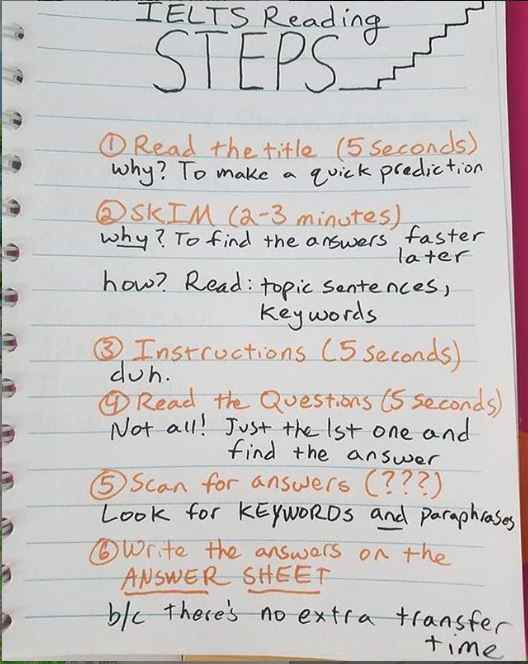
Don’t spend too much time here thinking about it. Just read it, get an idea of what you will be reading about and get started.
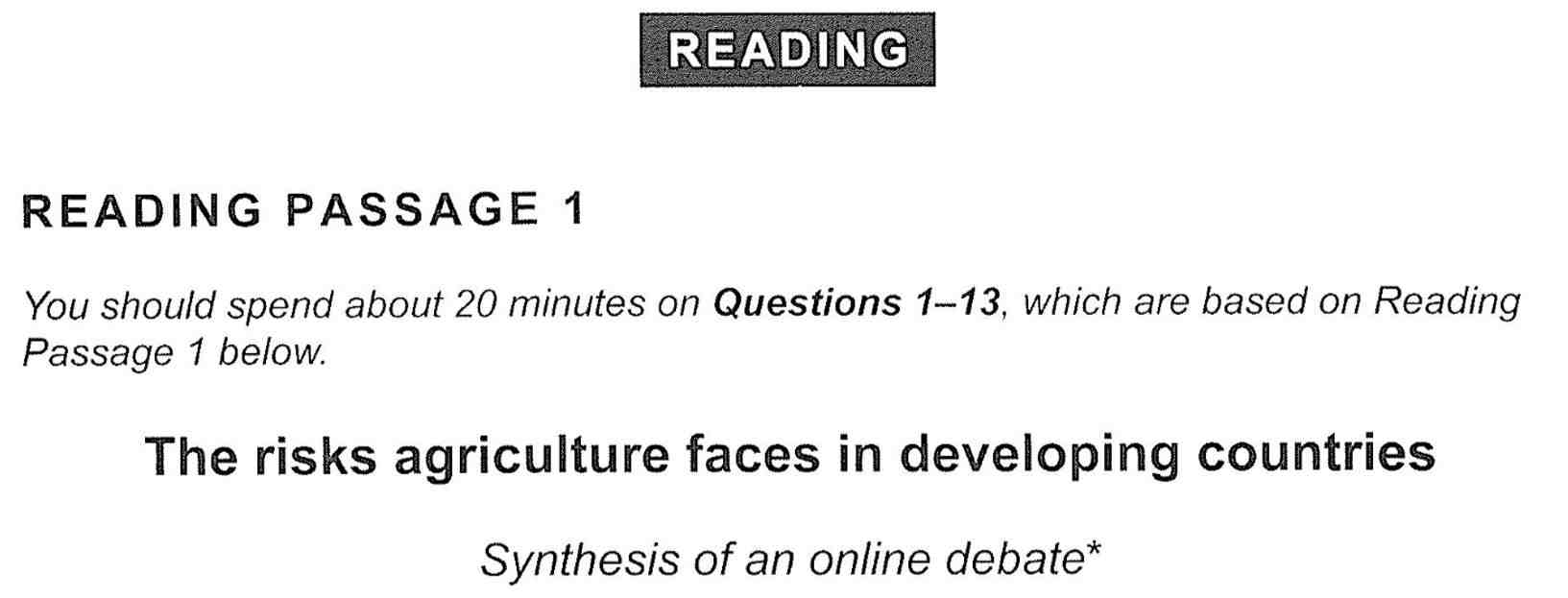
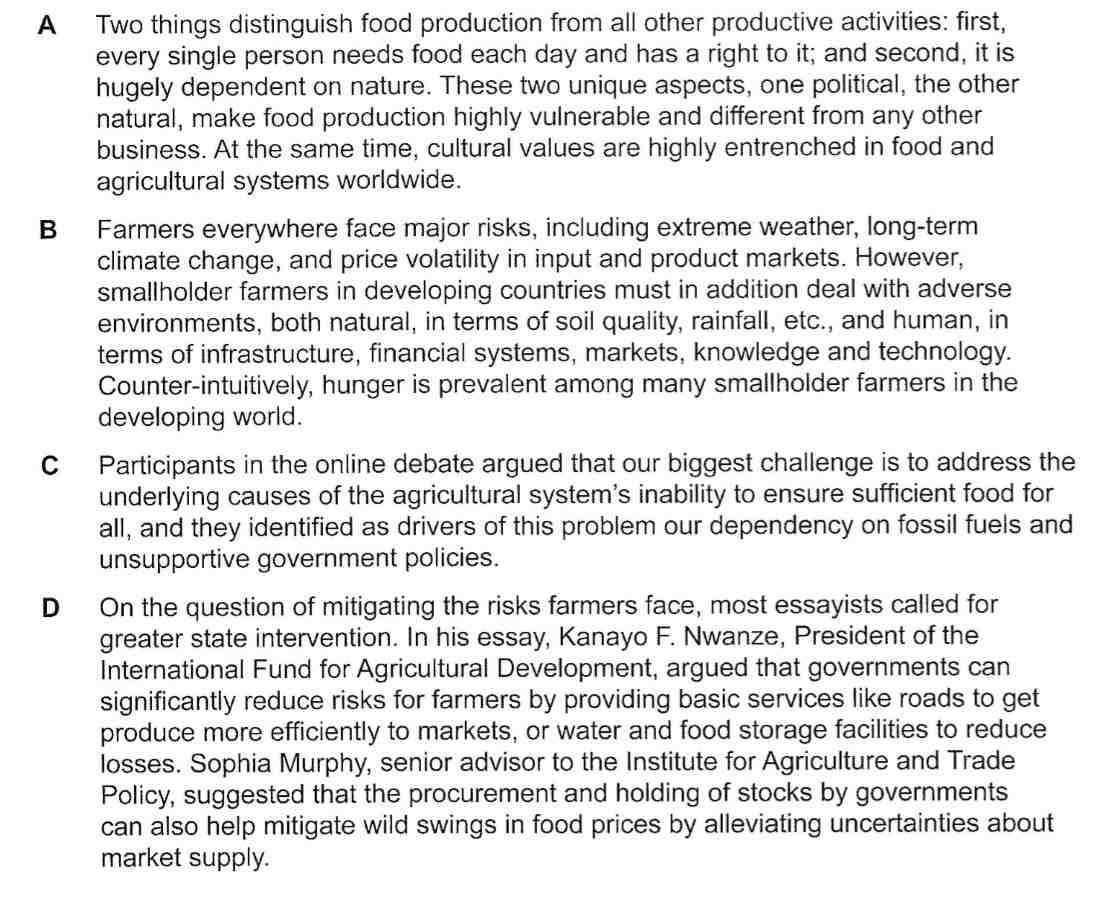
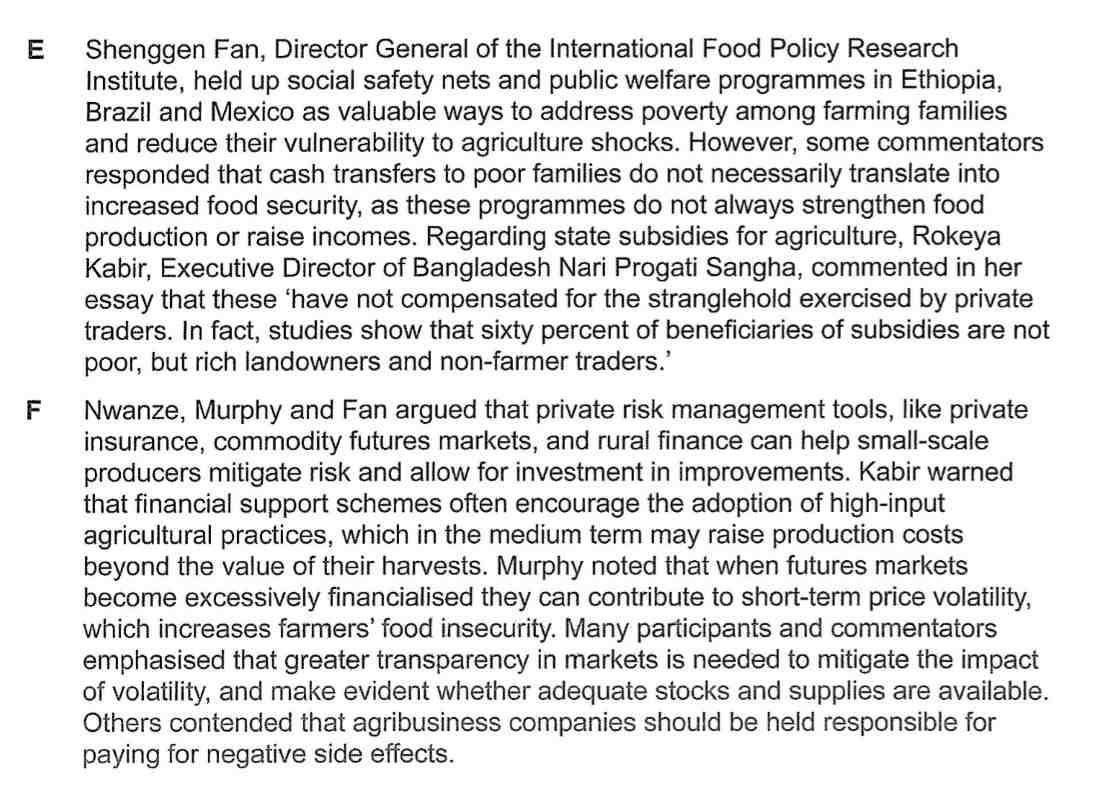
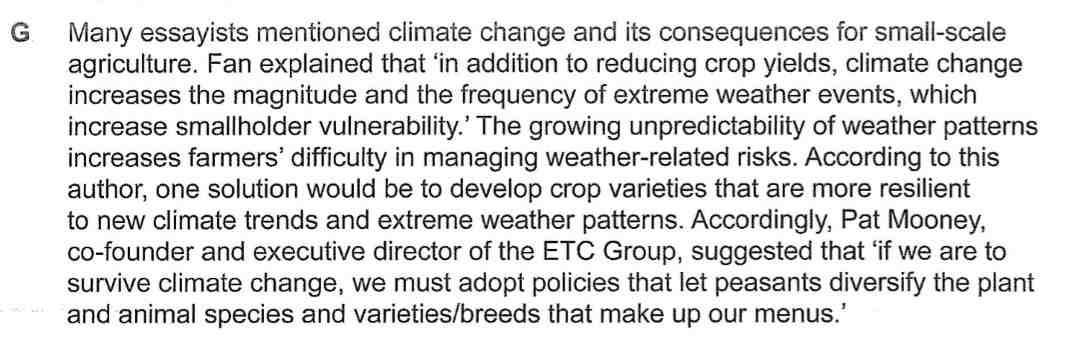
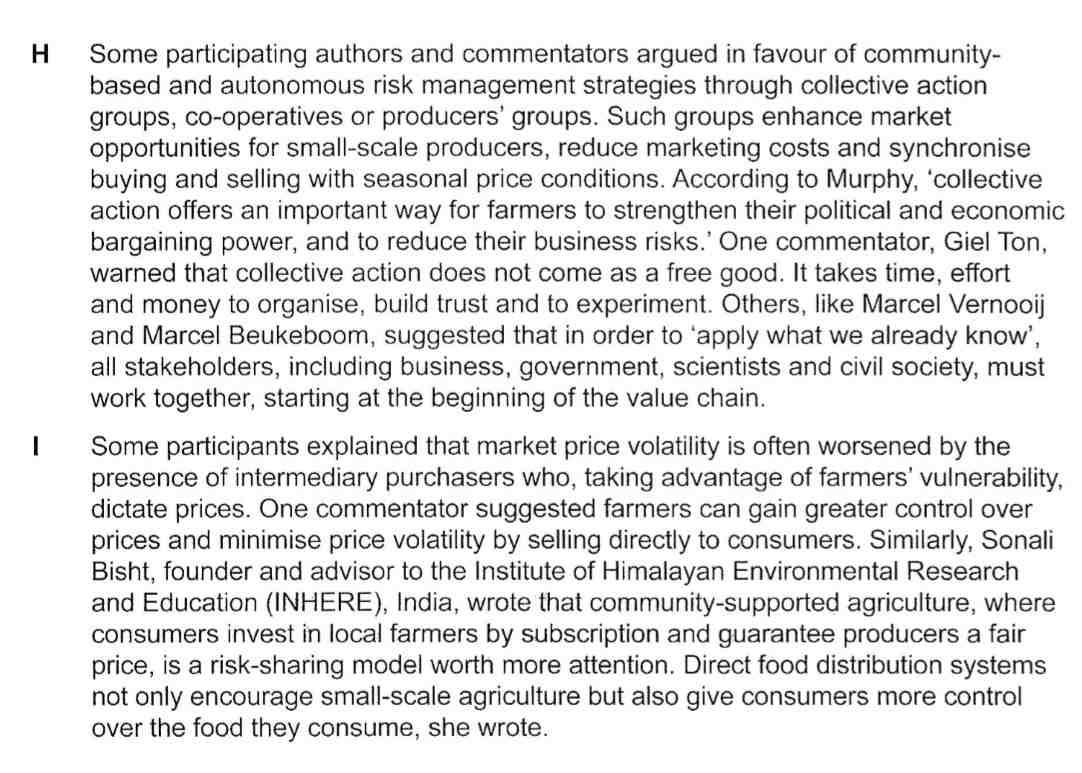
This is a reading from Cambridge IELTS 12 (real past test papers).
For this one the title is ‘The Risks Agriculture Faces in Developing Countries.’
You can imagine that the article will be scientific, that it will talk about specific poor countries, about agricultural methods and why these countries have problems with agriculture sometimes.
To skim means to read quickly for the overall meaning of the passage, not just the specific details.
It is like drawing a rough map of the passage, without all the street names filled in.
You should skim an IELTS reading (2000 – 3000 words) in 2 – 3 minutes. The reason why it has to be so fast is that you want it to stick in your short term memory.
When you read the first question you should still have that rough map in your head – you don’t want it to fade. If it takes longer than 3 minutes then it will start to fade and won’t be as useful.
So how exactly do you skim?
To skim you should read:
1. The topic sentence of each paragraph. Read this slowly. It is the most important sentence.
2. The keywords. Read the rest of the paragraph faster, skipping words and details and focusing on some keywords (nouns and verbs).
You should ignore:
1. Words that you don’t know. There is no time to figure them out now (hopefully it is not too many – if it is too many then you are not ready to be studying IELTS yet.)
2. Small details like names, years, and places – you can easily locate those later!
3. Small grammar words like: is, are, of, the, a, to, etc. If you take those out of the sentence you can still understand it because they have very little meaning – ignore them for now!
It’s important for you to remember that skimming is an IELTS skill ONLY. It does not make you a good reader – just the opposite: it makes you a bad reader. But it is useful for the test so you should improve this skill to be able to do the IELTS reading quickly.
Practice skimming this passage by focusing on the topic sentences and keywords (should take you 2 – 3 minutes):
Step 3: READ THE INSTRUCTIONS
This one is obvious! But the more practice tests you do, the faster you can do this on the real test because you will already be familiar with the different question types.
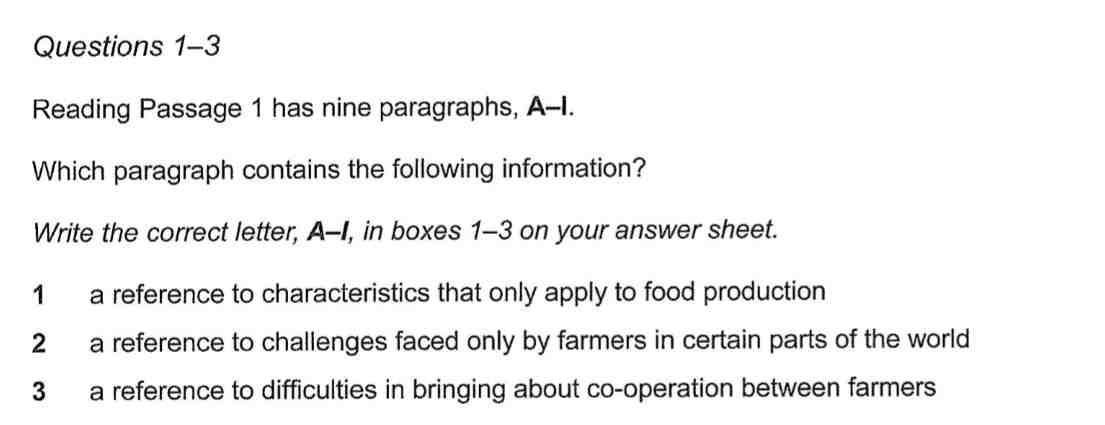
Step 4: READ THE QUESTION
This is also obvious. Don’t read all the questions – you’re not trying to impress anyone with your memory.
Read the first question and then you can scan for the answer. It will be easier and faster to scan if you did a good job skimming before.
Step 5: SCAN FOR THE ANSWER
Scan for the answer just means to read quickly to find the answer.
Locate the keyword in the question and look for it in the reading.
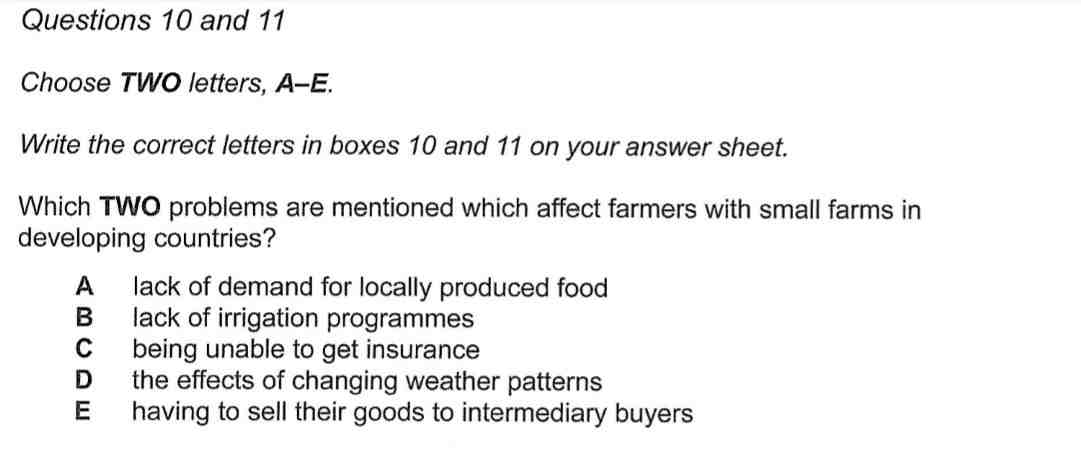
Sometimes you will be able to find the keyword. For example, you might see ‘lack of demand’ in the question and then find the same phrase ‘lack of demand’ in the reading like a landmark to find the answer.
But it is more common for the keywords to be paraphrased. For example you see ‘lack of demand’ in the question and then find ‘a relatively undeveloped domestic market’ or ‘few people want to buy.’
The biggest mistake that a lot of students make is they either just look for the keyword or direct synonyms. Both of these are rare. Look for something paraphrased that means the same thing with totally different words.
Underline the keywords but don’t spend time thinking of synonyms. Instead follow your map to the part of the text where you think the answer is and read very carefully and slowly.
For most questions, the answers come in order in the reading so that will help you find the general area where the answer is.
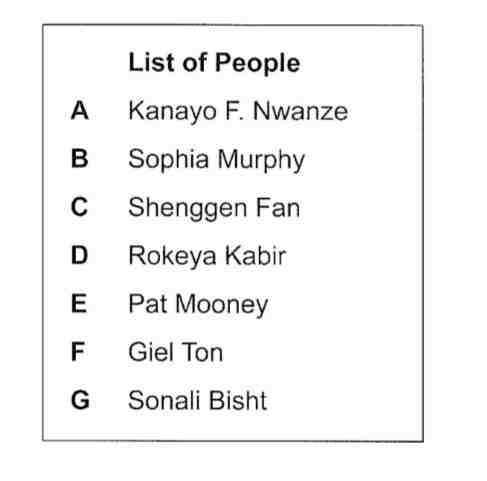
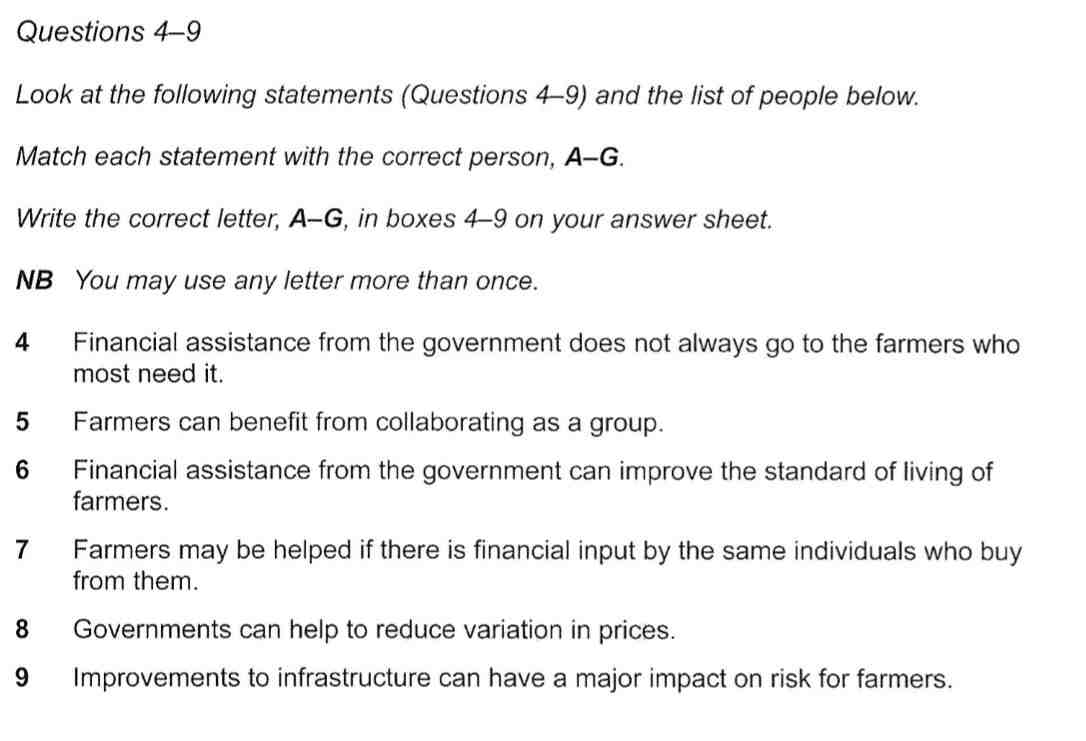
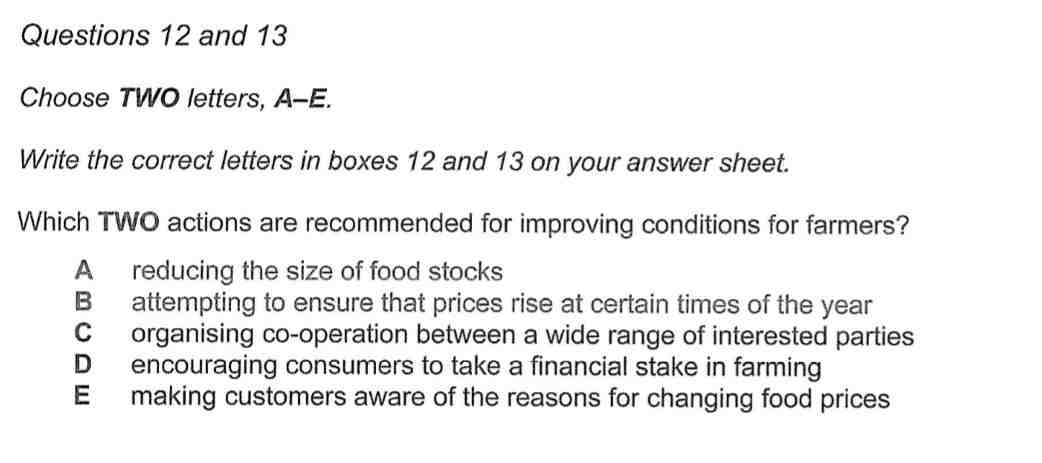
Here are the rest of the questions if you want to do some practice now:
Step 6: WRITE ON THE ANSWER SHEET
Would be a shame to forget this step! Make sure that you write on the answer sheet and not on the test – you will not get extra time to transfer your answers from the test to the answer sheet!
What if I want to do the reading a different way?
This is the best way, in my opinion, for most students to manage their time on the reading test.
But there are some other ways. These are some of the other ideas I have heard from my former students:
‘Read the question first and then skim afterwards. If your vocab and memory are really good then this can be faster.’
‘Spend more time skimming – about 5 minutes. Then you know the text really well and it is much easier to find the answers.’
‘Don’t read it at all – just take a look at the paper of the person next to you…’
Practice and figure out which way works best for you!
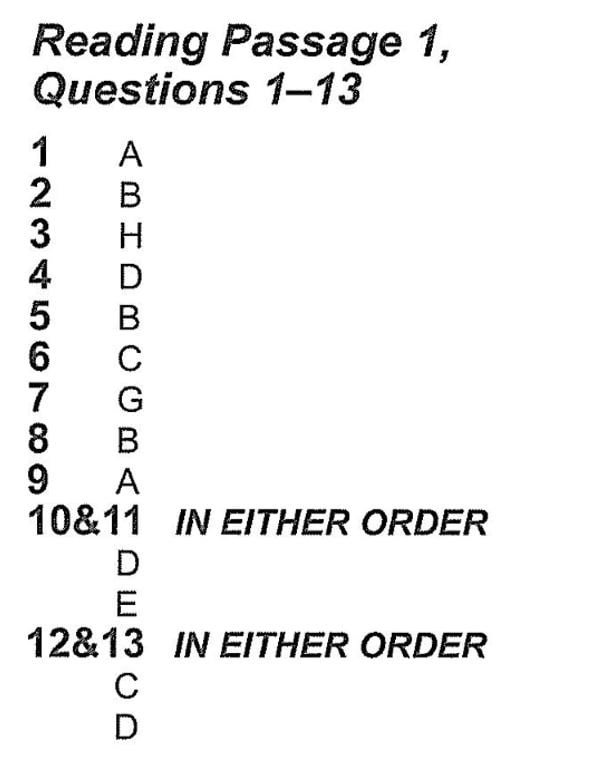
Here are the answers for the reading above which is from Cambridge IELTS 12:
Sleep is such a common topic across IELTS listening, reading, writing and speaking. It could help improve all parts of your IELTS score if you take some time to learn some new vocabulary related to sleep, mornings and evenings.
Let’s look first at some vocabulary and then try out the practice activities and links underneath!
Here is the tapescript in case you couldn’t understand some of it:
I just got out of bed and this is what my hair usually looks like in the morning – you can call it ‘bed head’ ‘yeah that’s a bed head’ when your hair is messed up – when your pillow is your hairdresser – to sleep in is to sleep late that’s different from a sleepover which is a group of kids who get together ‘so how was the sleepover? we had an adult sleepover’ and a sleepover is different from a night in – a night is when a group of friends usually adults hang out together watching movie – ‘we can have a girls night in’ – if you don’t sleep well you can say I was tossing and turning all night ‘I was tossing and turning – try not to toss and turn’ a person who’s a night owl is someone who likes to stay up late ‘we’re both night owls I think’ you can also call them a night person as opposed to a morning person or an early bird because as you know the early bird gets the worm – enjoy the rest of your day – have a good night’s sleep – comb your hair before you go out unless if you’re a guy in which case it doesn’t really matter!
SLEEP
‘I slept like a log.’
This means that you slept very well, deeply.
‘I was tossing and turning all night.’
The opposite – you didn’t sleep well at all.
‘He’s a real night owl.’
He likes to stay up late at night.
‘Early bird gets the worm.’
If you get up early then you will get better opportunities than other people.
‘Rise and shine sleepy head!’
Get up, lazy!
‘Why don’t you try sleeping on it?’
Think about a problem/decision for another day and then make up your mind.
‘I slept like a baby.’
Same as sleeping like a log – sleeping really well.
‘Time to hit the hay.’
Time to go to sleep.
‘Have a lie in.’
Sleep late in the morning.
‘I slept in like the lazy piece of trash I am.’
Same as having a lie in. ‘Lie in’ is a UK expression and ‘sleep in’ is for Americans. It means to sleep late, usually on the weekend.
‘Time to turn in.’
TIme to go to bed.
‘He went out like a light.’
Went to sleep right away.
‘Couldn’t sleep a wink all night.’
Unable to sleep at all.
‘Get your beauty rest – you need it.’
Sleep so that you look beautiful and don’t have bags under your eyes.
‘I just dozed off for a second, officer!’
Fell asleep for a little bit. Don’t do this while driving!
MORNINGS
‘I’m asleep in the wee hours of the morning.’
The early hours of the morning.
‘I get up at the crack of dawn.’
I get up early – at around 6 am when the sun comes up.
‘The sunrise is gorgeous.’
The rising of the sun is beautiful.
‘I want to get an early start tomorrow.’
I want to get up early in the morning.
‘I got up at an ungodly hour to catch the plane.’
A very early hour like 3 or 4 or 5 in the morning.
‘The morning light woke me up.’
The sun at dawn.
‘It will take all morning.’
Use up all the hours of the morning.
‘I’m not a morning person or a night person – I’m barely a person at all!’
I don’t like to get up early (or stay up late).
EVENINGS
‘In the middle of the night, I woke up screaming.’
Very late at night.
‘Sleep tight, don’t let the bed bugs bite…’
Sleep well.
‘The sunset isn’t so gorgeous.’
The falling sun is ugly.
‘I’m a night person.’
I like to stay up late at night.
‘They are like night and day – total opposites!’
Completely different personalities – opposites.
‘I had a one night stand last night – it was ok.’
Sleep with someone for one night – the opposite of a long-term relationship.
‘Time to call it a day.’
Time to go to bed.
‘I’m gonna have an early night.’
I’m going to go to bed early.
‘I’m gonna spend the night in.’
Not going to go out tonight.
‘In the dead of night, Santa Claus breaks into your house.’
Very late at night.
‘Night after night, I can’t sleep.’
Every night.
‘Let’s go out for a night on the town.’
Go out and party.
If you have nothing better to do with your time, I also explained all of this vocabulary in a Live Lesson on my Facebook account. Watch it here:
To practice the vocabulary above, comment below and I will correct your answers:
1. Do you go to bed and get up at the same time every day?
2. What do you usually do in the mornings?
3. What is the perfect evening for you?
Remember to use the vocabulary above in your answers!
ASAP Science Links
This is one of my favourite YouTube channels for learning about science. They talk really quickly but you can slow the video down or use the visuals to help watch. Here are some ideas for how you can watch them.
"The highest quality materials anywhere on the internet! Dave improved my writing and vocabulary so much. Really affordable options you don't want to miss out on!"