by Dave | Mar 15, 2018 | Sample Answers
This is an IELTS Writing Task 2 Sample Answer from March 15th 2018 on the topic of whether or not students should mainly read literature from their own country or other countries.
It’s a seemingly simple question but as with all questions it’s a real challenge to think of ideas that are relevant and that you can support well.
I bet you can think of some main ideas. For agree: to learn about the traditions of their country, to learn about its history, to inform their identity, to learn their language better, to become more patriotic. Those are all good – but can you support them?
It’s best to choose one idea and support it fully rather than writing a paragraph full of main ideas. That is the fastest and easiest pathway to a band 5 for Task Achievement – by far the most common score on IELTS Writing Task 2.
Read on for a sample answer from a former examiner, analysis, vocabulary practice and some handwritten notes!
For more, check out our other sample answers here: IELTS Sample Answers.
You can also subscribe to our YouTube Channel for some IELTS Speaking Sample Answers: HowtodoIELTS YouTube.
Dave
Sample Answer
Some people say that school children should be mainly taught about the literature (e.g fiction and poetry) of their own country because it is more important than that of other countries.
To what extent do you agree?
Many think that it is more important to learn about the literature from one’s own country, rather than other countries. I am in complete agreement with this viewpoint because of how literature can contribute to both national understanding and individual identity.
The most fundamental reason that children should be exposed to literature from their own country is to deepen their understanding. For example, young students in America study a common curriculum including authors like Dr. Seuss, Shel Silverstein, and Harper Lee. The books from Dr. Seuss and Shel Silverstein convey principles of individualism, creativity and entrepreneurship that are key to understanding America’s history and present. To Kill a Mockingbird by Harper Lee is a good example of a book focused on a period of racial segregation, that can help students to better understand recent events around the Black Lives Matter movement. Learning about racism from a classic novel set in America is more likely to likely engage, inform and stimulate a relevant response.
Another reason why students need to learn their national literature well is that it will help to shape their personal identity at an impressionable age. Children will form their identity from a variety of sources, including the literature of other countries. This is a positive development. But the main influence should be from their own country so that they are a true representative of their nationality. A Japanese child growing up abroad could return to Japan and feel like an outsider. One method of countering this is to make sure they have a good grasp of poetry and fiction from Japan. From classical poetry they will be influenced by Japan’s singular minimalist tradition. From the novels, they will learn about the relationships between people and the differing levels of formality expected in Japanese society. This will all contribute to making their identity more Japanese.
In conclusion, children will better understand and have their identity firmly shaped by the literature of their home country. This is becoming increasingly important in a globalized world that threatens to blur the distinctions between nationalities into a single mono-culture.
Sample Answer Analysis
1. Many think that it is more important to learn about the literature from one’s own country, rather than other countries. 2. I am in complete agreement with this viewpoint because of how literature can contribute to both national understanding and individual identity.
1. The first sentence simply restates what the general topic is – should kids mainly read literature from their own country.
2. The second sentence is the self-evident opinion that it is more important to learn your country’s literature (I agree).
1. The most fundamental reason that children should be exposed to literature from their own country is to deepen their understanding. 2. For example, young students in America study a common curriculum including authors like Dr. Seuss, Shel Silverstein, and Harper Lee. 3. The books from Dr. Seuss and Shel Silverstein convey principles of individualism, creativity and entrepreneurship that are key to understanding America’s history and present. 4. To Kill a Mockingbird by Harper Lee is a good example of a book focused on a period of racial segregation, that can help students to better understand recent events around the Black Lives Matter movement. 5. Learning about racism from a classic novel set in America is more likely to likely engage, inform and stimulate a relevant response.
1. The first sentence is a topic sentence that includes my main idea for the whole paragraph (literature will deepen a child’s understand of their country).
2. The second sentence jumps right into my example by listing 3 authors common read in America (where I’m from).
3. The third sentence expands on what elements of America they will be able to better understand from 2 of the 3 authors.
4. The fourth sentence expands on what they will be able to better understand from the 3rd author.
5. The fifth sentence develops that idea by saying how important literature is in general to engaging students.
1. Another reason why students need to learn their national literature well is that it will help to shape their personal identity at an impressionable age. 2. Children will form their identity from a variety of sources, including the literature of other countries. 3. This is a positive development. 4. But the main influence should be from their own country so that they are a true representative of their nationality. 5. A Japanese child growing up abroad could return to Japan and feel like an outsider. 6. One method of countering this is to make sure they have a good grasp of poetry and fiction from Japan. 7. From classical poetry they will be influenced by Japan’s singular minimalist tradition. 8. From the novels, they will learn about the relationships between people and the differing levels of formality expected in Japanese society. 9. This will all contribute to making their identity more Japanese.
1. The first sentence is a topic sentence that includes my main idea for the whole paragraph (literature helps shape personal identity).
2. The second sentence explains that identity comes from a variety of sources including other countries’ literature.
3. The third sentence is short and says this is a positive development.
4. The fourth sentence claims that literature from their own country should be the primary influence.
5. The fifth sentence gives an example of a Japanese child growing up in another country feeling out of place in Japan.
6. The sixth sentence argues that this can be fixed by encouraging the child to read Japanese poetry and fiction.
7. The seventh sentence explains how poetry will impact their identity.
8. The eigth sentence explains how the novels will impact their identity.
9. The ninth sentence concludes the paragraph by saying these will all impact their identity.
1. In conclusion, children will better understand and have their identity firmly shaped by the literature of their home country. 2. This is becoming increasingly important in a globalized world that threatens to blur the distinctions between nationalities into a single mono-culture.
1. The first sentence restates my opinion that learning their own country’s literature is more important.
2. The last sentence adds an extra detail that further explains why it is important to have distinct nationalities in a globalized world.
Vocabulary Analysis and Practice
I have highlighted some of the high-level vocabulary from the sample answer.
Before looking at the definition let’s do some practice!
Answer the following questions about everything in bold:
1. What does each one mean?
2. Can you think of another way to say the same thing?
Many think that it is more important to learn about the literature from one’s own country, rather than other countries. I am in complete agreement with this viewpoint because of how literature can contribute to both national understanding and individual identity.
The most fundamental reason that children should be exposed to literature from their own country is to deepen their understanding. For example, young students in America study a common curriculum including authors like Dr. Seuss, Shel Silverstein, and Harper Lee. The books from Dr. Seuss and Shel Silverstein convey principles of individualism, creativity and entrepreneurship that are key to understanding America’s history and present. To Kill a Mockingbird by Harper Lee is a good example of a book focused on a period of racial segregation, that can help students to better understand recent events around the Black Lives Matter movement. Learning about racism from a classic novel set in America is more likely to likely engage, inform and stimulate a relevant response.
Another reason why students need to learn their national literature well is that it will help to shape their personal identity at an impressionable age. Children will form their identity from a variety of sources, including the literature of other countries. This is a positive development. But the main influence should be from their own country so that they are a true representative of their nationality. A Japanese child growing up abroad could return to Japan and feel like an outsider. One method of countering this is to make sure they have a good grasp of poetry and fiction from Japan. From classical poetry they will be influenced by Japan’s singular minimalist tradition. From the novels, they will learn about the relationships between people and the differing levels of formality expected in Japanese society. This will all contribute to making their identity more Japanese.
In conclusion, children will better understand and have their identity firmly shaped by the literature of their home country. This is becoming increasingly important in a globalized world that threatens to blur the distinctions between nationalities into a single mono-culture.
Vocabulary Definitions
one’s own country (noun phrase): the country you are from
in complete agreement with (prepositional phrase): agree with
viewpoint (n): opinion
individual identity (n): who you are / your personal knowledge of yourself
most fundamental reason (noun phrase): basic reason why
exposed (v): to see or experience something
deepen their understanding (verb phrase): understand something better or more deeply/clearly
common curriculum (n): materials and content all students study
convey principles (v + n): teach or show basic values/ideas
individualism (n): stressing the individual person over the community
creativity (n): the ability to think of new ideas
entrepreneurship (n): starting or doing something on your own
racial segregation (adj + n): separating people based on their race or skin color
recent events (adj + n): situation usually in the news from not a long time ago
engage (v): to be interested in something
inform (v): to know something well / to tell someone information about something
stimulate (v): to feel energized or deeply interested and cause a reaction
relevant response (adj + n): an answer or response that is related
another reason why (adverbial phrase): an additional reason
national literature (adj + n): literature from a country
impressionable age (adj + n): an age when you are easily influenced
a variety of sources (noun phrase): coming from many different places
positive development (adj + n): a good thing/change
main influence (adj + n): primary impact/effect
true representative (adj + n): an honest representation/sample/symbol of something
growing up abroad (verb phrase): to live in a foreign country
countering (v): to fix/combat or try to change
good grasp (adj + n): good understanding of something
classical poetry (adj + n): old, good poetry
Japan’s singular minimalist tradition (noun phrase): the aesthetic from Japan that is unique to them focusing on minimal/simple design
differing levels of formality (verb phrase): different ways of interacting with people based on age and stature
firmly shaped (adv + v): influenced powerfully
increasingly important (adv + adj): becoming more important
globalized world (adj + n): cultures becoming more similar around the world
threatens to blur the distinctions (verb phrase): may begin to break down the differences between
mono-culture (n): a single culture
Example Notes
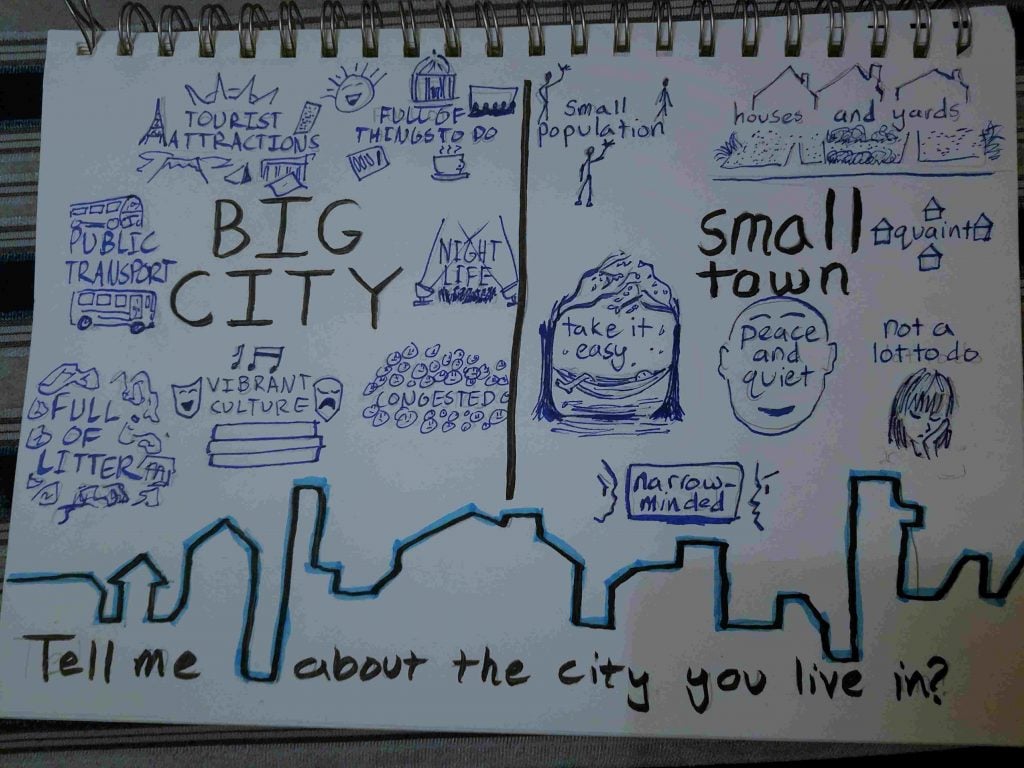

“Can I use a personal example in an IELTS Writing Task 2 essay?”
I get this question all the time on the HowtodoIELTS Facebook Group.
The answer is simple: yes, but no.
Technically, yes. As long as it is relevant you should not lose points. In the answer above you could talk about what you learned at school and that would be fine.
But I personally know some examiners who will mark you down for it.
My final advice: it’s a risk – so don’t do it unless if you like taking risks with your IELTS score and your future.

by Dave | Mar 14, 2018 | IELTS FAQ
I have noticed a significant increase recently in people on social media and other websites offering fake IELTS certificates (also known as IELTS Test Report Forms). These are scammers:

Beware scammers on Facebook offering fake IELTS certificates!
Dave
Beware Fake Certificates!
Luckily these offers are pretty easy to spot:
-
They often guarantee you a high band score (no one can guarantee you that!).
-
They claim you will receive a ‘verified IELTS certificate’ without even taking the test (like winning the lottery without buying a ticket!).
-
They suggest they have insider contacts within British Council or IDP to help you (this is just bullshit).
What is guaranteed is that they will ask for a large fee and the certificate that you will get will be FAKE and useless, and the immigration department or university you apply to will verify your result online and reject your application.
Worse than that, they may blacklist (ban) you, so you won’t be able to re-apply to that university or country in the future!
We strongly recommend that you just ignore these scammers, and even better report them to [email protected]
Beware Fake Registration Websites!
We are also aware that there are more and more websites pretending to be British Council IELTS registration sites. These websites are trying to carry out identity fraud by stealing your personal information.
Therefore, we recommend that before you enter any personal details, please make sure that you are using the official and secure British Council or IDP sites in your country. You can access them here:

Beware fake registration websites. Only use official British Council or IDP sites.

by Dave | Mar 12, 2018 | IELTS FAQ
How are your band scores calculated for each skill, as well as your Overall Score? The process of marking and scoring your IELTS exam can seem complicated and confusing. In this guide I will explain everything you need to know about the following:
-
Overall Band Score
-
Listening and Reading Scores
-
Speaking Scores
-
Writing Scores
If you need some writing feedback from a former examiner about your strengths and weaknesses, as well as your current band scores, check out IELTS Writing Band Score and Correction Service.

An example IELTS Certificate (or IELTS Test Report Form), with band scores for four skills and an Overall Band Score.
Dave
Overall Band Score
Students get a whole or half band score (0-9) for each of the four skills (Listening, Reading, Writing, Speaking).
The average of these four scores is calculated by adding them together and dividing by 4. This figure is then rounded up or down to the nearest whole or half band score to produce an ‘Overall Band Score’.
|
Listening
|
Reading
|
Writing
|
Speaking
|
Average (of 4 Skills)
|
Overall Band score
|
Donald
|
6.5
|
6.5
|
5
|
7
|
6.25
|
6.5
|
Kanye
|
4.0
|
3.5
|
4.0
|
4.0
|
3.875
|
4.0
|
Taylor
|
6.5
|
6.5
|
5.5
|
6.0
|
6.125
|
6.0
|
Listening and Reading Scores
In the IELTS Listening and Reading exams, a member of the British Council or IDP exams team will mark your answers to the 40 questions for each test, using an answer key from Cambridge.
Each correct answer scores one point and the the total (raw) score out of 40 is calculated for both the Reading and Listening tests. These raw scores for each skill are then converted into a whole or half band score (0-9).
Below is a guide to how many points you need to achieve a particular band score, but this will change depending on the difficulty of the test. For example, if you have a difficult listening test, the score needed for band 6 might be 21 or 22. If the listening test is easier, you might need to score 24 or 25 to get the same band score.
As you can see from the table below, a higher raw score may be needed in General Training to get the same band score compared to Academic reading. This is because Academic reading texts often contains more difficult vocabulary or more complex styles of writing.
IELTS Listening
|
|
IELTS Reading (Academic)
|
|
IELTS Reading (General Training)
|
Band score
|
Raw score out of 40
|
|
Band score
|
Raw score out of 40
|
|
Band score
|
Raw score out of 40
|
5
|
16
|
|
5
|
15
|
|
4
|
15
|
6
|
23
|
|
6
|
23
|
|
5
|
23
|
7
|
30
|
|
7
|
30
|
|
6
|
30
|
8
|
35
|
|
8
|
35
|
|
7
|
34
|
Speaking Scores
An IELTS examiner at British Council or IDP will assess your speaking overall for the three parts of the speaking test. Parts 1, 2 and 3 are equally important but they do not give separate scores for each part.
Overall, your speaking will get a whole band score (0-9) for each of the four criteria:
– Fluency and Coherence (F) – Ability to keep going and structure
– Lexical Resource (LR) – Vocabulary
– Grammatical Range and Accuracy (GR) – Grammar
– Pronunciation (P) – Correct sounds, word and sentence stress, intonation and rhythm.
You can find more information about the band descriptors for IELTS Speaking here:
The exams office at BC or IDP will calculate an average score, and this figure will be rounded down to the nearest half or whole band score (see the table below).
|
F
|
LR
|
GR
|
P
|
Average Score
|
Final Result
|
Speaking
|
5
|
7
|
7
|
6
|
6.25
|
6*
|
*rounded down to the nearest half or whole band score.
Writing Scores
Task 1 and Task 2 writing will be marked separately by two different IELTS examiners.
For each task, your writing will get a whole band score (0-9) for each of the following four criteria:
– Task Achievement (TA) – Opinion and Ideas
– Coherence and Cohesion (CC) – Organisation and Linking
– Lexical Resource (LR) – Vocabulary and Spelling
– Grammatical Range and Accuracy (GR) – Grammar and Punctuation
You can find more information about the band descriptors for IELTS Writing here:
The exams office at BC or IDP will calculate an average score for each Task, and a combined score (Task 2 = 66%, Task 1 = 33%). The final figure is rounded down to the nearest half or whole band score.
It is very important to remember that Task 2 is worth twice as much as Task 1 (Task 2 = 66%, Task 1 = 33%).
|
TA
|
CC
|
LR
|
GR
|
Average Scores
|
Final result
|
Writing Task 1
|
5
|
7
|
7
|
6
|
6.25
|
|
Writing Task 2
|
6
|
6
|
6
|
5
|
5.75
|
|
Combined Writing Score (Task 1 = 33%, Task 2 = 66%).
|
5.91
|
5.5*
|
*rounded down to the nearest half or whole band score
by Dave | Mar 12, 2018 | IELTS Grammar
Students who want to achieve band 7+ for their IELTS Writing Task 2 need to use a wide range of grammar structures. In this article I show you how to use a range of modals naturally to express opinions, as well as make suggestions and predictions, which will help improve your grammar band score.
For more examples of good grammar in use, check out our Task 2 sample answers here: IELTS Sample Answers.
You can also subscribe to our YouTube Channel for some IELTS Speaking Sample Answers: HowtodoIELTS YouTube.
Be sure to avoid the mistakes that most students make on writing by signing up now for my exclusive IELTS Ebooks here on Patreon.
Dave
Grammar Doesn’t have to be Complex
In order to get a high band score for your writing you need to be able to naturally use a wide range of grammar structures. For Task 2 writing, this means correctly using complex structures, but it also means using more basic structures naturally, including modal verbs.
Sample Essay
Below is a sample essay for the following question.
Some people think that all university students should study whatever they like. Others believe that they should only be allowed to study subjects that will be useful in the future, such as those related to science and technology.
Discuss both these views and give your own opinion.
Look at the phrases that are in bold. For each one, do you think they are expressing (saying) something more certain or less certain?
One question that has caused a great deal of controversy over the years is which subjects students study at University. I believe that students should have the choice to study whatever they like. However we have to overcome the problem of enough graduates in important subjects. In this essay the arguments surrounding this issue will be discussed.
Many people argue that students should choose their own subjects at university. The principle reason for this is because students will probably be more motivated so they will be more likely to work harder and for longer and therefore achieve more, be more successful and probably more satisfied. A good example is a student who has a passion for art or science. They will be more likely to do extra work to improve their knowledge or develop their skills to a higher level. Another reason is that if students follow their passion it can often lead to more creativity. An example here is Steve Jobs, who followed his passions to become one of the most creative and successful entrepreneurs of modern times.
Other people suggest that students should not be allowed to choose. They argue that if society allowed students to do this, then we might be left with a lack of graduates in some ‘core’ subjects essential for the future. An example here is important subjects such as science or technology, which might not be popular without encouragement. This could result in a less skilled labour force with a negative impact on the economy. However I would suggest that this is not a serious problem as we could deal with this issue by making core subjects more attractive. This could be done through financial policies, for example reduced fees, offering bursaries or guaranteeing jobs for studying the target subjects.
In conclusion, there are clear advantages of allowing students to choose their own subjects both for individuals as well as wider benefits. Nevertheless we must ensure there are enough students who select important subjects. This could be achieved using financial incentives or job guarantees. Regardless, we must always make sure our Universities are flexible enough to meet the challenges that society will face in the future.
Use the Correct Grammar for the Right Situation
Let’s look at the sample answer again. I’ve coloured phrases that are more certain in red and phrases that are less certain in green. It’s now clear to see that in my first body paragraph I am more certain about my opinions, whereas in the second body paragraph I am less certain.
First Body Paragraph:
Many people argue that students should choose their own subjects at university. The principle reason for this is because students will probably be more motivated so they will be more likely to work harder and for longer and therefore achieve more, be more successful and probably more satisfied. A good example is a student who has a passion for art or science. They will be more likely to do extra work to improve their knowledge or develop their skills to a higher level. Another reason is that if students follow their passion it can often lead to more creativity. An example here is Steve Jobs, who followed his passions to become one of the most creative and successful entrepreneurs of modern times.
Second Body Paragraph:
Other people suggest that students should not be allowed to choose. They argue that if society allowed students to do this, then we might be left with a lack of graduates in some ‘core’ subjects essential for the future. An example here is important subjects such as science or technology, which might not be popular without encouragement. This could result in a less skilled labour force with a negative impact on the economy. However I would suggest that this is not a serious problem as we could deal with this issue by making core subjects more attractive. This could be done through financial policies, for example reduced fees, offering bursaries or guaranteeing jobs for studying the target subjects.
Analysis: First Body Paragraph (more certain)
In this paragraph I am confidently explaining my opinion about why students should choose their own subjects, by suggesting they’ll probably be more motivated, work harder and be more successful.
So I use language that matches my confidence. However this is academic writing so I’m still not 100% confident. Look at the table that compares good and bad ways to express certainty.
I didn’t say “Students will be more motived so they will work harder” or “If students follow their passion they will be more creative.”
This is too strong so instead I used “will probably be more motivated” or “can often lead to more creativity“
Good phrases for strong opinions
(Strong – 80%)
|
Poor phrases for strong opinions
(Too Strong – 100%)
|
Students will probably be more motivated……
…will be more likely to work harder.
If students follow their passion it can often lead to more creativity.
|
Students will be more motivated…
…so they will work harder.
If students follow their passion they will be more creative.
|
Analysis: Second Body Paragraph (less certain)
In this paragraph I first make predictions about possible negative effects of allowing students to choose (a lack of graduates for important subjects and it’s possible impact on the economy). Then I suggest a possible solution (making important subjects more attractive through financial incentives).
By using less certain language, I show that these are just possible ideas. I didn’t say “We will be left with a lack of graduates.” or “This will result in a less skilled workforce.” or even “This can be done through financial policies.”
Those structures are too strong for academic writing so instead I used “We might be left with a lack of graduates.“, “This could result in a less skilled workforce.” and “This could be done through financial policies.”
Good phrases for predictions and suggestions
(Possible – 50%)
|
Poor phrases for predictions and suggestions
(Too Strong – 100%)
|
We might be left with a lack of graduates.
This could result in a less skilled workforce.
This could be done through financial policies.
|
We will be left with a lack of graduates.
This will result in a less skilled workforce.
This can be done through financial policies.
|
Plan your Language
As well as brainstorming and organising ideas, it’s important to think about how certain you want to be about these ideas. Yes, I said want because remember your essay doesn’t have to follow your real opinions, and you should try to use a range of grammar.
When you are planning your body paragraphs, keep in mind what language you will use to express your opinions and suggestion/predictions. For example if you have a discuss both sides question, which requires you to choose a side, then use more certain language for your chosen side but use less certain language for the other side.
Likewise in a problem and solution essay, you could choose to use stronger language to talk about the seriousness of the problem, but weaker language to discuss solutions.
Now it’s your turn! Put your answers in the comments.
Governments should spend money on railways rather than roads.
To what extent do you agree or disagree?
Brainstorm some main ideas – then write some strong/weak opinions and strong/weak suggestions or predictions using suitable language.

by Dave | Mar 10, 2018 | Sample Answers
This is an IELTS Writing Task 2 Sample Answer from March 10th on the topic of whether or not buildings should be built according to their function.
It’s a great question because it is an important debate due to the increasing size and influence of cities.
I guarantee that most people doing this question are getting a 5 for Task Achievement because they do not have a good main idea for why the outward appearances of buildings is important. When I was writing this I thought of a main idea by imagining some different perspectives.
Why would the city government value appearances? The people of the city? The architect?
Read on for a sample answer from a former examiner, analysis, vocabulary practice and some handwritten notes!
For more, check out our other sample answers here: IELTS Sample Answers.
You can also subscribe to our YouTube Channel for some IELTS Speaking Sample Answers: HowtodoIELTS YouTube.
Dave
Sample Answer
When designing a building, the most important factor is the intended use of the building rather than its outward appearance.
To what extent do you agree or disagree?
When it comes to building design, architects often have to make compromises between form and function. Many feel that the purpose of the building should dictate these decisions. I agree that how the building will be used is a key factor, but I think that how it looks is just as important.
Those who argue that a building should be constructed according to its function are mainly thinking about the people who will later use the building. If a building is unable to perform its most basic functions, then it is undoubtedly a failed project. For example, if an architect is building a primary school then they must consider parking areas, how cars will pick up and drop off children, where to put the playground, access for people with disabilities, and that is just the area around the school. A beautiful parking lot that only has room for a handful of cars is useless. Inside the school, they also need classrooms that are large enough, hallways that do not get easily too crowded, a good number and location of restrooms and many other pragmatic concerns. If the architect is overly focused on how the school looks, then they may sacrifice ease of use and practicality.
However, the look of the building is also important because of the role of art in everyday life. Architecture is often considered one of the original and purest forms of artistic expression. I am reminded of a quote from Pablo Picasso who said ‘Art washes away from the soul the dust of everyday life.’ Imagine a city filled with ugly, utilitarian structures like many Soviet-era buildings. These buildings will not lift people’s spirits or encourage them to contemplate the intended message. Contrast this with a city where architects have been given free rein to be artists. As long as the buildings are also functional, you will find a city filled with beauty and provocation that enhances life for its inhabitants. The outward appearance does not have to be beautiful, but it has a responsibility to contribute something to enrich the lives of everyday people.
In conclusion, how a building works is equally as important as how that same building looks. Form should not follow function but be fused together in order to add to the aesthetic dimension of a city. It is undoubtedly more challenging, expensive and time-consuming to achieve this kind of balance, but it is also worth the effort.
Sample Answer Analysis
1. When it comes to building design, architects often have to make compromises between form and function. 2. Many feel that the purpose of the building should dictate these decisions. I agree that how the building will be used is a key factor, but I think that how it looks is just as important.
1. The first sentence simply restates what the general topic is – the form and function of buildings.
2. The second sentence restates that many feel the function is more important.
3. The third sentence is my objective correct opinion – form and function are equally important.
1. Those who argue that a building should be constructed according to its function are mainly thinking about the people who will later use the building. 2. If a building is unable to perform its most basic functions, then it is undoubtedly a failed project. 3. For example, if an architect is building a primary school then they must consider parking areas, how cars will pick up and drop off children, where to put the playground, access for people with disabilities, and that is just the area around the school. 4. A beautiful parking lot that only has room for a handful of cars is useless. 5. Inside the school, they also need classrooms that are large enough, hallways that do not get easily too crowded, a good number and location of restrooms and many other pragmatic concerns. 6. If the architect is overly focused on how the school looks, then they may sacrifice ease of use and practicality.
1. The first sentence is a topic sentence that includes my main idea for the whole paragraph (architects care about how people will use the building).
2. The second sentence explains my main idea by saying that if a building cannot be used as it was intended, it is a failure. It’s often important to explain your main idea in one sentence.
3. The third sentence gives an example of all the areas that have functional purpose in a primary school.
4. The fourth sentence develops what will happen if the parking lot is too small.
5. The fifth sentence gives more examples of what an architect must consider inside the school.
6. The sixth sentence summarizes that an architect too focused on the look of the school may hurt the functional elements of the school.
1. However, the look of the building is also important because of the role of art in everyday life. 2. Architecture is often considered one of the original and purest forms of artistic expression. 3. I am reminded of a quote from Pablo Picasso who said ‘Art washes away from the soul the dust of everyday life.’ 4. Imagine a city filled with ugly, utilitarian structures like many Soviet-era buildings. 5. These buildings will not lift people’s spirits or encourage them to contemplate the intended message. 6. Contrast this with a city where architects have been given free rein to be artists. 7. As long as the buildings are also functional, you will find a city filled with beauty and provocation that enhances life for its inhabitants. 8. The outward appearance does not have to be beautiful, but it has a responsibility to contribute something to enrich the lives of everyday people.
1. The first sentence is a topic sentence that includes my main idea for the whole paragraph (architecture is an important art form and art is important in our daily lives).
2. The second sentence explains my opinion by saying that architecture is a form of art.
3. The third sentence supports my opinion with a quote from Picasso explaining why art is important.
4. My fourth sentence supports my main idea with a hypothetical example of utilitarian city.
5. The fifth sentence explains how people in this city might feel.
6. The sixth sentence contrasts this with a hypothetical city with nice cities that makes life better.
7. Sentence 7 extends this idea further.
8. The eighth sentence concludes by saying that art does not have to be beautiful but it should in some way make people’s lives richer.
1. In conclusion, how a building works is equally as important as how that same building looks. 2. Form should not follow function but be fused together in order to add to the aesthetic dimension of a city. 3. It is undoubtedly more challenging, expensive and time-consuming to achieve this kind of balance, but it is also worth the effort.
1. The first sentence restates my opinion that how a building looks and works are equally important.
2. The second sentence restates the main reason behind my opinion.
3. The last sentence adds an extra detail that acknowledges this challenge but claims it is worth it.
Vocabulary Analysis and Practice
I have highlighted some of the key vocabulary from the sample answer.
Before looking at the definition let’s do some practice!
Answer the following questions about everything in bold:
1. What does each one mean?
2. Can you think of another way to say the same thing?
When it comes to building design, architects often have to make compromises between form and function. Many feel that the purpose of the building should dictate these decisions. I agree that how the building will be used is a key factor, but I think that how it looks is just as important.
Those who argue that a building should be constructed according to its function are mainly thinking about the people who will later use the building. If a building is unable to perform its most basic functions, then it is undoubtedly a failed project. For example, if an architect is building a primary school then they must consider parking areas, how cars will pick up and drop off children, where to put the playground, access for people with disabilities, and that is just the area around the school. A beautiful parking lot that only has room for a handful of cars is useless. Inside the school, they also need classrooms that are large enough, hallways that do not get easily too crowded, a good number and location of restrooms and many other pragmatic concerns. If the architect is overly focused on how the school looks, then they may sacrifice ease of use and practicality.
However, the look of the building is also important because of the role of art in everyday life. Architecture is often considered one of the original and purest forms of artistic expression. I am reminded of a quote from Pablo Picasso who said ‘Art washes away from the soul the dust of everyday life.’ Imagine a city filled with ugly, utilitarian structures like many Soviet-era buildings. These buildings will not lift people’s spirits or encourage them to contemplate the intended message. Contrast this with a city where architects have been given free rein to be artists. As long as the buildings are also functional, you will find a city filled with beauty and provocation that enhances life for its inhabitants. The outward appearance does not have to be beautiful, but it has a responsibility to contribute something to enrich the lives of everyday people.
In conclusion, how a building works is equally as important as how that same building looks. Form should not follow function but be fused together in order to add to the aesthetic dimension of a city. It is undoubtedly more challenging, expensive and time-consuming to achieve this kind of balance, but it is also worth the effort.
Vocabulary Definitions
compromise (v): to make an agreement with each side giving something up and getting something
form and function (n): how something looks and how it works
dictate (v): control / decide for
key factor (n): an important part
mainly thinking (v): most think this way
perform (v): to act or serve a role
most basic function (n): the use most associated with something, its core job
undoubtedly (adv): without a doubt
consider (v): think about
pick up (v): to give someone a ride from somewhere
drop off (v): to drive someone to somewhere
access (v): ability to enter a place
handful (n): some / a few
overly focused (adj): too focused
sacrifice (v/n): get rid of something in order to get something else
ease of use (n): how easy it is to use
role of art (n): what function art serves
often considered (v): many people think this
everyday life (n): daily life
utilitarian (adj): done only to achieve an end, not in-itself
Soviet-era (n/adj): from the time when Russia was the USSR
lift people’s spirits (v): make people happier
contemplate (v): think about
contrast this with (linking phrase): compare with
free rein (n): allowed to do anything
provocation (n): to incite, stimulate or give rise to
enrich (v): to make better, richer, deeper and more fulfilling
fused together (v): joined or combined
aesthetic dimension (n): related to appearances and art
time-consuming (adj): taking a long time
worth the effort (n): a good idea to do it even though it takes time
Example Notes
Here are some notes I made about architecture (check out more on our Instagram page)!

Architecture Articles
Architecture Videos
Now it’s Your Turn! Comment below on our IELTS Sample Answer:
Do you think building should be built just according to their function? Is it important how they look?
