Doing an enjoyable activity with a child can is better for their overall skills development and creativity than reading.
To what extent do you agree?
Some today have argued that in order to best facilitate a child’s skills and imagination they should participate in engaging activities instead of spending time reading. In my opinion, though reading is beneficial to imagination to an extent, it is better to take part in a more active pastime.
Those who argue in favor of reading maintain that it stimulates creativity. For generations, parents have read stories to children not only to impart moral lessons but also inspire. One of the most famous children’s authors, Dr. Seuss, is well-known for his imaginative drawings, creative rhymes, and socially conscious plotlines. Children who read his stories are then likely to imitate this example in their own writing and artwork. As kids grow older, they can discover other creative writers and use reading as a way to imagine diverse worlds and characters. By doing so, they will implicitly have more examples to creatively rely on in their studies and future work.
However, a fun activity requires greater levels of engagement. This is broadly true for a number of pastimes ranging from playing sports and making art to socializing and going on holiday. For instance, if a parent decides to teach painting, then their children will have to learn how to employ different kinds of paints and papers, choose subjects to portray, and learn the techniques to achieve any given effect. They will also have to develop resilience and dedication as their first paintings are unlikely to be successes. If this activity is done in a group, then they can develop social skills at the same time. Depending on the activity, a child will have to push themselves outside their comfort zone far beyond what is required when passively reading a book alone.
In conclusion, despite the legitimate benefits of reading for imagination, I would argue that a more active undertaking has more concrete and memorable advantages. Parents should encourage a balance but prioritize active engagement over passivity.
Analysis
1. Some today have argued that in order to best facilitate a child’s skills and imagination they should participate in engaging activities instead of spending time reading. 2. In my opinion, though reading is beneficial to imagination to an extent, it is better to take part in a more active pastime.
Paraphrase the overall essay topic.
Write a clear opinion. Read more about introductions here.
1. Those who argue in favor of reading maintain that it stimulates creativity. 2. For generations, parents have read stories to children not only to impart moral lessons but also inspire. 3. One of the most famous children’s authors, Dr. Seuss, is well-known for his imaginative drawings, creative rhymes, and socially conscious plotlines. 4. Children who read his stories are then likely to imitate this example in their own writing and artwork. 5. As kids grow older, they can discover other creative writers and use reading as a way to imagine diverse worlds and characters. 6. By doing so, they will implicitly have more examples to creatively rely on in their studies and future work.
Write a topic sentence with a clear main idea at the end.
Explain your main idea.
Develop it with specific or hypothetical examples.
Keep developing it fully.
Vary long and short sentences.
You might add a counterpoint here.
1. However, a fun activity requires greater levels of engagement. 2. This is broadly true for a number of pastimes ranging from playing sports and making art to socializing and going on holiday. 3. For instance, if a parent decides to teach painting, then their children will have to learn how to employ different kinds of paints and papers, choose subjects to portray, and learn the techniques to achieve any given effect. 4. They will also have to develop resilience and dedication as their first paintings are unlikely to be successes. 5. If this activity is done in a group, then they can develop social skills at the same time. 6. Depending on the activity, a child will have to push themselves outside their comfort zone far beyond what is required when passively reading a book alone.
Write a new topic sentence with a new main idea at the end.
Explain your new main idea.
Include specific details and examples.
Add as much information as you can and make sure it links logically.
Continue your development.
Finish the paragraph strong.
1. In conclusion, despite the legitimate benefits of reading for imagination, I would argue that a more active undertaking has more concrete and memorable advantages. 2. Parents should encourage a balance but prioritize active engagement over passivity.
Summarise your main ideas.
Include a final thought. Read more about conclusions here.
Vocabulary
What do the words in bold below mean?Make some notes on paper to aid memory and then check below.
Some today have argued that in order to best facilitate a child’s skills and imagination they should participate in engaging activities instead of spending time reading. In my opinion, though reading is beneficial to imagination to an extent, it is better to take part in a more active pastime.
Those who argue in favor of reading maintain that it stimulates creativity. For generations, parents have read stories to children not only to impart moral lessons but also inspire. One of the most famous children’s authors, Dr. Seuss, is well-known for his imaginative drawings, creative rhymes, and socially conscious plotlines. Children who read his stories are then likely to imitate this example in their own writing and artwork. As kids grow older, they can discover other creative writers and use reading as a way to imagine diverse worlds and characters. By doing so, they will implicitly have more examples to creatively rely on in their studies and future work.
However, a fun activity requires greater levels of engagement. This is broadly true for a number of pastimes ranging from playing sports and making art to socializing and going on holiday. For instance, if a parent decides to teach painting, then their children will have to learn how to employ different kinds of paints and papers, choose subjects to portray, and learn the techniques to achieve any given effect. They will also have to develop resilience and dedication as their first paintings are unlikely to be successes. If this activity is done in a group, then they can develop social skills at the same time. Depending on the activity, a child will have to push themselves outside their comfort zone far beyond what is required when passively reading a book alone.
In conclusion, despite the legitimate benefits of reading for imagination, I would argue that a more active undertaking has more concrete and memorable advantages. Parents should encourage a balance but prioritize active engagement over passivity.
Answers
For extra practice, write an antonym (opposite word) on a piece of paper to help you remember the new vocabulary:
facilitate make it possible to, allow for
imagination creativity, thinking of lots of ideas
participate in engaging activities instead of spending time reading do fun stuff rather than reading books
beneficial to imagination to an extent helps you be more creative somewhat
take part in a more active pastime do more active activities
Those who argue in favor of people who support
maintain argue
stimulates creativity makes you more imaginative
not only to impart moral lessons more than just telling you ethical stories
inspire encourage
well-known for his imaginative drawings famous for creative pictures
creative rhymes interesting words that sound the same
socially conscious plotlines stories that show you care about the world
imitate copy
As kids grow older when children grow up
discover other creative writers find different imaginative authors
imagine diverse worlds and characters think of varied places and people
By doing so in this way
implicitly not explicitly
rely on depend on
studies schoolwork
future work job later
requires greater levels of engagement need more interaction
This is broadly true for mostly the case for
ranging from playing sports and making art to socializing and going on holiday including…
decides chooses
employ use
subjects what you choose to draw about
portray how it is shown
learn the techniques to achieve any given effect know how to make different kinds of images
develop resilience become grittier
dedication commitment
unlikely to be successes not much chance of it working out
social skills at the same time interacting with others also
Depending on relying on
push themselves outside their comfort zone far beyond challenge yourself
passively reading a book alone buried in a book on your own
despite the legitimate benefits of regardless of the real advantages of
active undertaking not a passive activity
concrete real, tangible
memorable advantages easy to remember benefits
encourage a balance promote equality
prioritize active engagement over passivity focus more on activity rather than doing nothing
I recommend getting a pencil and piece of paper because that aids memory. Then write down the missing vocabulary from my sample answer in your notebook:
Some today have argued that in order to best f_________e a child’s skills and i______________n they should p_____________________________________________________g. In my opinion, though reading is b______________________________________t, it is better to t________________________________e.
T__________________________________f reading m______________n that it s________________y. For generations, parents have read stories to children n__________________________s but also i___________e. One of the most famous children’s authors, Dr. Seuss, is w____________________________________s, c__________________s, and s_____________________s. Children who read his stories are then likely to i_________e this example in their own writing and artwork. A___________________r, they can d_____________________________________s and use reading as a way to i___________________________________s. B_____________o, they will i_____________y have more examples to creatively r________n in their s___________s and f____________k.
However, a fun activity r_______________________________________t. T___________________________r a number of pastimes r_________________________________________________________________________y. For instance, if a parent d________s to teach painting, then their children will have to learn how to e_______y different kinds of paints and papers, choose s________s to p________y, and l_________________________________________________t. They will also have to d__________________e and d___________n as their first paintings are u______________________s. If this activity is done in a group, then they can develop s__________________________________e. D_________________n the activity, a child will have to p_________________________________________________________d what is required when p_________________________e.
In conclusion, d_______________________________f reading for imagination, I would argue that a more a___________________g has more c___________e and m_____________________________s. Parents should e__________________________e but p___________________________________________________y.
Listening Practice
Learn more about this topic by watching from YouTube below and practice with these activities:
Some children spend hours every day on their smartphones.
Why is this the case?
Do you think this is a positive or a negative development?
Many today would argue that children spend too many hours on their smartphones. In my opinion, this is a natural result of the conveniences these phones afford and is decidedly negative as it severely impacts health.
The main reason children are using phones too much today is parents view it as a convenient option. This is firstly a simple practicality. Most parents are busy and tired after work and smartphones are one of the easiest methods to keep their children occupied and entertained. It is a common occurrence to witness children on phones at restaurants and airports while their parents are distracted. Moreover, parents can easily justify smartphones by claiming they help their children become better acclimated with technology. This justification is self-serving, but there is a degree of truth in the fact that young children will be able to understand applications and how to navigate websites like YouTube and Google search.
As far as I am concerned, the overuse of smartphones greatly impairs children physically and mentally. Physically, using a smartphone encourages a more sedentary lifestyle. A large proportion of children today are more likely to sit at home after school playing games, chatting, and scrolling through YouTube or TikTok instead of playing outside with friends. Over time, these become ingrained habits and threaten their long-term physical fitness. Intellectually, phones lead to shorter attention spans. Media online, especially applications that have embraced shorter video formats, produce dopamine responses in the brain that then require frequent stimulation. In contrast to a book, children can only gain these feelings from their digital devices.
In conclusion, despite the convenient uses of smartphones, they hinder the physical and intellectual development of children. Parents should limit their children’s screen time.
Analysis
1. Many today would argue that children spend too many hours on their smartphones. 2. In my opinion, this is a natural result of the conveniences these phones afford and is decidedly negative as it severely impacts health.
Paraphrase the overall essay topic.
Write a clear opinion. Read more about introductions here.
1. The main reason children are using phones too much today is parents view it as a convenient option. 2. This is firstly a simple practicality. 3. Most parents are busy and tired after work and smartphones are one of the easiest methods to keep their children occupied and entertained. 4. It is a common occurrence to witness children on phones at restaurants and airports while their parents are distracted. 5. Moreover, parents can easily justify smartphones by claiming they help their children become better acclimated with technology. 6. This justification is self-serving, but there is a degree of truth in the fact that young children will be able to understand applications and how to navigate websites like YouTube and Google search.
Write a topic sentence with a clear main idea at the end.
Explain your main idea.
Develop it with specific or hypothetical examples.
Keep developing it fully.
You might add a counterpoint here.
Finish strong.
1. As far as I am concerned, the overuse of smartphones greatly impairs children physically and mentally. 2. Physically, using a smartphone encourages a more sedentary lifestyle. 3. A large proportion of children today are more likely to sit at home after school playing games, chatting, and scrolling through YouTube or TikTok instead of playing outside with friends. 4. Over time, these become ingrained habits and threaten their long-term physical fitness. 5. Intellectually, phones lead to shorter attention spans. 6. Media online, especially applications that have embraced shorter video formats, produce dopamine responses in the brain that then require frequent stimulation. 7. In contrast to a book, children can only gain these feelings from their digital devices.
Write a new topic sentence with a new main idea at the end.
Explain your new main idea.
Include specific details and examples.
Add as much information as you can and make sure it links logically.
Continue your development.
Keep developing your ideas specifically.
Finish the paragraph strong.
1. In conclusion, despite the convenient uses of smartphones, they hinder the physical and intellectual development of children. 2. Parents should limit their children’s screen time.
Summarise your main ideas.
Include a final thought. Read more about conclusions here.
Vocabulary
What do the words in bold below mean?Make some notes on paper to aid memory and then check below.
Many today would argue that children spend too many hours on their smartphones. In my opinion, this is a natural result of the conveniences these phones afford and is decidedly negative as it severely impacts health.
The main reason children are using phones too much today is parents view it as a convenient option. This is firstly a simplepracticality. Most parents are busy and tired after work and smartphones are one of the easiest methods to keep their children occupied and entertained. It is a common occurrence to witness children on phones at restaurants and airports while their parents are distracted. Moreover, parents can easily justify smartphones by claiming they help their children become better acclimated with technology. This justification is self-serving, but there is a degree of truth in the fact that young children will be able to understand applications and how to navigate websites like YouTube and Google search.
As far as I am concerned, the overuse of smartphones greatly impairs children physically and mentally. Physically, using a smartphone encourages a more sedentary lifestyle. A large proportion of children today are more likely to sit at home after school playing games, chatting, and scrolling through YouTube or TikTok instead of playing outside with friends. Over time, these become ingrained habits and threaten their long-term physical fitness. Intellectually, phones lead to shorter attention spans. Media online, especially applications that have embraced shorter video formats, produce dopamine responses in the brain that then require frequent stimulation. In contrast to a book, children can only gain these feelings from their digital devices.
In conclusion, despite the convenient uses of smartphones, they hinder the physical and intellectual development of children. Parents should limit their children’s screen time.
Answers
For extra practice, write an antonym (opposite word) on a piece of paper to help you remember the new vocabulary:
argue claim
smartphones phones, mobile phones
natural result of the conveniences happens obviously because they are easy
afford allow for
decidedly negative definitely bad
severely impacts health greatly hurts your body
main reason biggest source
view it as a convenient option think it is an easy way
firstly to start
simplepracticality just an easy thing to do in life
easiest methods best ways
occupied spend time on
entertained kept occupied and engaged
It is a common occurrence to witness it happens a lot to see
while their parents are distracted as their mom and dad are busy
easily justify give themselves the excuse to
claiming arguing
better acclimated with technology able to use devices better
justification reason for
self-serving good for them
a degree of truth in the fact that some reality in the situation
understand applications know how to use apps
navigate websites get around sites
As far as I am concerned in my opinion
overuse use too often
greatly impairs children physically and mentally hurt kids in terms of body and mind
Physically related to the body
encourages motivates
sedentary lifestyle not active ways of living
A large proportion of most of
scrolling through looking through
instead of playing outside with friends not going outside with other kids
Over time as time goes on
ingrained habits actions you can’t change
threaten their long-term physical fitness hurt their body later on
Intellectually related to the mentality
lead to shorter attention spans make it harder to pay attention for a long time
embraced shorter video formats watch videos that aren’t that long
produce dopamine responses in the brain make people happy in their minds
require frequent stimulation need more content
In contrast to in comparison to
digital devices phones, tablets, etc.
despite regardless of
hinder hold back
physical and intellectual development of body and mind change
I recommend getting a pencil and piece of paper because that aids memory. Then write down the missing vocabulary from my sample answer in your notebook:
Many today would a______e that children spend too many hours on their s________________s. In my opinion, this is a n_________________________________s these phones a________d and is d_________________e as it s______________________h.
The m______________n children are using phones too much today is parents v______________________________n. This is f______y a s____________________y. Most parents are busy and tired after work and smartphones are one of the e____________________s to keep their children o____________d and e____________d. I____________________________________s children on phones at restaurants and airports w______________________________d. Moreover, parents can e_________________y smartphones by c___________g they help their children become b_______________________________y. This j________________n is s____________g, but there is a____________________________t young children will be able to u_________________________s and how to n________________s like YouTube and Google search.
A_______________________d, the o_________e of smartphones g_________________________________________y. P_________y, using a smartphone e________________s a more s_____________________e. A_____________________________f children today are more likely to sit at home after school playing games, chatting, and s_____________________h YouTube or TikTok i________________________________________s. O________________e, these become i___________________s and t________________________________________________s. I__________________y, phones l__________________________s. Media online, especially applications that have e_______________________________s, p__________________________________________n that then r_____________________________________n. I_____________________o a book, children can only gain these feelings from their d____________________s.
In conclusion, d___________e the convenient uses of smartphones, they h________r the p_f children. Parents should limit their children’s screen time.
Listening Practice
Learn more about this topic by watching from YouTube below and practice with these activities:
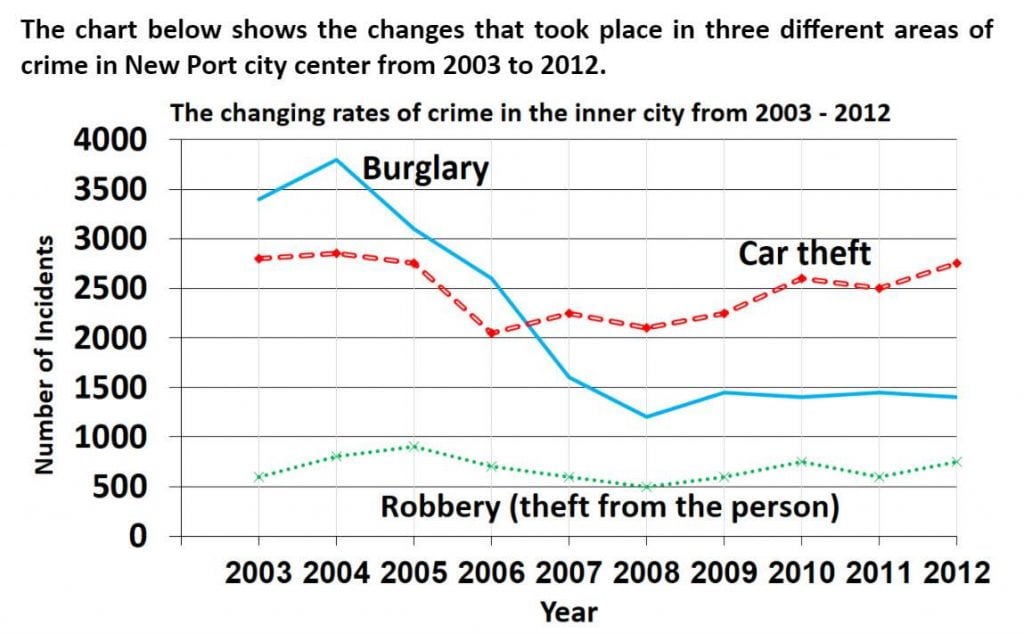
Some people believe more actions can be taken to prevent crime, while others think that little can be done.
Discuss both sides and give your own opinion.
Many concerned parties today feel that crime has already been reduced as much as is realistically possible. While I agree this may be true in nations where security is prioritized over privacy rights, there is still tremendous progress that can be made globally.
Those who argue crime no longer needs addressing point to technological innovations. This situation is most apparent in authoritarian nations. Security surveillance can include the use of street cameras, digital tracking, and eavesdropping on private communications. For instance, in South Korea the crime rate in most urban areas is negligible and the average person reports little anxiety about possible criminality, in contrast to periods in the past when there were more instances of robbery, assault, theft, pickpocketing, and so on. These technological shifts have greatly aided law enforcement in prosecuting criminals thereby also increasing the deterrence of potential offences.
However, crime still exists and can be countered by addressing the deeper, societal roots. The main cause of all crime is poverty. When individuals earn a wage sufficient to maintain a decent standard of living, the entire motive for most crimes disappears. The evidence for this is that in wealthy countries where there is a relatively even distribution of wealth, the crime rates are low and the police do not require draconian punishment or surveillance techniques. Beyond income, it is also possible to invest in improving mental health. Many people today spend too much time online and are vulnerable to extremist views. A still significant proportion of crimes could be eliminated by encouraging people to spend more time outdoors in their community.
In conclusion, though technology has reduced certain kinds of criminality greatly, it is still possible to lower crime rates by embracing a holistic, societal approach. The complete eradication of crime is likely impossible and therefore there will always be a need to make progress.
Analysis
1. Many concerned parties today feel that crime has already been reduced as much as is realistically possible. 2. While I agree this may be true in nations where security is prioritized over privacy rights, there is still tremendous progress that can be made globally.
Paraphrase the overall essay topic.
Write a clear opinion. Read more about introductions here.
1. Those who argue crime no longer needs addressing point to technological innovations. 2. This situation is most apparent in authoritarian nations. 3. Security surveillance can include the use of street cameras, digital tracking, and eavesdropping on private communications. 4. For instance, in South Korea the crime rate in most urban areas is negligible and the average person reports little anxiety about possible criminality, in contrast to periods in the past when there were more instances of robbery, assault, theft, pickpocketing, and so on. 5. These technological shifts have greatly aided law enforcement in prosecuting criminals thereby also increasing the deterrence of potential offences.
Write a topic sentence with a clear main idea at the end.
Explain your main idea.
Develop it with specific or hypothetical examples.
Keep developing it fully.
You might add a counterpoint here.
1. However, crime still exists and can be countered by addressing the deeper, societal roots. 2. The main cause of all crime is poverty. 3. When individuals earn a wage sufficient to maintain a decent standard of living, the entire motive for most crimes disappears. 4. The evidence for this is that in wealthy countries where there is a relatively even distribution of wealth, the crime rates are low and the police do not require draconian punishment or surveillance techniques. 5. Beyond income, it is also possible to invest in improving mental health. 6. Many people today spend too much time online and are vulnerable to extremist views. 7. A still significant proportion of crimes could be eliminated by encouraging people to spend more time outdoors in their community.
Write a new topic sentence with a new main idea at the end.
Explain your new main idea.
Include specific details and examples.
Add as much information as you can and make sure it links logically.
Continue your development.
Vary long and short sentences.
Finish the paragraph strong.
1. In conclusion, though technology has reduced certain kinds of criminality greatly, it is still possible to lower crime rates by embracing a holistic, societal approach. 2. The complete eradication of crime is likely impossible and therefore there will always be a need to make progress.
Summarise your main ideas.
Include a final thought. Read more about conclusions here.
Vocabulary
What do the words in bold below mean?Make some notes on paper to aid memory and then check below.
Many concerned parties today feel that crime has already been reduced as much as is realistically possible. While I agree this may be true in nations where security is prioritized over privacy rights, there is still tremendous progress that can be made globally.
Those who argue crime no longer needs addressing point to technological innovations. This situation is most apparent in authoritarian nations. Security surveillance can include the use of street cameras, digital tracking, and eavesdropping on private communications. For instance, in South Korea the crime rate in most urban areas is negligible and the average person reports little anxiety about possible criminality, in contrast to periods in the past when there were more instances of robbery, assault, theft, pickpocketing, and so on. These technological shifts have greatly aided law enforcement in prosecuting criminals thereby also increasing the deterrence of potential offences.
However, crime still exists and can be countered by addressing the deeper, societal roots. The main cause of all crime is poverty. When individuals earn a wage sufficient to maintain a decent standard of living, the entire motive for most crimes disappears. The evidence for this is that in wealthy countries where there is a relatively even distribution of wealth, the crime rates are low and the police do not require draconian punishment or surveillance techniques. Beyond income, it is also possible to invest in improving mental health. Many people today spend too much time online and are vulnerable to extremist views. A still significant proportion of crimes could be eliminated by encouraging people to spend more time outdoors in their community.
In conclusion, though technology has reduced certain kinds of criminality greatly, it is still possible to lower crime rates by embracing a holistic, societal approach. The complete eradication of crime is likely impossible and therefore there will always be a need to make progress.
Answers
For extra practice, write an antonym (opposite word) on a piece of paper to help you remember the new vocabulary:
Many concerned parties today feel that lots of people think
reduced as much as is realistically possible get it down as low as it can go
this may be true in nations where security is prioritized over privacy rights is the case in countries that care more about being safe than about freedom
still tremendous progress that can be made globally lots that can still be done around the world
crime no longer needs addressing point to technological innovations offenses don’t need to be tackled any more because of new inventions
apparent in authoritarian nations clear in non-Democratic countries
Security surveillance watching people
street cameras CCTV on roads
digital tracking following people on online
eavesdropping on private communications listening in on people
crime rate in most urban areas offenses in cities
negligible not that impactful, minor
reports little anxiety about possible criminality not worried about crime
in contrast to periods in the past when in comparison to earlier times
robbery stealing
assault hurting
theft stealing
pickpocketing taking from people
and so on etc.
technological shifts new inventions, innovations
greatly aided law enforcement in prosecuting criminals really helps police catch offenders
deterrence discouragement
potential offences possible crimes
exists are real
countered by addressing the deeper fixed by dealing with the source/original
societal roots deeper causes
cause reason for
poverty not rich
earn a wage sufficient to maintain a decent standard of living make enough money to live well
entire motive for most crimes disappears reason for the majority of offenses goes away
The evidence for this is that in wealthy countries the support is that in rich nations
relatively even distribution of wealth comparatively equal earnings
low not high
require draconian punishment or surveillance techniques need old fashioned
Beyond income more than just what you earn
invest in improving mental health put money into making sure people are healthy
vulnerable weak
extremist views controversial opinions
still significant proportion still a lot of
eliminated gotten rid of
encouraging motivating
outdoors in their community outside in their neighborhood
greatly tremendously
embracing starting to do
holistic overall, combining everything
societal approach way of addressing all people
The complete eradication of crime getting rid of crime 100%
impossible can’t happen
a need to make progress have to continue advancing
I recommend getting a pencil and piece of paper because that aids memory. Then write down the missing vocabulary from my sample answer in your notebook:
M____________________________________t crime has already been r_______________________________________e. While I agree t___________________________________________________________________s, there is s_______________________________________________________y.
Those who argue c_____________________________________________________________________s. This situation is most a_____________________________________________s. S_______________________e can include the use of s_________________s, d_____________________g, and e_____________________________________s. For instance, in South Korea the c____________________________________s is n________________e and the average person r________________________________________________y, i_______________________________n there were more instances of r__________y, a_________t, t_______t, p_____________________g, a____________n. These t__________________s have g________________________________________________s thereby also increasing the d_______________e of p________________s.
However, crime still e_________s and can be c__________________________________________________s. The main c________e of all crime is p_________y. When individuals e________________________________________________________g, the e__________________________________________________s. T_______________________________________s where there is a r_________________________________________________h, the crime rates are l___w and the police do not r______________________________________________________s. B________________e, it is also possible to i__________________________________h. Many people today spend too much time online and are v______________e to e___________________s. A s_____________________n of crimes could be e________________d by e______________g people to spend more time o___________________________y.
In conclusion, though technology has reduced certain kinds of criminality g_________y, it is still possible to lower crime rates by e_____________g a h______________________________h. T_____________________________e is likely i______________e and therefore there will always be a______________________________s.
Listening Practice
Learn more about this topic by watching from YouTube below and practice with these activities:
Some argue that patriotism is the primary cause of wars globally. Others feel that it serves to prevent less ethical politicians from running a country and starting wars.
Discuss both views and give your opinion.
Many feel that patriotic feelings do more to foment, rather than prevent, conflicts and potential wars. In my opinion, though patriotism can be a positive force in a nation, it is more likely to serve as the justification for armed conflict.
Those who value the benefits of patriotism argue that it is a tool to oppose international interventions. This is most often the case in countries where it is possible for citizens to voice their opinions publicly. A standout example of this would be in the United States as the government is often engaged in unpopular conflicts abroad such as the wars in Vietnam, Iraq, and Afghanistan. Many critics make the argument that the US was originally isolationist and should not now interfere in the affairs of other countries. This appeal to the patriotic roots of the country is persuasive.
However, it is more common for politicians to encourage nationalistic feelings to justify foreign wars. There are examples of this from both the modern era and past historical epochs. For instance, in Medieval Europe there were frequent wars of aggression between France, England, and Spain. The rulers of these countries used both religious and ethnic or nationalistic justifications for either expansion or defensive measures. Over time, patriotism came to be considered a method to distract residents from the domestic situation and motivate them towards a common goal.
In conclusion, despite the legitimate potential advantages of patriotism within a country, I feel that it is more likely to serve as a catalyst for international conflict. In fact, individuals have very little overall impact on whether or not their country enters a war.
Analysis
1. Many feel that patriotic feelings do more to foment, rather than prevent, conflicts and potential wars. 2. In my opinion, though patriotism can be a positive force in a nation, it is more likely to serve as the justification for armed conflict.
Paraphrase the overall essay topic.
Write a clear opinion. Read more about introductions here.
1. Those who value the benefits of patriotism argue that it is a tool to oppose international interventions. 2. This is most often the case in countries where it is possible for citizens to voice their opinions publicly. 3. A standout example of this would be in the United States as the government is often engaged in unpopular conflicts abroad such as the wars in Vietnam, Iraq, and Afghanistan. 4. Many critics make the argument that the US was originally isolationist and should not now interfere in the affairs of other countries. 5. This appeal to the patriotic roots of the country is persuasive.
Write a topic sentence with a clear main idea at the end.
Explain your main idea.
Develop it with specific or hypothetical examples.
Keep developing it fully.
You might add a counterpoint here.
1. However, it is more common for politicians to encourage nationalistic feelings to justify foreign wars. 2. There are examples of this from both the modern era and past historical epochs. 3. For instance, in Medieval Europe there were frequent wars of aggression between France, England, and Spain. 4. The rulers of these countries used both religious and ethnic or nationalistic justifications for either expansion or defensive measures. 5. Over time, patriotism came to be considered a method to distract residents from the domestic situation and motivate them towards a common goal.
Write a new topic sentence with a new main idea at the end.
Explain your new main idea.
Include specific details and examples.
Add as much information as you can and make sure it links logically.
Continue your development.
1. In conclusion, despite the legitimate potential advantages of patriotism within a country, I feel that it is more likely to serve as a catalyst for international conflict. 2. In fact, individuals have very little overall impact on whether or not their country enters a war.
Summarise your main ideas.
Include a final thought. Read more about conclusions here.
Vocabulary
What do the words in bold below mean?Make some notes on paper to aid memory and then check below.
Many feel that patriotic feelings do more to foment, rather than prevent, conflicts and potential wars. In my opinion, though patriotism can be a positive force in a nation, it is more likely to serve as the justification for armed conflict.
Those who value the benefits of patriotism argue that it is a tool to oppose international interventions. This is most often the case in countries where it is possible for citizens to voice their opinions publicly. A standout example of this would be in the United States as the government is often engaged in unpopular conflicts abroad such as the wars in Vietnam, Iraq, and Afghanistan. Many critics make the argument that the US was originally isolationist and should not now interfere in the affairs of other countries. This appeal to the patriotic roots of the country is persuasive.
However, it is more common for politicians to encourage nationalistic feelings to justify foreign wars. There are examples of this from both the modern era and past historical epochs. For instance, in Medieval Europe there were frequent wars of aggression between France, England, and Spain. The rulers of these countries used both religious and ethnic or nationalistic justifications for either expansion or defensive measures. Over time, patriotism came to be considered a method to distract residents from the domestic situation and motivate them towards a common goal.
In conclusion, despite the legitimate potential advantages of patriotism within a country, I feel that it is more likely to serve as a catalyst for international conflict. In fact, individuals have very little overall impact on whether or not their country enters a war.
Answers
For extra practice, write an antonym (opposite word) on a piece of paper to help you remember the new vocabulary:
patriotic feelings being proud of your country
foment create
rather than prevent instead of stop
conflicts fights
potential wars possible fights
patriotism feeling strongly about your country
positive force does good
serve as the justification are the main reason for
armed conflict wars
value importance of
benefits advantages of
argue contend
tool to oppose international interventions method to stop fights abroad
This is most often the case in countries where usually happens in nations in which
voice their opinions publicly protest
A standout example of this would be in the United States as A good instance is in America where
engaged in unpopular conflicts abroad always fighting wars
critics those who argue against
argument contention
originally isolationist before didn’t interfere with other countries
interfere in intervene
affairs situations
appeal try
patriotic roots thinking about the past of your country
persuasive convincing
politicians governments
encourage nationalistic feelings make people love their country more
justify foreign wars give reason to fight abroad
modern era nowadays
past historical epochs past eras
frequent wars of aggression fighting others / attacking others
religious and ethnic or nationalistic justifications reasons related to religion, race, nation
either expansion or defensive measures in order to grow bigger or protect yourself
Over time later on
considered thought of as
distract residents make people not pay attention to
domestic situation how things are in the country
motivate them towards a common goal make them come together
despite regardless of
legitimate potential advantages of real possible benefits from
serve as a catalyst for international conflict be the main reason for wars abroad
In fact actually
very little overall impact on whether or not not much effect on the whole regardless if
I recommend getting a pencil and piece of paper because that aids memory. Then write down the missing vocabulary from my sample answer in your notebook:
Many feel that p___________________s do more to f________t, r____________________t, c___________s and p_____________s. In my opinion, though p___________m can be a p_____________e in a nation, it is more likely to s_______________________________n for a_________________t.
Those who v______e the b____________s of patriotism a_______e that it is a t__________________________________________s. T__________________________________________________________e it is possible for citizens to v____________________________y. A________________________________________________________________s the government is often e____________________________________________d such as the wars in Vietnam, Iraq, and Afghanistan. Many c______s make the a__________t that the US was o____________________t and should not now i________________n the a______s of other countries. This a________l to the p_______________s of the country is p____________e.
However, it is more common for p___________s to e___________________________________s to j__________________s. There are examples of this from both the m______________a and p________________________s. For instance, in Medieval Europe there were f______________________________n between France, England, and Spain. The rulers of these countries used both r____________________________________________s for e_______________________________________________s. O_________e, patriotism came to be c______________d a method to d_______________s from the d____________________n and m___________________________________l.
In conclusion, d______e the l____________________________________________f patriotism within a country, I feel that it is more likely to s_________________________________________________t. I_______t, individuals have v_______________________________________________t their country e______________r.
Listening Practice
Learn more about this topic by watching from YouTube below and practice with these activities:
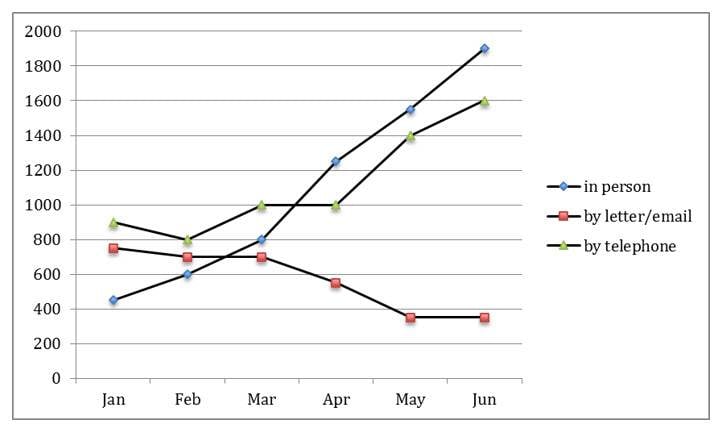
The chart shows requests for information at a tourist office in the United Kingdom from January to June.
The line chart details the frequency of requests in person, by letter/email, and by telephone at a UK tourist office in the first 6 months of a given year. Looking from an overall perspective, it is readily apparent that in-person requests increased from the least to most common over the period, overtaking telephone, which also rose. Information requests by email and letter declined and were by far the least frequent by the end of the time surveyed.
In January, in-person information requests were the lowest of all 3 categories at approximately 420. In contrast, written requests and telephone calls stood at 770 and 900 in turn. By mid-March, in-person questions (1,000) had surpassed other queries, an upwards trend that persisted and culminated at 1,900 to finish the period.
In comparison, telephone requests fluctuated between 800 and 1,000 until the beginning of April prior to growing sharply to end just behind in-person requests at 1,600. Letter and email requests fell marginally until March (to 700), before a steep drop, and a levelling off at 400 from May to June.
Analysis
1. The line chart details the frequency of requests in person, by letter/email, and by telephone at a UK tourist office in the first 6 months of a given year. 2. Looking from an overall perspective, it is readily apparent that in-person requests increased from the least to most common over the period, overtaking telephone, which also rose. 3. Information requests by email and letter declined and were by far the least frequent by the end of the time surveyed.
Paraphrase what the bar chart shows.
Write a clear overview summarising the differences.
This one is a little complex so it needs a second sentence for the overview.
1. In January, in-person information requests were the lowest of all 3 categories at approximately 420. 2. In contrast, written requests and telephone calls stood at 770 and 900 in turn. 3. By mid-March, in-person questions (1,000) had surpassed other queries, an upwards trend that persisted and culminated at 1,900 to finish the period.
Begin writing about the data for the first categories.
Compare between each sentence.
Make sure all the data is included.
1. In comparison, telephone requests fluctuated between 800 and 1,000 until the beginning of April prior to growing sharply to end just behind in-person requests at 1,600. 2. Letter and email requests fell marginally until March (to 700), before a steep drop, and a levelling off at 400 from May to June.
Write about the final other parts of the graph – include everything!
Compare the categories.
Vocabulary
What do the words in bold below mean?Make some notes on paper to aid memory and then check below.
The line chart details the frequency of requests in person, by letter/email, and by telephone at a UK tourist office in the first 6 months of a given year. Looking from an overall perspective, it is readily apparent that in-person requests increased from the least to most common over the period, overtaking telephone, which also rose. Information requests by email and letter declined and were by far the least frequent by the end of the time surveyed.
In January, in-person information requests were the lowest of all 3 categories at approximately 420. In contrast, written requests and telephone calls stood at 770 and 900 in turn. By mid-March, in-person questions (1,000) had surpassed other queries, an upwards trend that persisted and culminated at 1,900 to finish the period.
In comparison, telephone requests fluctuated between 800 and 1,000 until the beginning of April prior togrowing sharply to end just behind in-person requests at 1,600. Letter and email requests fell marginally until March (to 700), before a steep drop, and a levelling off at 400 from May to June.
Answers
For extra practice, write an antonym (opposite word) on a piece of paper to help you remember the new vocabulary:
details shows
frequency how often it happens
requests in person questions asked face to face
by letter/email sending written questions
UK tourist office in a traveler’s department in the United Kingdom
first 6 months of a given year from January to July
Looking from an overall perspective, it is readily apparent that overall
from the least to most common over the period not happening as much the whole time
overtaking becoming more common
Information requests questions for details
declined went down
by far the least frequent by the end of the time surveyed didn’t happen as much by the finish
lowest the least
approximately around
In contrast in comparison
stood at were at
in turn respectively
mid-March the middle of March
surpassed overtook
queries questions
upwards trend pattern going up
persisted continued
culminated finished
finish the period ended the time
In comparison in contrast
fluctuated between … and … until the beginning of April prior togrowing sharply went up and down after April until it increased quickly
end just behind finish a little less than
fell marginally until went down a little up to
before a steep drop preceding a big fall
a levelling off at … from …. to …. steady from one number to another
I recommend getting a pencil and piece of paper because that aids memory. Then write down the missing vocabulary from my sample answer in your notebook:
The line chart d________s the f___________y of r_________________n, b______________l, and by telephone at a U___________________n the f______________________r. L_______________________________________________________t in-person requests increased f_________________________________________________d, o_________g telephone, which also rose. I_________________________s by email and letter d_________d and were b______________________________________________________________d.
In January, in-person information requests were the l_________t of all 3 categories at a___________y 420. I________t, written requests and telephone calls s__________t 770 and 900 i_______n. By m__________h, in-person questions (1,000) had s_____________d other q________s, an u______________d that p_____________d and c___________d at 1,900 to f_________________d.
I______________n, telephone requests f______________________________________________________________________________________y to e________________d in-person requests at 1,600. Letter and email requests f___________________l March (to 700), b________________p, and a_____________t 400 f_____m May t__ June.
Listening Practice
Learn more about this topic by watching from YouTube below and practice with these activities:
"The highest quality materials anywhere on the internet! Dave improved my writing and vocabulary so much. Really affordable options you don't want to miss out on!"