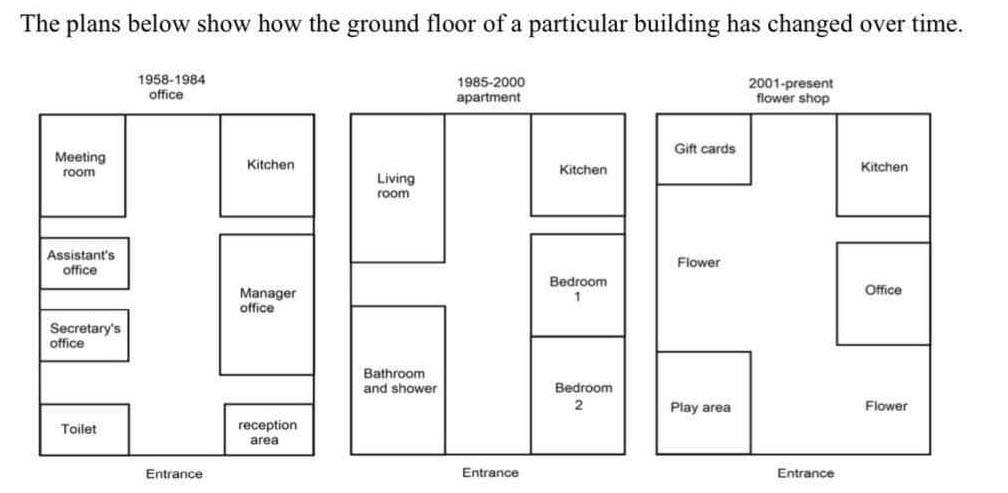
The floorplan shows how a building has changed from 1958 to the present day. Looking from an overall perspective, it is readily apparent that the building has served both commercial and residential purposes with the only area remaining unchanged being the kitchen. At present, the flower shop has a more open layout relative to when it was an apartment and office.
In 1958, the building was used as an office with a meeting room in the top left corner of the floorplan, an assistant’s and secretary’s office below there and a toilet in the bottom left corner. In 1985, the meeting room was extended and turned into a living room and a large bathroom and shower took the place of the offices and toilet. The florist shop contained a gift card room in the top left, above a large open space for flowers and a play area in the bottom left corner.
On the right side, the kitchen in the top corner was unaltered across all iterations of the ground floor. In comparison, there was a manager’s office on the right hand side and a reception area in the bottom corner. These spaces were allocated for bedrooms in the apartment and are now an office and additional space for flowers.
Analysis
1. The floorplan shows how a building has changed from 1958 to the present day. 2. Looking from an overall perspective, it is readily apparent that the building has served both commercial and residential purposes with the only area remaining unchanged being the kitchen. 3. At present, the flower shop has a more open layout relative to when it was an apartment and office.
Paraphrase what the map shows.
Write a clear overview summarising the differences.
Add a second sentence to make sure everything is covered.
1. In 1958, the building was used as an office with a meeting room in the top left corner of the floorplan, an assistant’s and secretary’s office below there and a toilet in the bottom left corner. 2. In 1985, the meeting room was extended and turned into a living room and a large bathroom and shower took the place of the offices and toilet. 3. The florist shop contained a gift card room in the top left, above a large open space for flowers and a play area in the bottom left corner.
Begin writing about the map.
Make sure you compare as much as possible.
Don’t leave anything out.
1. On the right side, the kitchen in the top corner was unaltered across all iterations of the ground floor. 2. In comparison, there was a manager’s office on the right hand side and a reception area in the bottom corner. 3. These spaces were allocated for bedrooms in the apartment and are now an office and additional space for flowers.
Write about the final, other parts of the map – include everything!
Compare the categories.
Add in everything, even what has not changed.
Vocabulary
What do the words in bold below mean?Take some notes on a piece of paper to aid your memory:
The floorplan shows how a building has changed from 1958 to the present day. Looking from an overall perspective, it is readily apparent that the building has served both commercial and residential purposes with the only area remaining unchanged being the kitchen. At present, the flower shop has a more open layout relative to when it was an apartment and office.
In 1958, the building was used as an office with a meeting room in the top left corner of the floor, an assistant’s and secretary’s office below there and a toilet in the bottom left corner. In 1985, the meeting room was extended and turned into a living room and a large bathroom and shower took the place of the offices and toilet. The florist shop contained a gift card room in the top left, above a large open space for flowers and a play area in the bottom left corner.
On the right side, the kitchen in the top corner was unaltered across all iterations of the ground floor. In comparison, there was a manager’s office on the right hand side and a reception area in the bottom corner. These spaces were allocated for bedrooms in the apartment and are now an office and additional space for flowers.
Answers
Try to write down or think of an antonym/opposite word for further practice:
floorplan blueprint
from … to the present day starting then up until now
Looking from an overall perspective, it is readily apparent that overall
served both commercial and residential purposes was for business and for living
remaining unchanged was not altered
At present now
open layout lots of space
relative to when compared to the time
meeting room place to meet
top left corner northwest
assistant’s people helping out
secretary’s office below assistant’s working space under that
bottom left corner southwest
extended lengthened
turned into transformed into
took the place of replaced
florist shop contained flower shop has
gift cardroom place to sell cards
play area where kid’s can play
unaltered across all iterations of the ground floor didn’t change through the years
In comparison compared to that
manager’s boss’s
on the right hand side to the right
reception area area to get help from a receptionist
Remember and fill in the blanks. Note it on a piece of paper so you can remember better:
The f_________n shows how a building has changed f____m 1958 t_________________y. L______________________________________________________________t the building has s_____________________________________________s with the only area r_____________________d being the kitchen. A_________________t, the flower shop has a more o_____________________________n it was an apartment and office.
In 1958, the building was used as an office with a m_________________m in the t______________r of the floor, an a_______________s and s________________________w there and a toilet in the b__________________r. In 1985, the meeting room was e___________d and t______________o a living room and a large bathroom and shower t___________________f the offices and toilet. The f______________________d a g__________d room in the top left, above a large open space for flowers and a p__________a in the bottom left corner.
On the right side, the kitchen in the top corner was u______________________________________________________r. I_______________n, there was a m___________s office o___________________e and a r_____________a in the bottom corner. These spaces were a______________r bedrooms in the apartment and are now an office and a_______________l space for flowers.
Listening Practice
Listen to the related topic below and practice with these activities:
Some believe that students should begin learning a language very early in school while others think these subjects should be taught later.
Discuss both sides and give your own opinion.
Many have argued that the earlier students begin learning a language in school the better. Although this can pose challenges for schools, I am in complete agreement with this opinion.
Those against early foreign language courses contend it is not always practical. In many school systems, the cost of such courses can be prohibitive. More specifically, in more remote areas, teachers will often not have the ability to teach another language and it may be difficult to recruit foreign native language speakers. If the schools teach a foreign language anyway, then they will have to rely largely on textbooks and the classes are not likely to be as productive. This reality can create a situation where wealthier school districts receive a disproportionately superior education.
However, even when the conditions are not ideal, there is tremendous value in learning a language early relative to learning it later in life. Studies have shown that languages can be acquired far more easily early in one’s education. As a person gets older, the muscles in the mouth become more fixed making it more difficult to pronounce sounds from another language similar to a native speaker. Their brains are also less flexible and this is clearly evidenced in the considerably slower progress for adults when learning a new language. Attempting to acquire another language younger therefore has greater overall value for any given individual.
In conclusion, the effectiveness of early language acquisition justifies its inclusion in curricula at all schools. This educational reform should be a priority.
Analysis
1. Many have argued that the earlier students begin learning a language in school the better. 2. Although this can pose challenges for schools, I am in complete agreement with this opinion.
Paraphrase the overall essay topic.
Write a clear opinion. Read more about introductions here.
1. Those against early foreign language courses contend it is not always practical. 2. In many school systems, the cost of such courses can be prohibitive. 3. More specifically, in more remote areas, teachers will often not have the ability to teach another language and it may be difficult to recruit foreign native language speakers. 4. If the schools teach a foreign language anyway, then they will have to rely largely on textbooks and the classes are not likely to be as productive. 5. This reality can create a situation where wealthier school districts receive a disproportionately superior education.
Write a topic sentence with a clear main idea at the end.
Explain your main idea.
Develop it with specific or hypothetical examples.
Keep developing it fully.
The more detail, the better!
1. However, even when the conditions are not ideal, there is tremendous value in learning a language early relative to learning it later in life. 2. Studies have shown that languages can be acquired far more easily early in one’s education. 3. As a person gets older, the muscles in the mouth become more fixed making it more difficult to pronounce sounds from another language similar to a native speaker. 4. Their brains are also less flexible and this is clearly evidenced in the considerably slower progress for adults when learning a new language. 5. Attempting to acquire another language younger therefore has greater overall value for any given individual.
Write a new topic sentence with a new main idea at the end.
Explain your new main idea.
Include specific details and examples.
Add as much information as you can and make sure it links logically.
Keep adding in the result to develop your ideas more.
1. In conclusion, the effectiveness of early language acquisition justifies its inclusion in curricula at all schools. 2. This educational reform should be a priority.
Summarise your main ideas.
Include a final thought. Read more about conclusions here.
Vocabulary
What do the words in bold below mean?Make some notes on paper to aid memory and then check below.
Many have argued thatthe earlier students begin learning a language in school the better. Although this can pose challenges for schools, I am in complete agreement with this opinion.
Those against early foreign language courses contend it is not always practical. In many school systems, the cost of such courses can be prohibitive. More specifically, in more remote areas, teachers will often not have the ability to teach another language and it may be difficult to recruit foreign native language speakers. If the schools teach a foreign language anyway, then they will have to rely largely ontextbooks and the classes are not likely to be as productive. This reality can create a situation where wealthier school districts receive a disproportionately superior education.
However, even when the conditions are not ideal, there is tremendous value in learning a language early relative to learning it later in life. Studies have shown that languages can be acquired far more easily early in one’s education. As a person gets older, the muscles in the mouth become more fixed making it more difficult to pronounce sounds from another language similar to a native speaker. Their brains are also less flexible and this is clearly evidenced in the considerably slower progress for adults when learning a new language. Attempting to acquire another language younger therefore has greater overall value for any given individual.
In conclusion, the effectiveness of early language acquisition justifies its inclusion in curricula at all schools. This educational reform should be a priority.
Answers
For extra practice, write an antonym (opposite word) on a piece of paper to help you remember the new vocabulary:
Many have argued that lots of people think that
the earlier … the better sooner in life is superior
Although but
pose challenges creates problems
I am in complete agreement with this opinion I agree 100%
contend argue
practical works, is possible
school systems the schools in a specific town/district
courses classes
prohibitive prevent you from doing it
More specifically in particular
in more remote areas in the countryside
recruit foreign native language speakers find teachers from other countries
rely largely ontextbooks use books too much
productive efficient
reality situation, fact
create a situation lead to the problem
where wealthier school districts in which richer schools
receive a disproportionately superior education have better schools
even when in the case that
conditions situations
not ideal bad
tremendous value in lots of importance in
relative to learning it later in life compared to learning later on
Studies have shown that research indicates that
acquired far more easily learned more efficiently
As a person gets older as you age
muscles parts of the mouth
fixed unable to change
pronounce sounds from articulate, say
similar to a native speaker not that different from a foreigner
less flexible more rigid, fixed
this is clearly evidenced in this is definitely the case
considerably slower progress for not nearly as fast
Attempting trying
acquire get
greater overall value more importance
any given individual a person
effectiveness how well it works
early language acquisition justifies learning a language early in life is reasonable because
inclusion adding it to
curricula what is learned in class
educational reform changes to school
priority important
Vocabulary Practice
I recommend getting a pencil and piece of paper because that aids memory. Then write down the missing vocabulary from my sample answer in your notebook:
M________________________tt_______________r students begin learning a language in school t______________r. A__________h this can p____________________s for schools, I_______________________________________________n.
Those against early foreign language courses c__________d it is not always p_________l. In many s_____________s, the cost of such c_________s can be p____________e. M_____________y, i_________________________s, teachers will often not have the ability to teach another language and it may be difficult to r____________________________________s. If the schools teach a foreign language anyway, then they will have to r_____________________________s and the classes are not likely to be as p___________e. This r________y can c_______________________________e w___________________________________________________________________________________n.
However, e_________n the c__________s are n__________l, there is t__________________n learning a language early r_____________o l____________________e. S__________________t languages can be a____________________y early in one’s education. A____________________r, the m______s in the mouth become more f_____d making it more difficult to p_______________________m another language s________________________r. Their brains are also l_____________e and t______________________n the c___________________________r adults when learning a new language. A___________g to a_________e another language younger therefore has g___________________e for a_________________________l.
In conclusion, the e___________________s of e___________________________s its i___________n in c___________a at all schools. This e____________________m should be a p___________y.
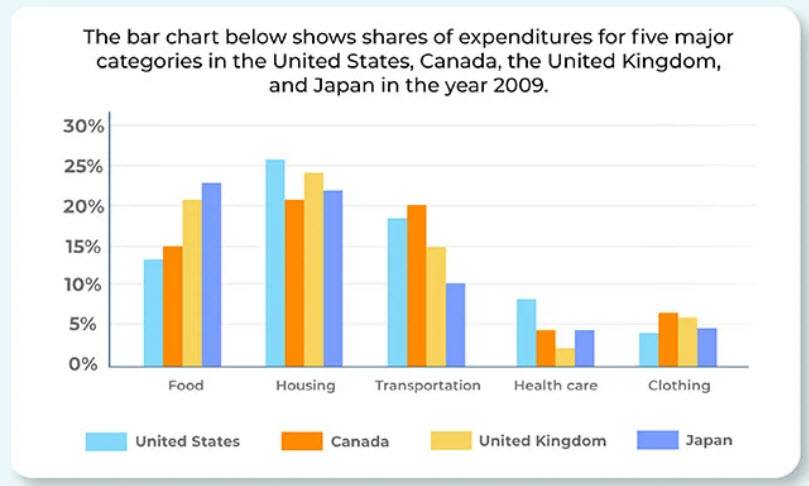
The bar chart describes spending in five lifestyle categories for residents of four different nations in 2009. Looking from an overall perspective, it is readily apparent that housing, food, and transportation are the biggest expenses in nearly all countries, with those in the United States spending the most on their homes and those in Japan the most on food. Healthcare and clothing are smaller expenses and transportation is a greater expenditure than food in only Canada and the US.
Expenditure on food ranges from a low of 14% in the United States to a high of 22% for Japan, with Canada (15%) and the UK (21%) in between. Housing costs represented at least a slightly higher percentage in all countries: 26% in the US, 24% in the UK, 21% in Japan, and 20% in Canada. The numbers were more variable for transportation as Canada stood at 20%, just above the USA at 19% while the UK and Japan were lower at 15% and 10%, respectively.
In terms of healthcare, by far the most is allocated for medical expenses in the USA (8%) while all other countries are below 5%. For clothing, Canada spends the most of their income (7%), followed by the UK (6%), Japan (4%), and finally the United States (3%).
Analysis
1. The bar chart describes spending in five lifestyle categories for residents of four different nations in 2009. 2. Looking from an overall perspective, it is readily apparent that housing, food, and transportation are the biggest expenses in nearly all countries, with those in the United States spending the most on their homes and those in Japan the most on food. 3. Healthcare and clothing are smaller expenses and transportation is a greater expenditure than food in only Canada and the US.
Paraphrase what the bar chart shows.
Write a clear overview summarising the differences and the overall trend.
This one is a little complex so it needs a second sentence for the overview.
1. Expenditure on food ranges from a low of 14% in the United States to a high of 22% for Japan, with Canada (15%) and the UK (21%) in between. 2. Housing costs represented at least a slightly higher percentage in all countries: 26% in the US, 24% in the UK, 21% in Japan, and 20% in Canada. 3. The numbers were more variable for transportation as Canada stood at 20%, just above the USA at 19% while the UK and Japan were lower at 15% and 10%, respectively.
Begin writing about the data for the first categories.
Compare between each sentence.
One paragraph can be longer than the other.
1. In terms of healthcare, by far the most is allocated for medical expenses in the USA (8%) while all other countries are below 5%. 2. For clothing, Canada spends the most of their income (7%), followed by the UK (6%), Japan (4%), and finally the United States (3%).
Write about the final other parts of the graph – include everything!
Compare the categories.
Add as much detail as possible.
Keep comparing…
This one is a bit long, but better than being too short!
Vocabulary
What do the words in bold below mean?Make some notes on paper to aid memory and then check below.
The bar chart describes spending in five lifestyle categories for residents of four different nations in 2009. Looking from an overall perspective, it is readily apparent that housing, food, and transportation are the biggest expenses in nearly all countries, with those in the United States spending the most on their homes and those in Japan the most on food. Healthcare and clothing are smaller expenses and transportation is a greater expenditure than food in only Canada and the US.
Expenditure on food ranges from a low of 14% in the United States to a high of 22% for Japan, with Canada (15%) and the UK (21%) in between. Housing costs represented at least a slightly higher percentage in all countries: 26% in the US, 24% in the UK, 21% in Japan, and 20% in Canada. The numbers were more variable for transportation as Canada stood at 20%, just above the USA at 19% while the UK and Japan were lower at 15% and 10%, respectively.
In terms of healthcare, by far the most is allocated for medical expenses in the USA (8%) while all other countries are below 5%. For clothing, Canada spends the most of their income (7%), followed by the UK (6%), Japan (4%), and finally the United States (3%).
Answers
For extra practice, write an antonym (opposite word) on a piece of paper to help you remember the new vocabulary:
describes spending shows how much money is used
categories areas
residents people living there
Looking from an overall perspective, it is readily apparent that overall
biggest expenses what is spent on the most
nearly almost
Healthcare hospitals, doctors, etc.
greater expenditure than more spent on
ranges from a low of goes from … to …
a high of the most at
in between in the middle
represented at least a slightly higher percentage was a little bit more
I recommend getting a pencil and piece of paper because that aids memory. Then write down the missing vocabulary from my sample answer in your notebook:
The bar chart d__________________g in five lifestyle c___________s for r____________s of four different nations in 2009. L__________________________________________________________________________t housing, food, and transportation are the b______________s in n________y all countries, with those in the United States spending the most on their homes and those in Japan the most on food. H_____________e and clothing are smaller expenses and transportation is a g_________________________n food in only Canada and the US.
Expenditure on food r____________________f 14% in the United States to a_________f 22% for Japan, with Canada (15%) and the UK (21%) i____________n. Housing costs r_______________________________________e in all countries: 26% in the US, 24% in the UK, 21% in Japan, and 20% in Canada. The numbers were more v________e for transportation as Canada s________t 20%, j_________e the USA at 19% w_____e the UK and Japan were l_______r at 15% and 10%, r____________y.
I_______________f healthcare, b_______r the most is a_________d for m______________s in the USA (8%) while all other countries are below 5%. For clothing, Canada spends the most of their i___________e (7%), f___________y the UK (6%), Japan (4%), and f_________y the United States (3%).
Listening Practice
Learn more about this topic by watching from YouTube below and practice with these activities:
Some people prefer to spend their lives doing the same things and avoiding change. Others, however, think that change is always a good thing.
Discuss both these views and give your own opinion.
While many people are justifiably resistant to the idea of change, others embrace it as a driving force for growth. In my opinion, change is not inherently progress and should not be pursued in all situations.
Those who argue in favor of change point out that when a person changes, they are likely to grow in a positive direction. This is evident as a person grows through stages of childhood and adolescence and becomes more mature and intelligent. The same fact applies when a person is an adult as reconsidering one’s biases, opinions, and habits can lead to healthy, upward personal development. One further instance of this relates to relationships. A person who has experience with multiple relationships will likely have developed their emotional intelligence and ability to be a healthy partner to someone else.
However, change is not necessarily related to personal growth. This fact is best illustrated through the everyday examples. A person who changes jobs is not guaranteed to learn more in a new position or company and may even come to regret moving on. It is more likely that someone who remains at a single job will be able to progress at that company into a variety or roles and grow. This is also the case when it comes to travel or moving to a new home. Individuals who travel learn more about the world but may neglect their own personal growth as a consequence. By staying in one city or country, a person can better understand themselves and their neighbors and make deeper and longer-lasting personal progress.
In conclusion, despite the fact that change can be a catalyst for healthy personal growth, it should not be regarded as intrinsically positive. Individuals should seek to grow as people but not always alter the material circumstances around them.
Analysis
1. While many people are justifiably resistant to the idea of change, others embrace it as a driving force for growth. 2. In my opinion, change is not inherently progress and should not be pursued in all situations.
Paraphrase the overall essay topic.
Write a clear opinion. Read more about introductions here.
1. Those who argue in favor of change point out that when a person changes, they are likely to grow in a positive direction. 2. This is evident as a person grows through stages of childhood and adolescence and becomes more mature and intelligent. 3. The same fact applies when a person is an adult as reconsidering one’s biases, opinions, and habits can lead to healthy, upward personal development. 4. One further instance of this relates to relationships. 5. A person who has experience with multiple relationships will likely have developed their emotional intelligence and ability to be a healthy partner to someone else.
Write a topic sentence with a clear main idea at the end.
Explain your main idea.
Develop it with specific or hypothetical examples.
Keep developing it fully.
The more detail, the better!
1. However, change is not necessarily related to personal growth. 2. This fact is best illustrated through the everyday examples. 3. A person who changes jobs is not guaranteed to learn more in a new position or company and may even come to regret moving on. 4. It is more likely that someone who remains at a single job will be able to progress at that company into a variety or roles and grow. 5. This is also the case when it comes to travel or moving to a new home. 6. Individuals who travel learn more about the world but may neglect their own personal growth as a consequence. 7. By staying in one city or country, a person can better understand themselves and their neighbors and make deeper and longer-lasting personal progress.
Write a new topic sentence with a new main idea at the end.
Explain your new main idea.
Include specific details and examples.
Add as much information as you can and make sure it links logically.
Keep adding in the result to develop your ideas more.
This paragraph can be longer.
Finish the paragraph strong.
1. In conclusion, despite the fact that change can be a catalyst for healthy personal growth, it should not be regarded as intrinsically positive. 2. Individuals should seek to grow as people but not always alter the material circumstances around them.
Summarise your main ideas.
Include a final thought. Read more about conclusions here.
Vocabulary
What do the words in bold below mean?Make some notes on paper to aid memory and then check below.
While many people are justifiably resistant to the idea of change, others embrace it as a driving force for growth. In my opinion, change is not inherently progress and should not be pursued in all situations.
Those who argue in favor of change point out that when a person changes, they are likely to grow in a positive direction. This is evident as a person grows through stages of childhood and adolescence and becomes more mature and intelligent. The same fact applies when a person is an adult as reconsidering one’s biases, opinions, and habits can lead to healthy, upward personal development. One further instance of this relates to relationships. A person who has experience with multiple relationships will likely have developed their emotional intelligence and ability to be a healthy partner to someone else.
However, change is not necessarily related to personal growth. This fact is best illustrated through the everyday examples. A person who changes jobs is not guaranteed to learn more in a new position or company and may even come to regret moving on. It is more likely that someone who remains at a single job will be able to progress at that company into a variety or roles and grow. This is also the case when it comes to travel or moving to a new home. Individuals who travel learn more about the world but may neglect their own personal growth as a consequence. By staying in one city or country, a person can better understand themselves and their neighbors and make deeper and longer-lasting personal progress.
In conclusion, despite the fact that change can be a catalyst for healthy personal growth, it should not be regarded as intrinsically positive. Individuals should seek to grow as people but not always alter the material circumstances around them.
Answers
For extra practice, write an antonym (opposite word) on a piece of paper to help you remember the new vocabulary:
justifiably resistant to the idea of change good reason to not want to do things differently
embrace accept
driving force for growth the motivation behind change/progress
not inherently progress doesn’t necessarily mean you are improving
not be pursued in all situations not a goal all the time
Those who argue in favor of people who support
grow in a positive direction progress
evident clear
through stages of childhood and adolescence as you get older
mature smarter, wiser, older
intelligent smarter
The same fact applies when it is also true as
adult older person
reconsidering thinking about again
biases opinions
healthy, upward personal development growing
One further instance of this relates to another example is
multiple relationships going out with lots of people
emotional intelligence understanding others well
healthy partner good person in a relationship
not necessarily related to doesn’t always have anything to do with
This fact is best illustrated through the everyday examples this truth can be supported by normal instances in life
not guaranteed to not for sure going to happen
position job
come to regret moving on will eventually not feel good about changing
remains at a single job stays at one occupation
into a variety or roles and grow in different positions and get better
neglect not pay attention to
personal growth as a consequence grow as a person because of that
make deeper and longer-lasting personal progress grow more personally
despite the fact that regardless of the truth that
catalyst cause of
intrinsically positive definitely good
alter the material circumstances around them change your job, home, etc.
Vocabulary Practice
I recommend getting a pencil and piece of paper because that aids memory. Then write down the missing vocabulary from my sample answer in your notebook:
While many people are j__________________________________________e, others e________e it as a d_________________________h. In my opinion, change is n_______________________________________s and should n_____________________________s.
T_________________________f change point out that when a person changes, they are likely to g________________________________n. This is e________t as a person grows t______________________________e and becomes more m_______e and i__________t. T_____________________________n a person is an a______t as r_______________g one’s b_____s, opinions, and habits can lead to h_________________________________________t. O_____________________________________o relationships. A person who has experience with m_______________s will likely have developed their e___________________________e and ability to be a h_______________r to someone else.
However, change is n_____________________________o personal growth. T_____________________________________________________________s. A person who changes jobs is n__________________o learn more in a new p__________n or company and may even c__________________________________n. It is more likely that someone who r______________________b will be able to progress at that company i_______________________________w. This is also the case when it comes to travel or moving to a new home. Individuals who travel learn more about the world but may n________t their own p_________________________________________e. By staying in one city or country, a person can better understand themselves and their neighbors and m____________________________________________s.
In conclusion, d____________________t change can be a c_________t for healthy personal growth, it should not be regarded as i_______________________________e. Individuals should seek to grow as people but not always a_______________________________________________m.
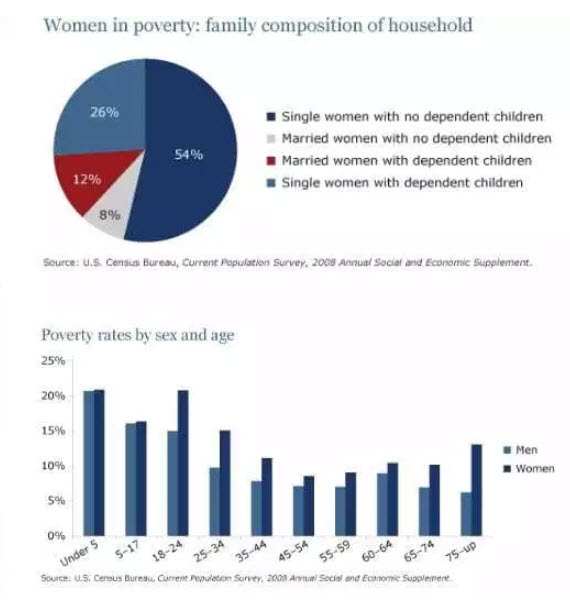
The pie chart shows women in poverty in the United States and bar chart compares poverty rates by gender.
The pie chart gives statistics for the status of women in poverty and the bar chart breaks down poverty by gender and age demographics in 2008. Looking from an overall perspective, it is readily apparent that the majority of women in poverty are single without children, followed by single with children, and much more distantly by married women with or without offspring. In terms of gender and age, younger people and women were more likely to be in poverty, particularly female young adults and the elderly.
Looking first of all at the pie chart, an overwhelming 54% of women in poverty were unmarried without children. This figure was more than double that of single females with children (26%) and considerably above married women with dependents (12%) and married women lacking any children (8%).
In terms of the rate of poverty relating to gender and age, more than 20% of those under the age of 5 were in poverty for both sexes. Poverty rates then generally declined for men and women until the age of 45 – 54 to relative lows of 7% and 6%, respectively. The exception was that over 20% of women aged 18 – 24 are in poverty, equal to the peak of the youngest demographic. After the age of 54, poverty likelihood for men rose to 9% for those aged 60-64 and then dropped to 5% for those over 75. For women, poverty levels rose more steadily to reach 12% for the oldest age group.
Analysis
1. The pie chart gives statistics for the status of women in poverty and the bar chart breaks down poverty by gender and age demographics in 2008. 2. Looking from an overall perspective, it is readily apparent that the majority of women in poverty are single without children, followed by single with children, and much more distantly by married women with or without offspring. 3. In terms of gender and age, younger people and women were more likely to be in poverty, particularly female young adults and the elderly.
Paraphrase what the bar chart shows.
Write a clear overview summarising the differences and the overall trend.
This one is a little complex so it needs a second sentence for the overview.
1. Looking first of all at the pie chart, an overwhelming 54% of women in poverty were unmarried without children. 2. This figure was more than double that of single females with children (26%) and considerably above married women with dependents (12%) and married women lacking any children (8%).
Begin writing about the data for the first categories.
Compare between each sentence.
1. In terms of the rate of poverty relating to gender and age, more than 20% of those under the age of 5 were in poverty for both sexes. 2. Poverty rates then generally declined for men and women until the age of 45 – 54 to relative lows of 7% and 6%, respectively. 3. The exception was that over 20% of women aged 18 – 24 are in poverty, equal to the peak of the youngest demographic. 4. After the age of 54, poverty likelihood for men rose to 9% for those aged 60-64 and then dropped to 5% for those over 75. 5. For women, poverty levels rose more steadily to reach 12% for the oldest age group.
Write about the final other parts of the graph – include everything!
Compare the categories.
Add as much detail as possible.
Keep comparing…
This one is a bit long, but better than being too short!
Vocabulary
What do the words in bold below mean?Make some notes on paper to aid memory and then check below.
The pie chart gives statistics for the status of women in poverty and the bar chart breaks down poverty by gender and age demographics in 2008. Looking from an overall perspective, it is readily apparent that the majority of women in poverty are single without children, followed by single with children, and much more distantly by married women with or without offspring. In terms of gender and age, younger people and women were more likely to be in poverty, particularly female young adults and the elderly.
Looking first of all at the pie chart, an overwhelming 54% of women in poverty were unmarried without children. This figure was more than double that of single females with children (26%) and considerably above married women with dependents (12%) and married women lacking any children (8%).
In terms of the rate of poverty relating to gender and age, more than 20% of those under the age of 5 were in poverty for both sexes. Poverty rates then generally declined for men and women until the age of 45 – 54 to relative lows of 7% and 6%, respectively. The exception was that over 20% of women aged 18 – 24 are in poverty, equal to the peak of the youngest demographic. After the age of 54, poverty likelihood for men rose to 9% for those aged 60-64 and then dropped to 5% for those over 75. For women, poverty levels rose more steadily to reach 12% for the oldest age group.
Answers
For extra practice, write an antonym (opposite word) on a piece of paper to help you remember the new vocabulary:
gives statistics for provide data for
status married / have children
in poverty poor, don’t have money
breaks down is categorized by
gender man or woman
age demographics how old they are
Looking from an overall perspective, it is readily apparent that overall
majority most of
single without children not kids, not married
followed by after that
much more distantly by a lot further by
with or without offspring having or not having kids
In terms of concerning
particularly especially
elderly old people
Looking first of all at when it comes to
overwhelming much bigger/stronger
unmarried no husband/wife
figure data
more than double that of 50%+
considerably above much higher than
dependents people who rely on you
lacking not having
the rate of poverty how common it is to be poor
sexes genders
generally declined mostly went down
relative lows near the lowest points
respectively in turn
exception not true in this one case
equal to the same as
peak high point
After the age of past the age
likelihood chance
dropped to fell to
poverty levels rose more steadily to reach how poor people were increase consistently to get to
I recommend getting a pencil and piece of paper because that aids memory. Then write down the missing vocabulary from my sample answer in your notebook:
The pie chart g___________________________r the s_______s of women i________________y and the bar chart b___________n poverty by g________r and a__________________cs in 2008. L__________________________________________________t the m_________y of women in poverty are s_________________n, f_____________y single with children, and m_________________y married women w_____________________g. I_______________f gender and age, younger people and women were more likely to be in poverty, p_______________y female young adults and the e________y.
L______________________t the pie chart, an o_______________g 54% of women in poverty were u____________d without children. This f_______e was m_____________________f single females with children (26%) and c____________________e married women with d_______________s (12%) and married women l________g any children (8%).
In terms of t_____________________y relating to gender and age, more than 20% of those under the age of 5 were in poverty for both s_______s. Poverty rates then g____________d for men and women until the age of 45 – 54 to r___________________s of 7% and 6%, r______________y. The e____________n was that over 20% of women aged 18 – 24 are in poverty, e____________o the p______k of the youngest demographic. A_______________f 54, poverty l____________d for men rose to 9% for those aged 60-64 and then d__________o 5% for those over 75. For women, p___________________________________________h 12% for the oldest age group.
Listening Practice
Learn more about this topic by watching from YouTube below and practice with these activities:
What do you like about your job/school at the moment?
What job would you like to do in the future?
Sample Correction
The pie chart compares the proportions of poor
women living in different households while the bar chart details similar
information related to poverty by gender according to age in the US in 2008.
Looking first at the pie chart, it is clear the
single women, and particularly those without dependent children,
tended to be poorest compared to both types of married women. Women without
dependent children were found to be in poverty at a rate of 54% and single
women with children followed distantly at 26%. Much lower were married women
with and without dependent children accounting for only 12% and 8%,
respectively.
Overall, for the bar chart, poverty rates for men
decreased steadily as they got older while the
poverty rates for women were higher throughout and fell and rose according to
age. The highest figures for men and women were 0-5, with
both around 20%. The poverty rate for men then fell steadily
to 16% for ages 5 – 17 and so on before there was a spike around age 60-64 at
nearly 10% before they continued to fall. For women, there was
a spike in poverty at 18 – 24 (nearly 20%) before a steady fall and another
sharp increase for 60 to 75 and up, rising to around 13%.
"The highest quality materials anywhere on the internet! Dave improved my writing and vocabulary so much. Really affordable options you don't want to miss out on!"