Let me know if you have questions in the comments below!
Dave
What is an IELTS General Overview?
An IELTS general overview is usually the second sentence of your task 1 writing and it should give an overview of what the graph shows in general.
Before an overview, usually you will write a sentence like ‘The chart shows the figures for sales of bananas’ – this is not the overview.
The overview is the next 1 or 2 sentences where you explain what is generally happening.
For example: ‘Overall, sales of bananas increased in India and Vietnam but fell in China. The most bananas were still consistently sold in China throughout the period.’
That’s it!
Sounds simple but when you start actually writing them, they get really, really tricky!
If you don’t have one (or you make a mistake with it) then you are limited to a maximum of band 5 for task achievement.
What should I not include in my general overview?
Do not include any opinion or speculation (such as the reason why banana sales increased or your opinion about bananas).
Do not include any of the data (such as sales increased to more than 12 million) – the data is for later in the essay.
What should I include?
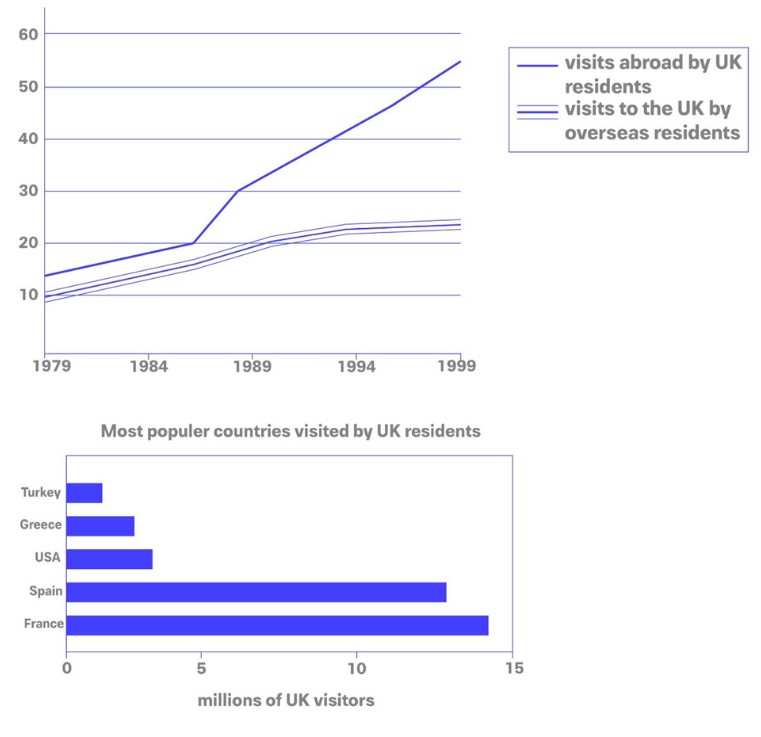
It depends a lot on the type of graph – there is no one answer that applies to every graph.
For graphs that show time – it is the trend, the speend and a ranking.
For graphs without time – it is a comparison and ranking.
For processes – it is a grouping and description.
For maps – it is also a grouping and description.
So let’s take a look at what each one requires!
How do I write the overview for a line graph / graph that shows time?
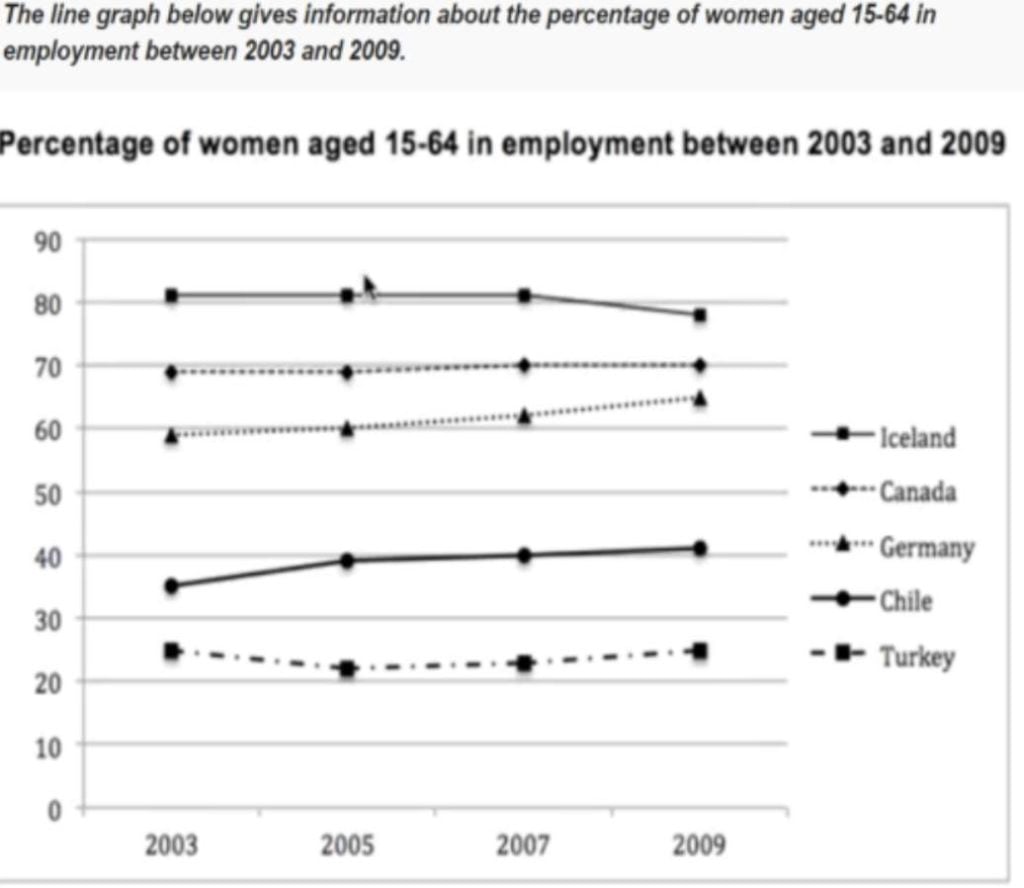
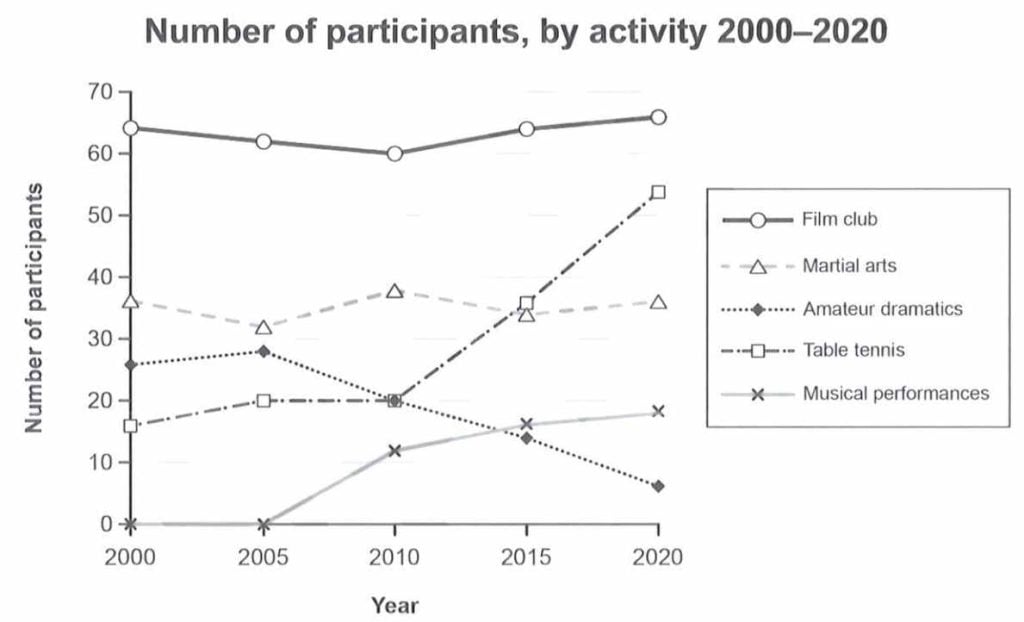
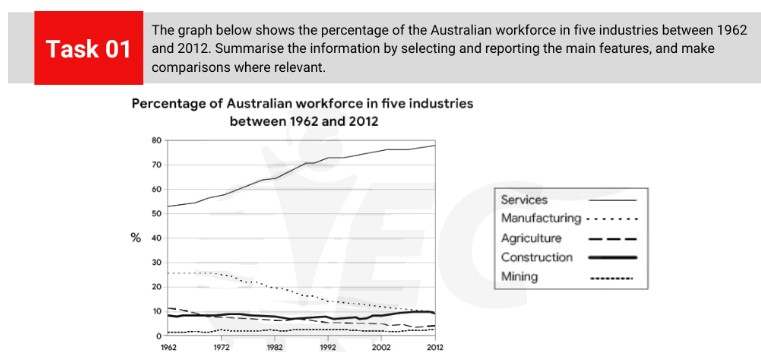
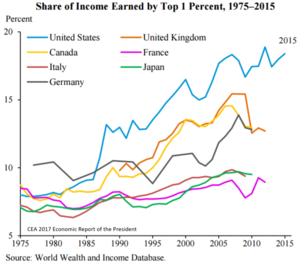
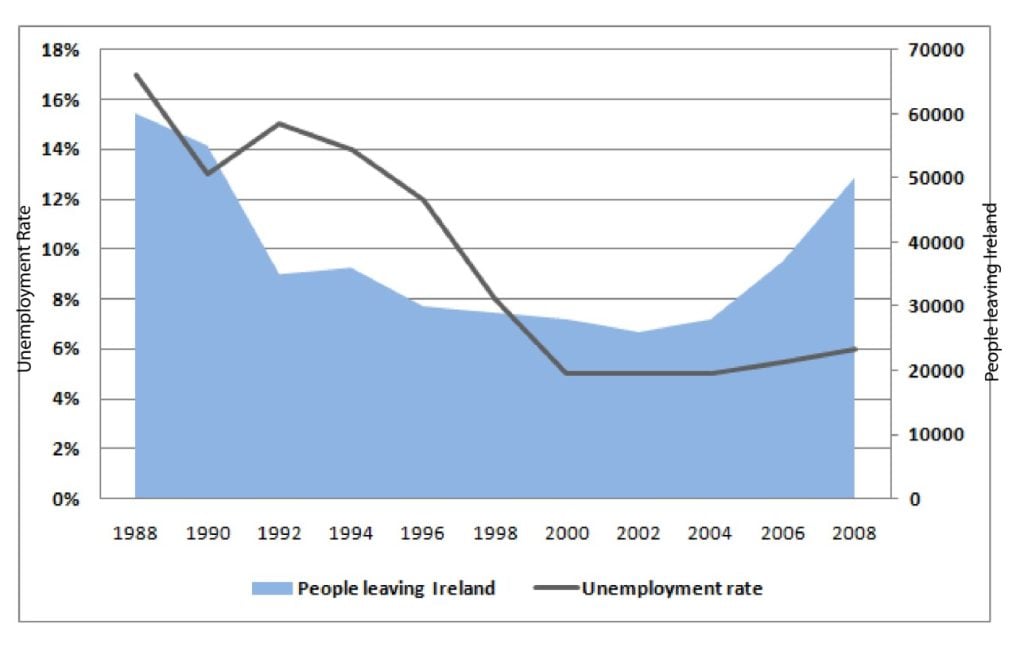
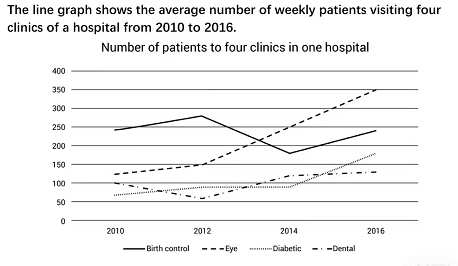
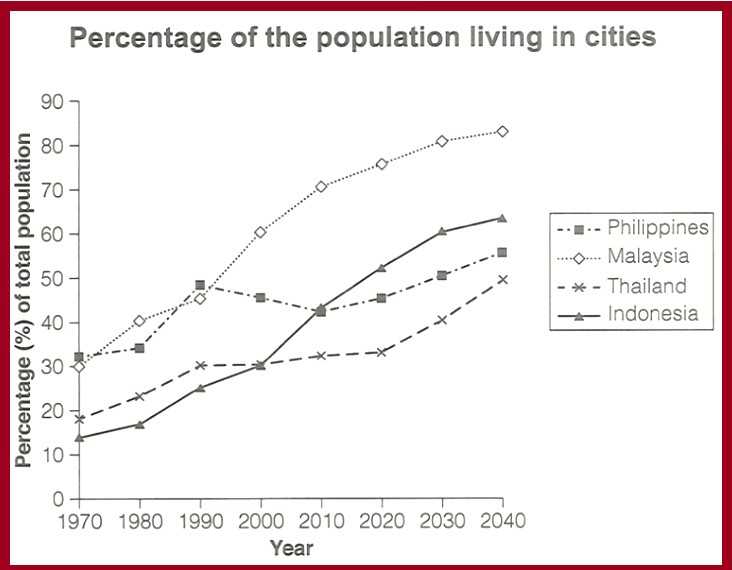
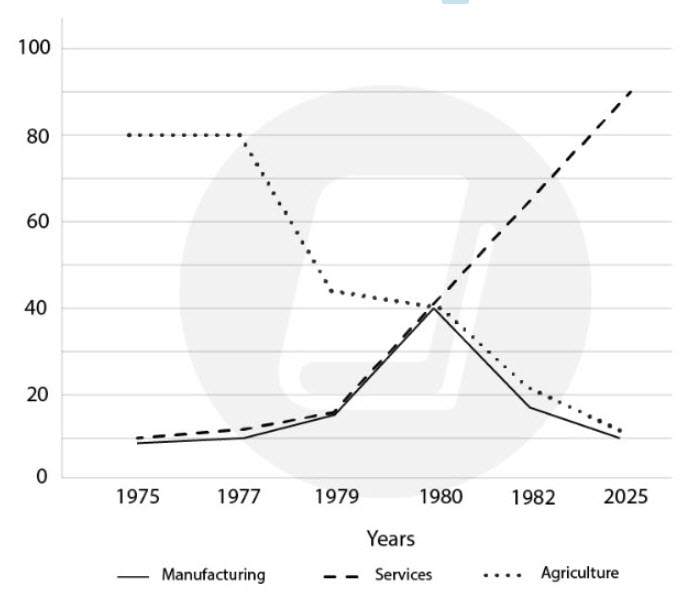
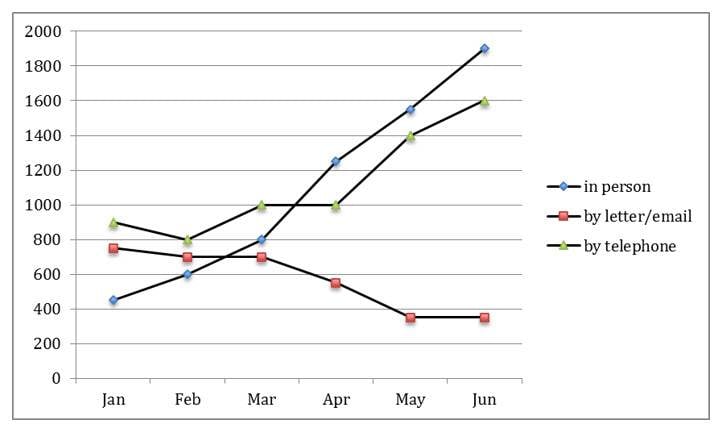
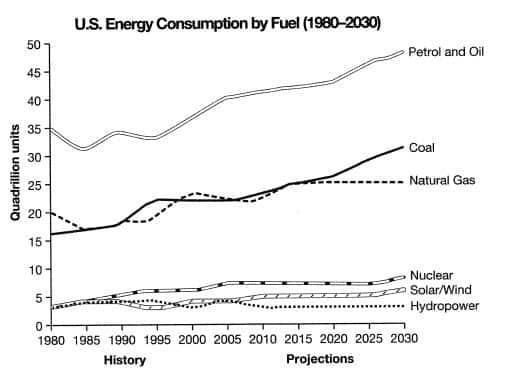
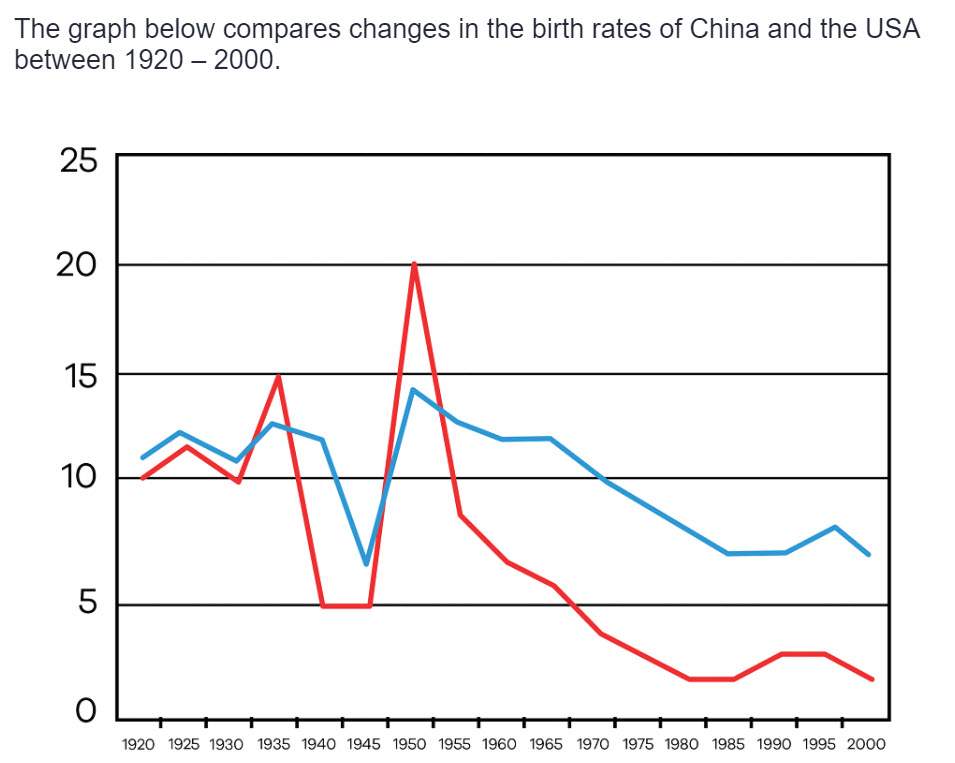
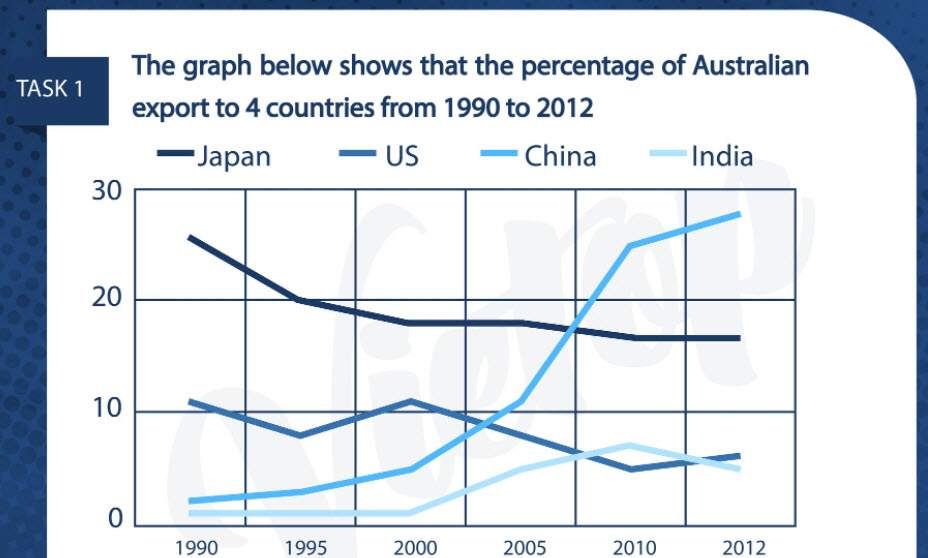
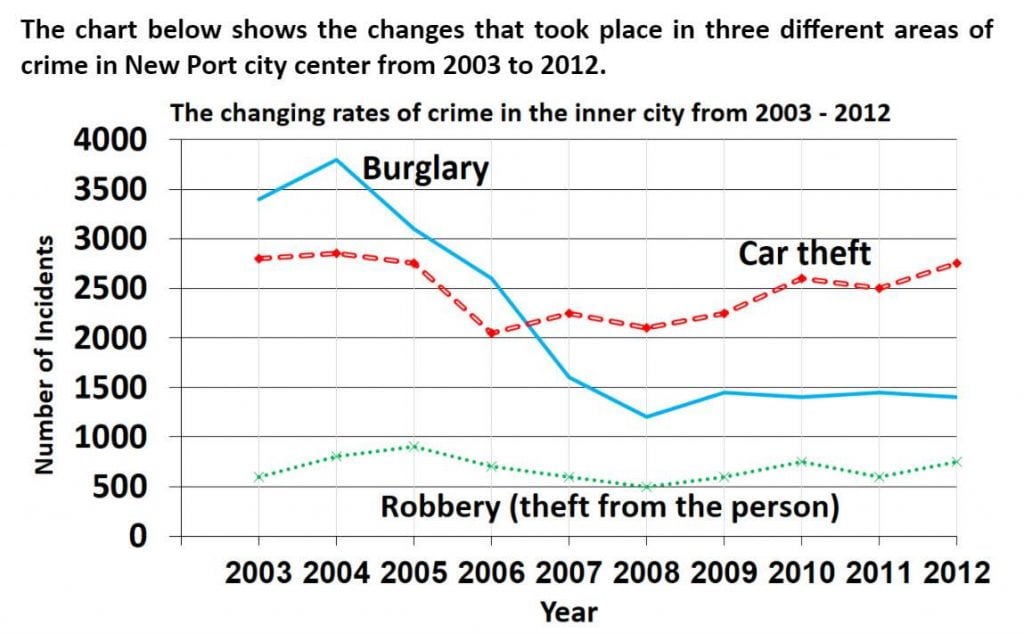
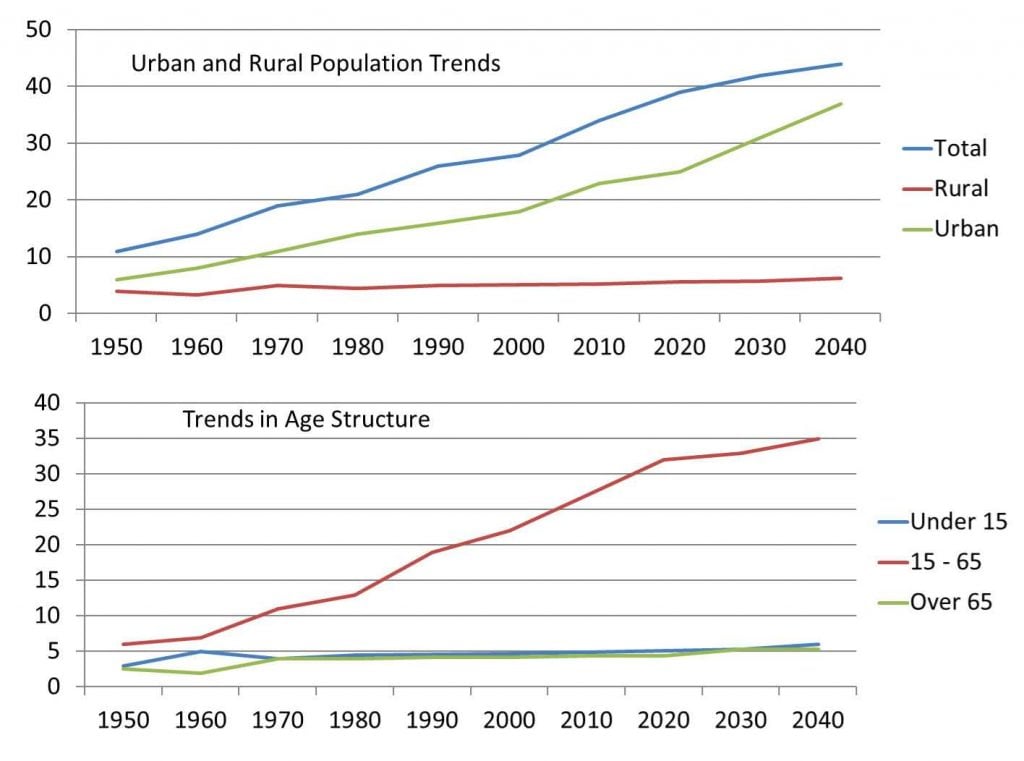
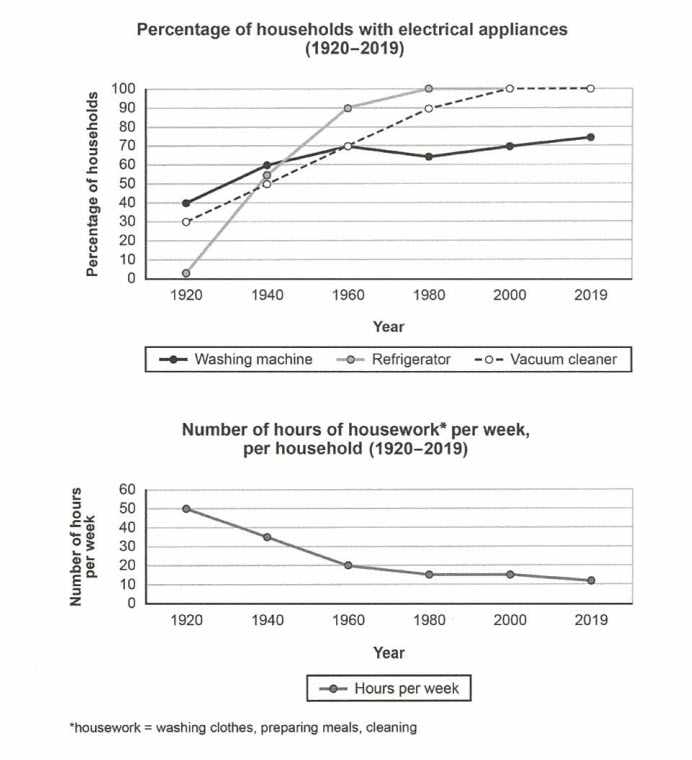
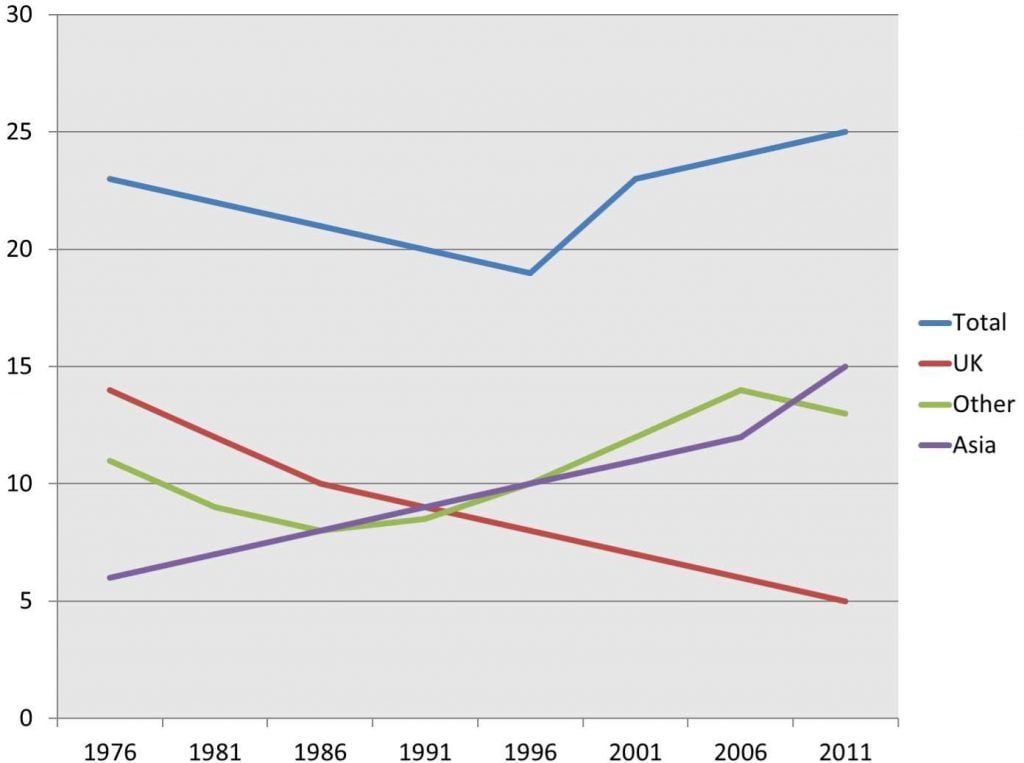
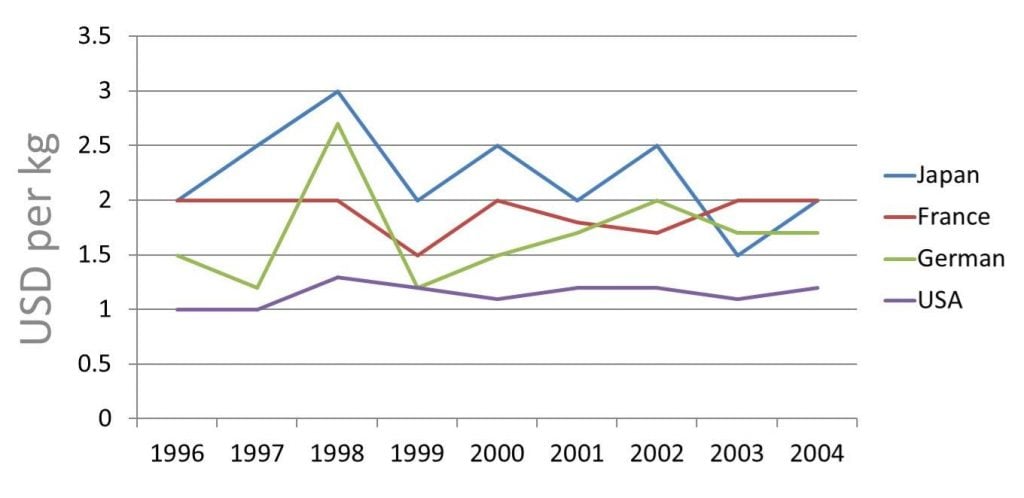
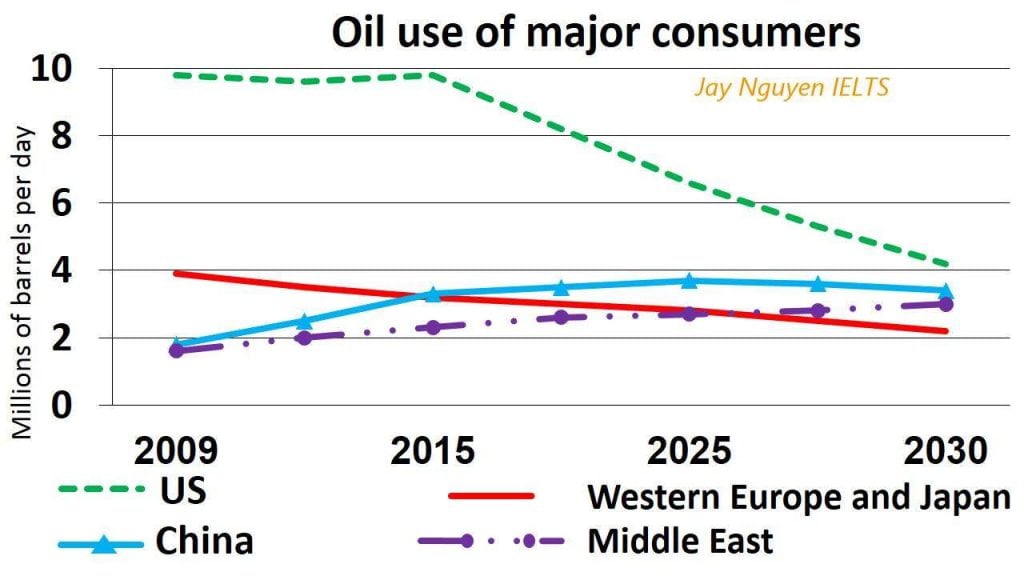
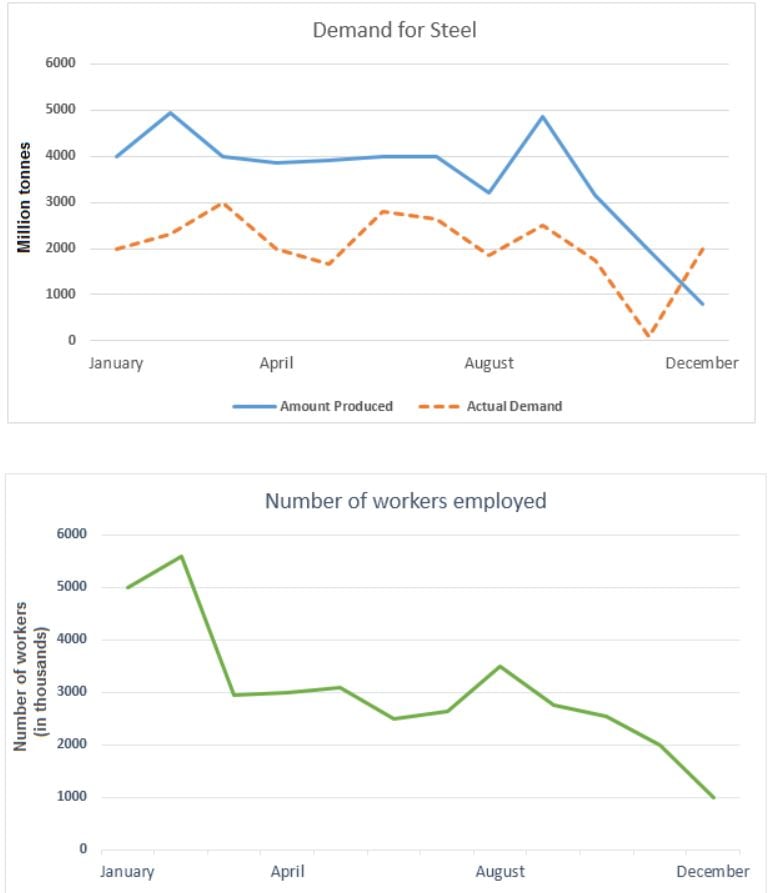
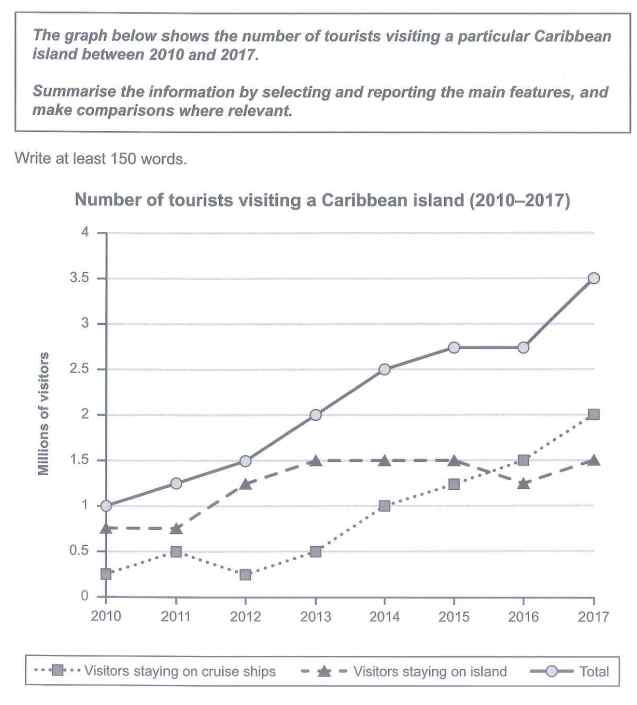
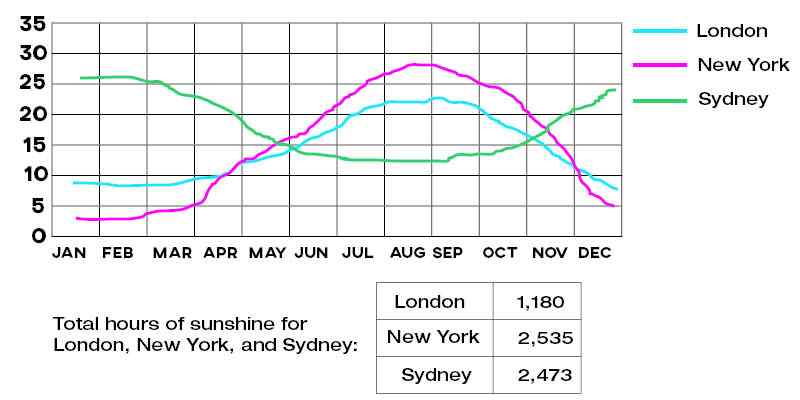
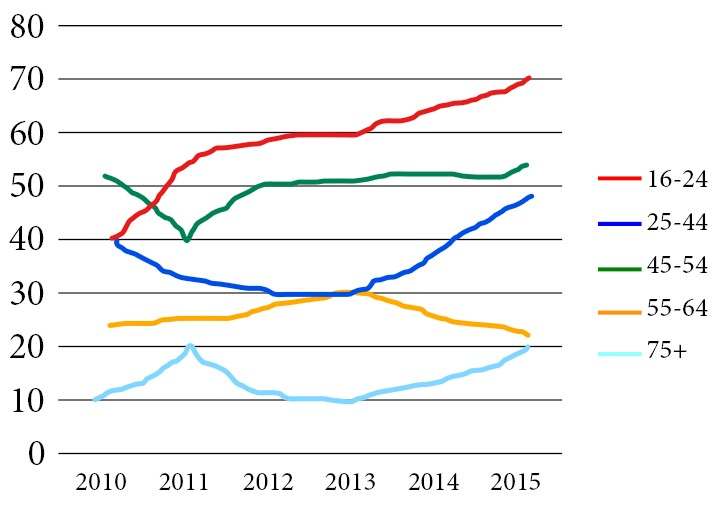
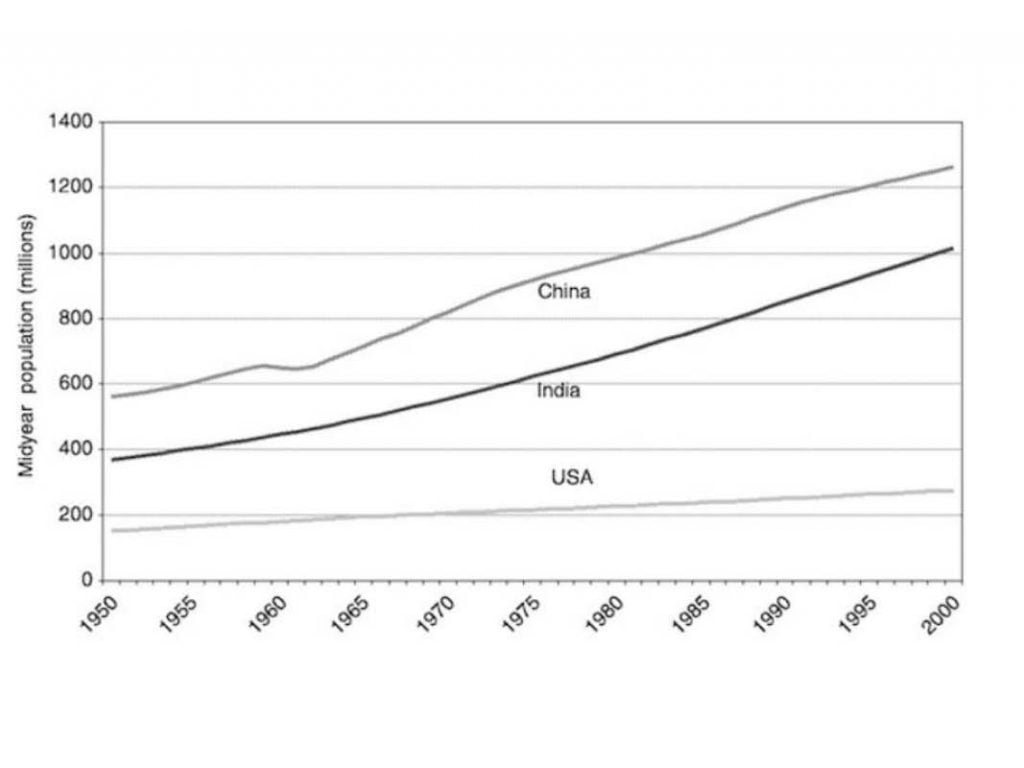
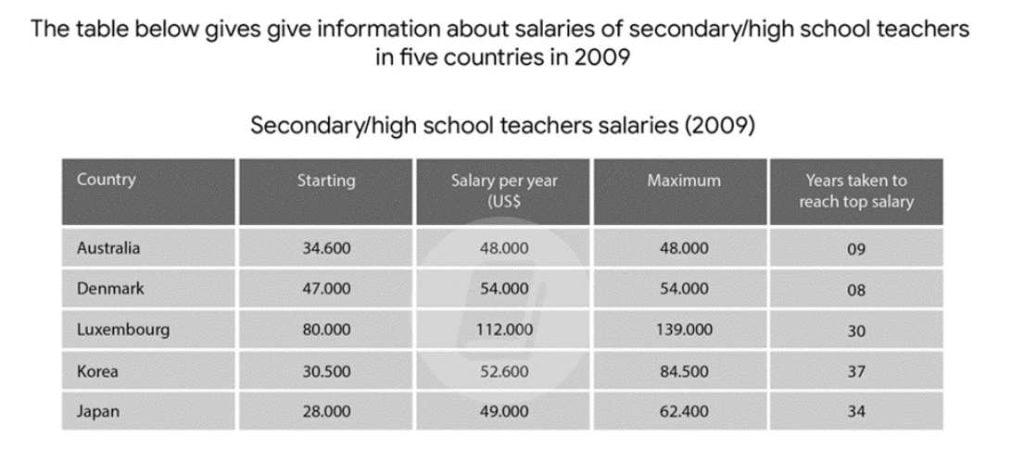
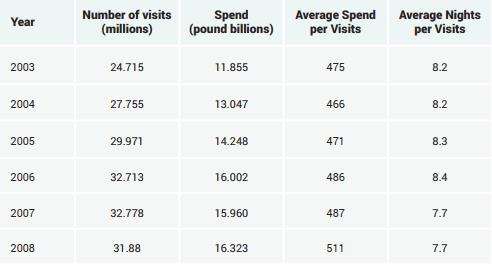
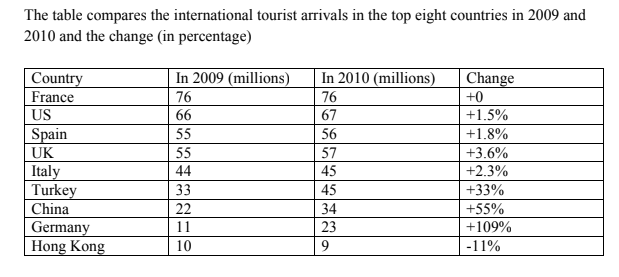
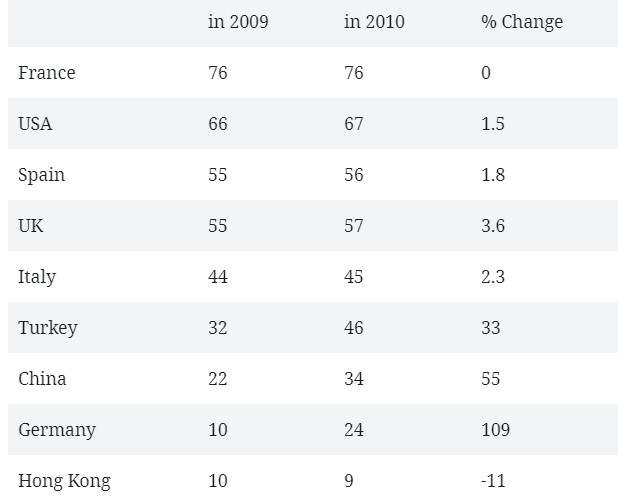
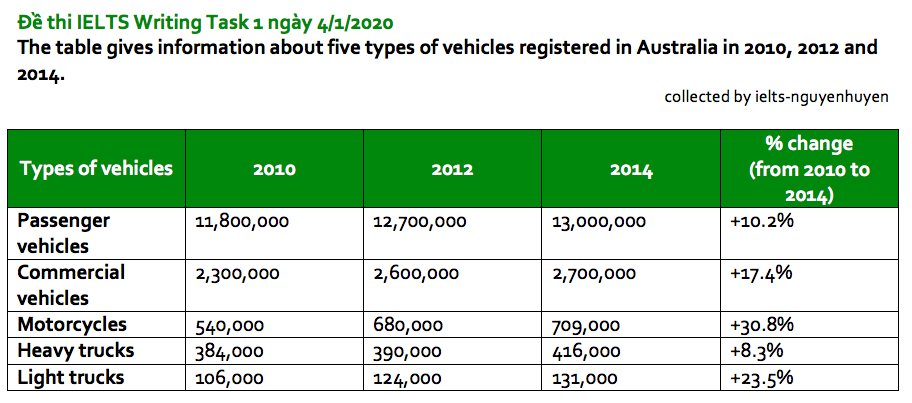
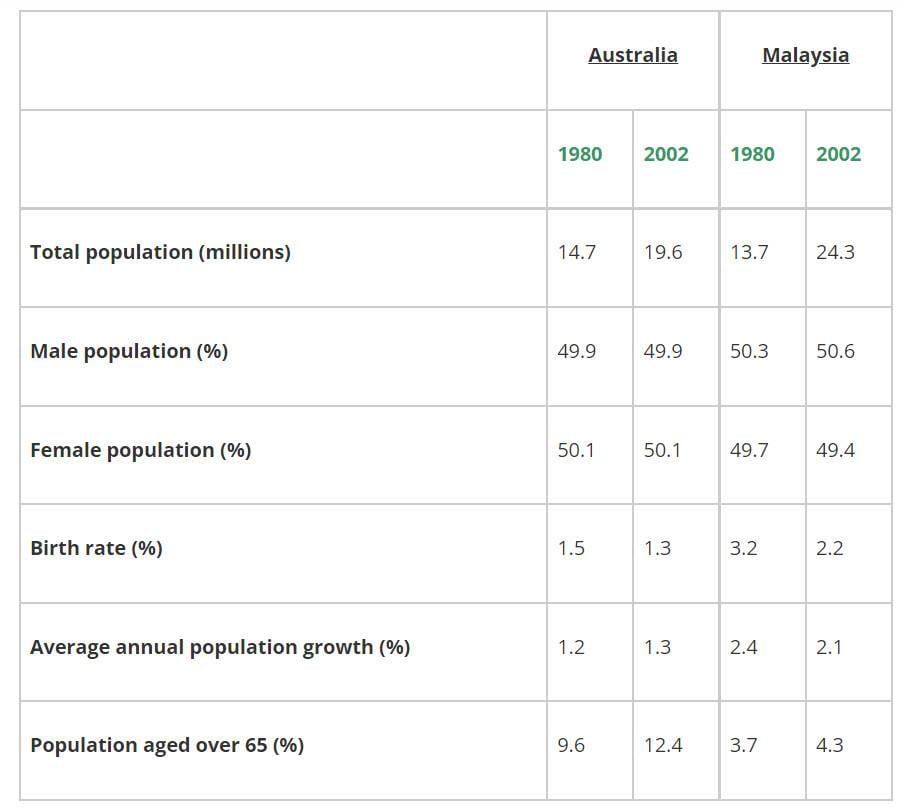
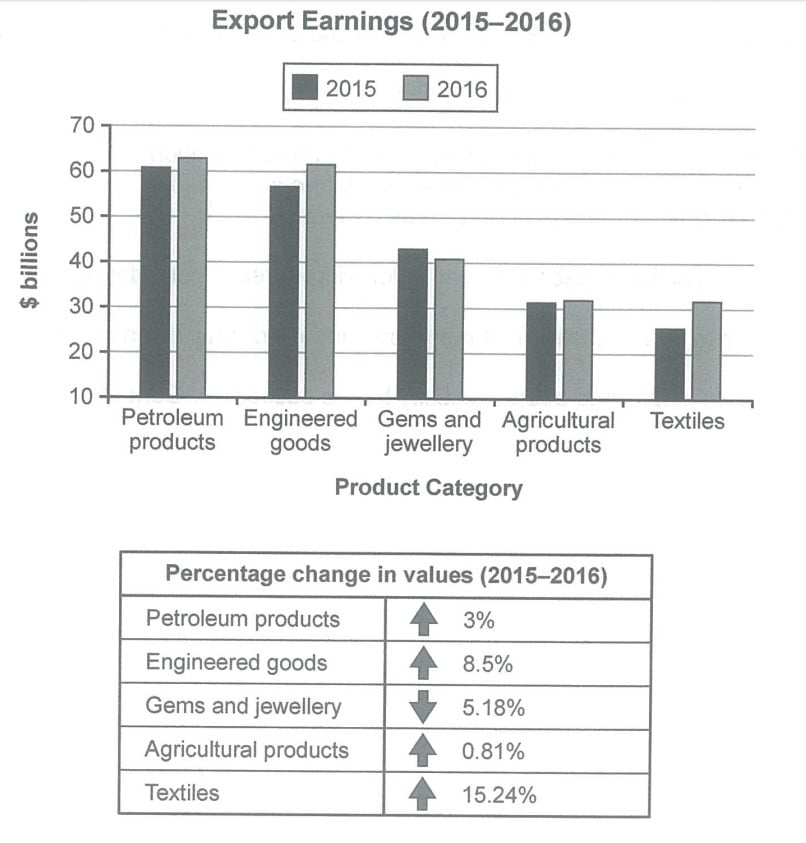
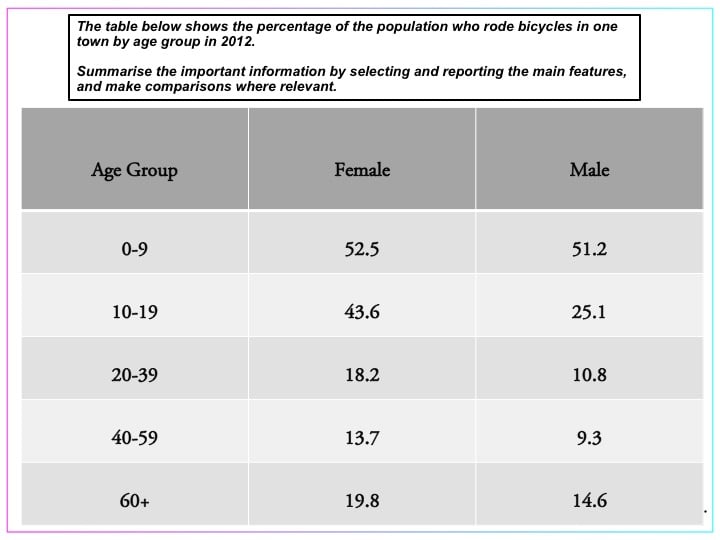
Here is my simple rule (from my online courses) for writing the general overview for line graphs (or pie charts, bar charts, and tables that show change over time):
TSR: Trend, Speed, and Ranking
Write that at the top of your paper and make sure that you include the trend, the speed and the ranking for the graph or chart.
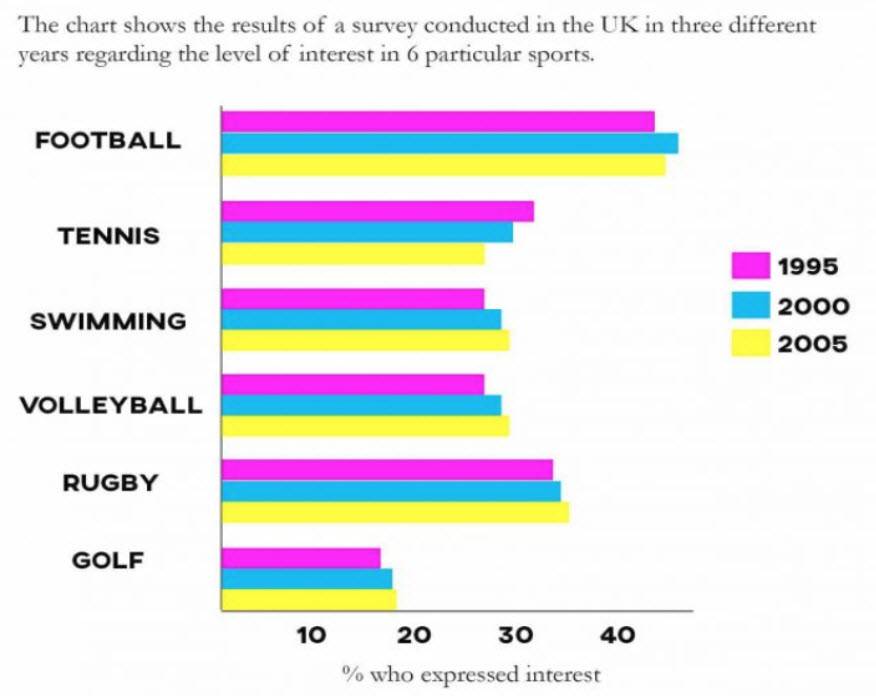
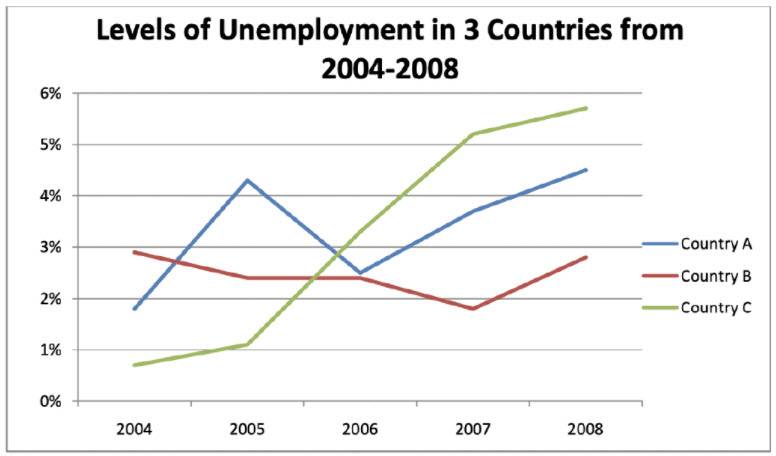
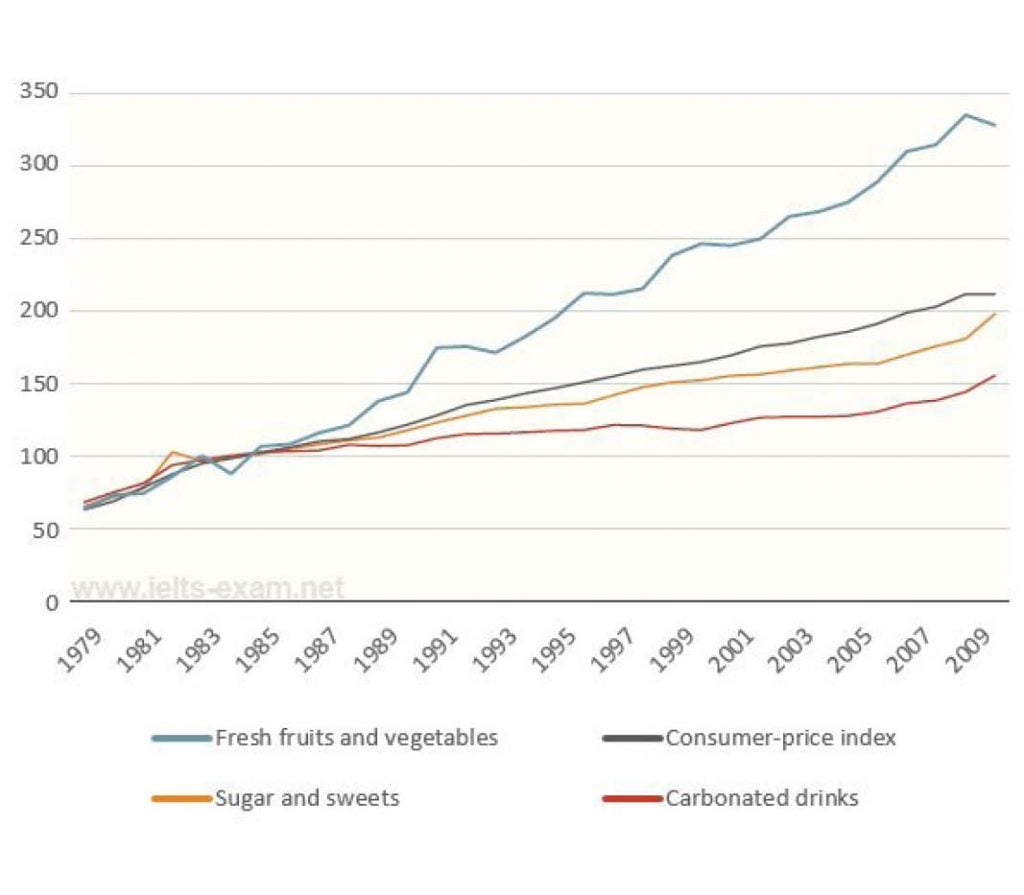
For example:
Here is the chart for that overview:
The most important of the 3 is the trend.
Make sure you have 100% of 100% of the categories.
Forget a category or don’t state the trend for one area and you will be stuck at band 5 for task achievement no matter how perfect the rest of your essay is.
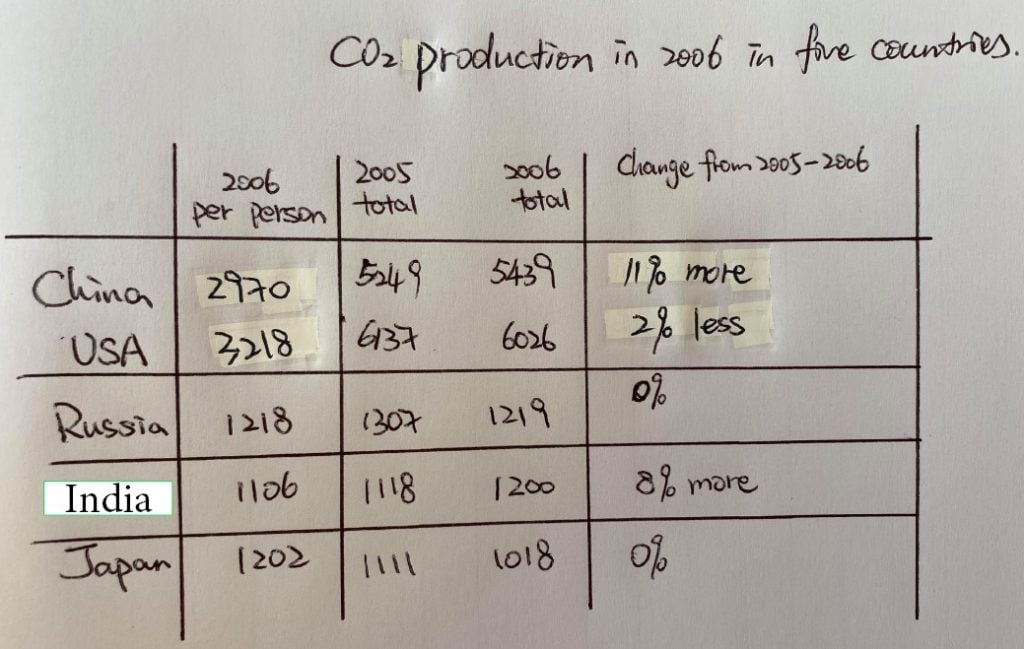
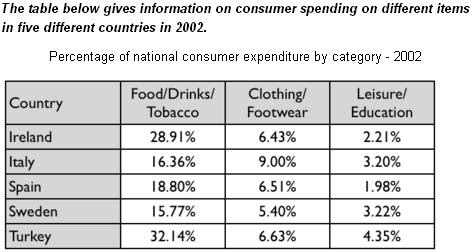
How do I write the overview for graphs and charts that don’t show time?
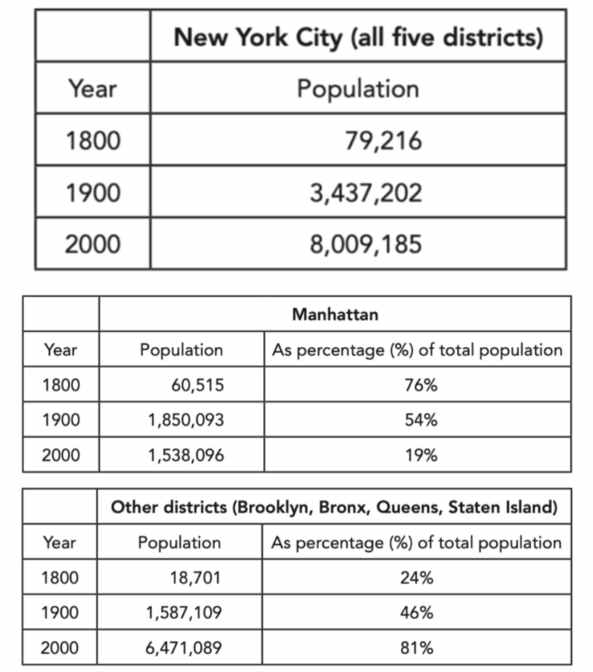
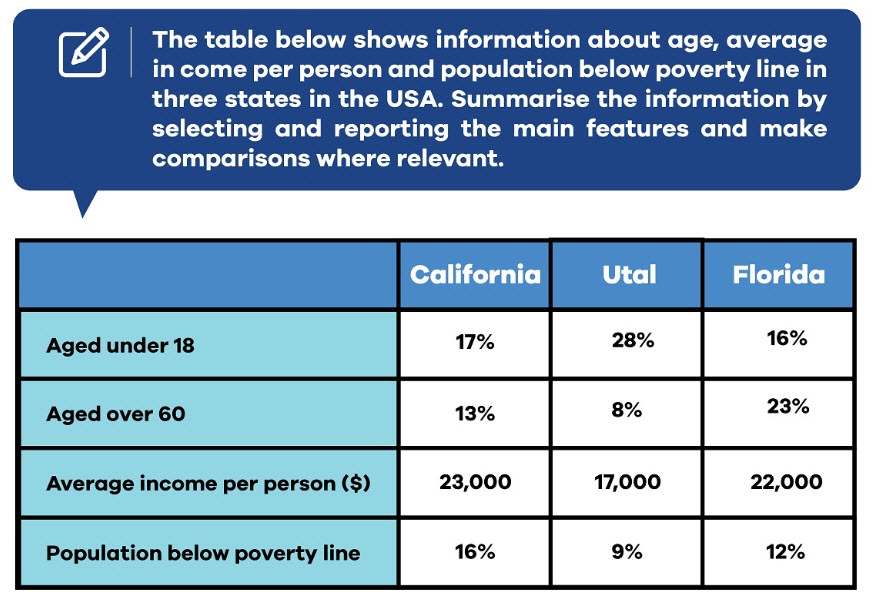
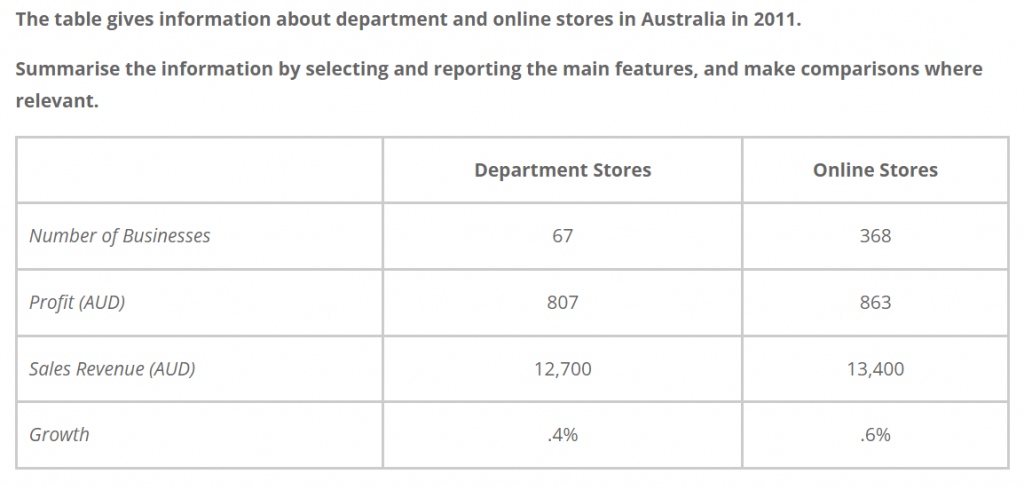
If a graph does not show time, then there is no trend and you are simply doing a ranking and comparison.
Just like the overview above, you must include all areas.
For instance:
Looking from an overall perspective, it is readily apparent that cars are more popular in the UK, the US and especially Italy while the French prefer to ride bicycles. In all countries except the United States, motorcycles are the least common option.
For a process, you must group and describe the major changes.
In the process below, that would look like this:
Looking from an overall perspective, it is readily apparent that there are 3 main steps to this entirely man-made process beginning with initial transportation of the raw material to the factory, followed by preparation and processing of the material, and finally the production of consumer products.
Students will often include the number of steps – that is fine, you can do that, but it is not really important for the overview.
The other mistake that students often make is just listing a couple of steps but not defining/describing them in any way.
They must be grouped together and described or it will not count as an overview.
How do I write the overview for a map?
The IELTS overviews for maps are similar to processes.
Group and describe.
For example:
Looking from an overall perspective, it is readily apparent that the town became more residential, commercial, and accessible at the expense of natural land, agriculture and smaller shops.
This is an IELTS writing task 2 sample answer essay on the topic of parents and governments and childhood obesity from the real IELTS exam.
Please consider supporting me on Patreon.com/howtodoielts to receive my full, exclusive IELTS Ebooks!
Dave
IELTS Essay: Parents and Governments and Childhood Obesity
In many countries, children are becoming overweight and unhealthy. Some people think that the government has the responsibility to solve this problem.
To what extent do you agree or disagree?
Some feel that the current global obesity epidemic should be primarily handled by governments. In my opinion, though the state has a key role to play, this is mainly the duty of parents.
Those who argue in favor of this contention point to the power of governmental regulation. Governments hold this responsibility not just because their job is to safeguard public welfare but also because they are endowed with the authority to enact real reforms. In some countries, there are strict laws about the products that can be advertised during children’s programming and their maximum sugar and fat content. Countries that do not have strong regulatory bodies to create and enforce these laws naturally have considerably higher rates of obesity. In an ideal world, governments would be more responsible for public health in this crucial area.
However, since governments often fail to protect the public interest, parents should take responsibility themselves. Parents can best achieve this by leading by example. If children are not given sugary soft drinks, candy, and eat a diet constituted of mainly vegetables and fruits, they are likely to develop lifelong, positive eating habits. For instance, in nations such as France where food and nutrition are taken very seriously, the majority of children do not grow up addicted to unhealthy American fast food and obesity rates are lower. Admittedly, this can be difficult for parents from lower socioeconomic backgrounds who may struggle with finding the time, energy, and finances to provide nutritious meals for their children.
In conclusion, government can regulate certain industries but parents must themselves instill healthy habits in their children for there to be a meaningful impact. This issue may have reached a high point and must now be addressed.
Analysis
1. Some feel that the current global obesity epidemic should be primarily handled by governments. 2. In my opinion, though the state has a key role to play, this is mainly the duty of parents.
Paraphrase the overall essay topic.
Write a clear opinion. Read more about introductions here.
1. Those who argue in favor of this contention point to the power of governmental regulation. 2. Governments hold this responsibility not just because their job is to safeguard public welfare but also because they are endowed with the authority to enact real reforms. 3. In some countries, there are strict laws about the products that can be advertised during children’s programming and their maximum sugar and fat content. 4. Countries that do not have strong regulatory bodies to create and enforce these laws naturally have considerably higher rates of obesity. 5. In an ideal world, governments would be more responsible for public health in this crucial area.
Write a topic sentence with a clear main idea at the end.
Explain your main idea.
Develop it with specific or hypothetical examples.
Keep developing it fully.
Vary long and short sentences.
1. However, since governments often fail to protect the public interest, parents should take responsibility themselves. 2. Parents can best achieve this by leading by example. 3. If children are not given sugary soft drinks, candy, and eat a diet constituted of mainly vegetables and fruits, they are likely to develop lifelong, positive eating habits. 4. For instance, in nations such as France where food and nutrition are taken very seriously, the majority of children do not grow up addicted to unhealthy American fast food and obesity rates are lower. 5. Admittedly, this can be difficult for parents from lower socioeconomic backgrounds who may struggle with finding the time, energy, and finances to provide nutritious meals for their children.
Write a new topic sentence with a new main idea at the end.
Explain your new main idea.
Include specific details and examples.
Add as much information as you can and make sure it links logically.
Develop the example fully.
1. In conclusion, government can regulate certain industries but parents must themselves instill healthy habits in their children for there to be a meaningful impact. 2. This issue may have reached a high point and must now be addressed.
Summarise your main ideas.
Include a final thought. Read more about conclusions here.
Vocabulary
What do the words in bold below mean?Make some notes on paper to aid memory and then check below.
Some feel that the current global obesity epidemic should be primarily handled by governments. In my opinion, though the state has a key role to play, this is mainly the duty of parents.
Those who argue in favor of this contention point to the power of governmental regulation. Governments hold this responsibility not just because their job is to safeguard public welfare but also because they are endowed with the authority to enact real reforms. In some countries, there are strict laws about the products that can be advertised during children’s programming and their maximum sugar and fat content. Countries that do not have strong regulatory bodies to create and enforce these laws naturally have considerably higher rates of obesity. In an ideal world, governments would be more responsible for public health in this crucial area.
However, since governments often fail to protect the public interest, parents should take responsibility themselves. Parents can best achieve this by leading by example. If children are not given sugary soft drinks, candy, and eat a diet constituted of mainly vegetables and fruits, they are likely to develop lifelong, positive eating habits. For instance, in nations such as France where food and nutrition are taken very seriously, the majority of children do not grow up addicted to unhealthy American fast food and obesity rates are lower. Admittedly, this can be difficult for parents from lower socioeconomic backgrounds who may struggle with finding the time, energy, and finances to provide nutritious meals for their children.
In conclusion, government can regulate certain industries but parents must themselves instill healthy habits in their children for there to be a meaningful impact. This issue may have reached a high point and must now be addressed.
Answers
For extra practice, write an antonym (opposite word) on a piece of paper to help you remember the new vocabulary:
current global obesity epidemic lots of unhealthy, fat kids today
primarily handled by mostly deal with by
the state the government
key role to play important part in
mainly mostly
duty responsibility
those who argue in favor of people who support
contention opinion
point to argue
governmental regulation the state controlling, making laws
responsibility duty
safeguard public welfare take care of all citizens
endowed with given the power to
authority power to
enact real reforms make new laws
strict laws harsh rules
products food items
advertised commercials, etc.
children’s programming kid’s TV shows
maximum sugar most sweetness
fat content how much fat in something
regulatory bodies government institutions
enforce make sure of
laws naturally rules of course
considerably higher rates of obesity much higher levels of fat people
In an ideal world in a perfect world
public health how healthy people are
crucial area important part
fail not achieve
protect keep safe
public interest for the good of all people
take responsibility fulfill a duty
best achieve better accomplish
leading by example doing things so other people copy you
sugary soft drinks sweet colas and drinks
diet constituted of mainly food that you eat is mostly
lifelong your whole life
positive eating habits good diet
nations countries
nutrition how healthy food is
taken very seriously care a lot about
majority most of
addicted can’t stop eating
unhealthy American fast food McDonald’s, etc.
obesity rates how overweight people are
Admittedly it must be admitted
lower socioeconomic backgrounds poorer people
struggle with have a tough time with
finances money
provide nutritious meals give healthy foods
regulate certain industries control some fields
instill healthy habits make kid’s have consistent behaviors
I recommend getting a pencil and piece of paper because that aids memory. Then write down the missing vocabulary from my sample answer in your notebook:
Some feel that the c____________________________c should be p____________________y governments. In my opinion, though t__________e has a k______________y, this is m_________y the d____y of parents.
T__________________________f this c____________n p_______o the power of g______________________n. Governments hold this r______________y not just because their job is to s_____________________e but also because they are e_______________h the a___________y to e______________s. In some countries, there are s_____________s about the p_________s that can be a_____________d during c_______________________g and their m__________________r and f_____________t. Countries that do not have strong r__________________s to create and e_______e these l_______________y have c____________________________________y. I_________________d, governments would be more responsible for p_____________h in this c____________a.
However, since governments often f____l to p_________t the p_____________t, parents should t___________________y themselves. Parents can b___________e this by l___________________e. If children are not given s_______________s, candy, and eat a d_________________________y vegetables and fruits, they are likely to develop l_________g, p________________s. For instance, in n______s such as France where food and n_________n are t__________________y, the m______y of children do not grow up a__________d to u___________________________d and o___________s are lower. A___________y, this can be difficult for parents from l________________________________s who may s_____________h finding the time, energy, and f________s to p______________________s for their children.
In conclusion, government can r______________________s but parents must themselves i____________________s in their children for there to be a m_______________t. This issue may have r______________________t and must now be a___________d.
Listening Practice
Learn more about this topic by watching videos from The New York Times YouTube channel below and practice with these activities:
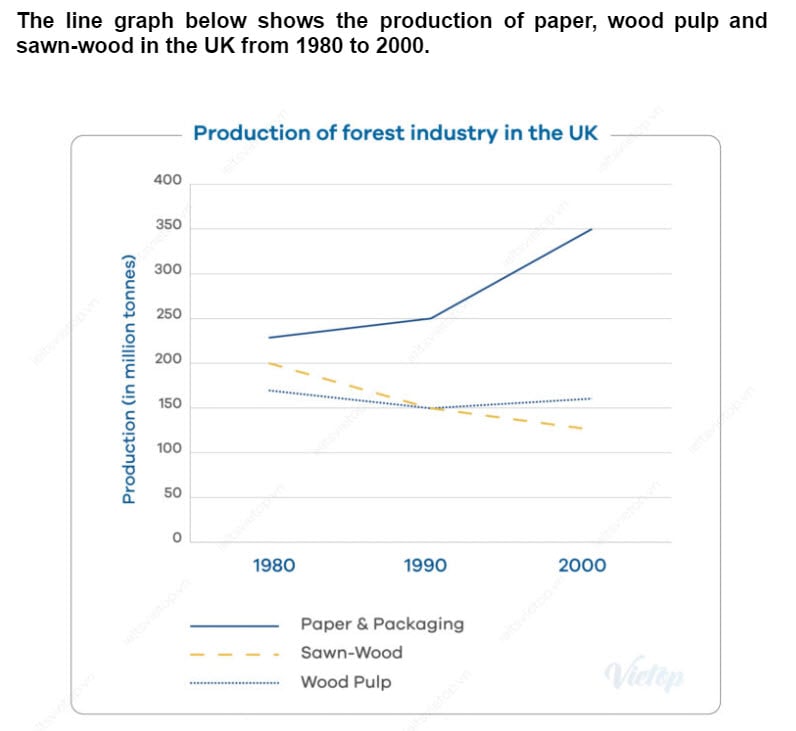
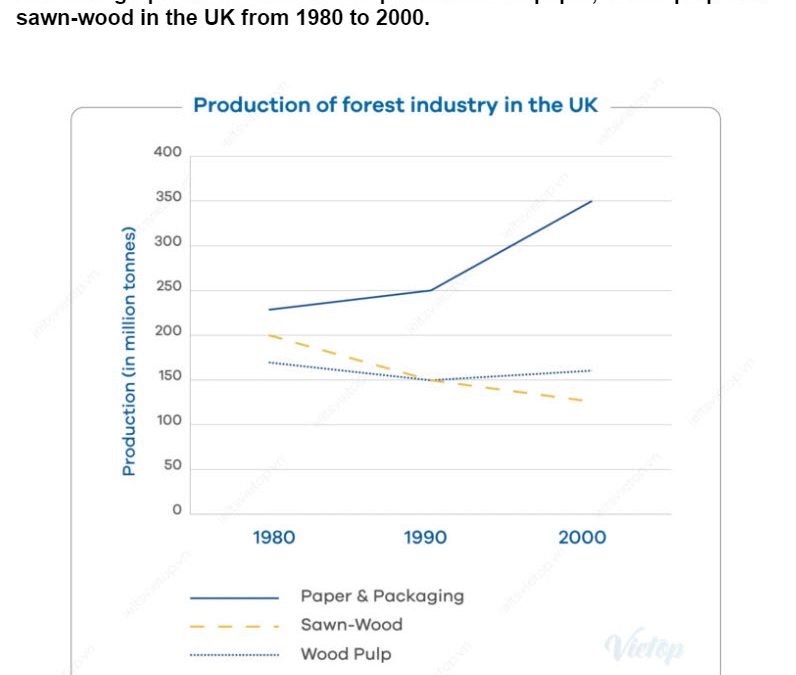
This is an IELTS writing task 1 sample answer essay on the topic of a line chart showing forest industry production in the UK from the real IELTS exam.
The line chart displays data concerning production from the forest industry in the UK from 1980 to 2000. Looking from an overall perspective, it is readily apparent that paper and packaging not only accounted for the most production throughout but also increased most significantly. Production of wood pulp fell slightly but overtook sawn-wood, which dropped steadily, by the end of the period.
Looking first of all at paper and packing, production in 1980 stood at approximately 230 million tonnes and grew steadily to 250 million by 1990. Over the next 10 years, output surged, finally reaching 350,000,000 tonnes by 2000.
Sawn-wood and wood pulp were considerably lower. The former started at precisely 200 million tonnes and fell consistently over the time surveyed to end at close to 140 million. In contrast, wood pulp began lower at 165 million tonnes, declined gradually to 150 million in 1990 and then recovered slightly to just over 155 million tonnes in 2000.
Analysis
1. The line chart displays data concerning production from the forest industry in the UK from 1980 to 2000. 2. Looking from an overall perspective, it is readily apparent that paper and packaging not only accounted for the most production throughout but also increased most significantly. 3. Production of wood pulp fell slightly but overtook sawn-wood, which dropped steadily, by the end of the period.
Paraphrase what the table shows.
Write a clear overview summarising the differences.
You might need another sentence for your overview.
1. Looking first of all at paper and packing, production in 1980 stood at approximately 230 million tonnes and grew steadily to 250 million by 1990. 2. Over the next 10 years, output surged, finally reaching 350,000,000 tonnes by 2000.
Begin writing about the data for the first categories.
Make sure you compare as much as possible.
1. Sawn-wood and wood pulp were considerably lower. 2. The former started at precisely 200 million tonnes and fell consistently over the time surveyed to end at close to 140 million. 3. In contrast, wood pulp began lower at 165 million tonnes, declined gradually to 150 million in 1990 and then recovered slightly to just over 155 million tonnes in 2000.
Write about the final other parts of the graph – include everything!
Compare the categories.
Everything must be included.
Vocabulary
What do the words in bold below mean?Take some notes on a piece of paper to aid your memory:
The line chart displaysdata concerning production from the forest industry in the UK from 1980 to 2000. Looking from an overall perspective, it is readily apparent thatpaper and packaging not only accounted for the most production throughout but also increased most significantly. Production of wood pulpfell slightly but overtook sawn-wood, which dropped steadily, by the end of the period.
Looking first of all at paper and packing, production in 1980 stood at approximately 230 million tonnes and grew steadily to 250 million by 1990. Over the next 10 years, output surged, finally reaching 350,000,000 tonnes by 2000.
Sawn-wood and wood pulp were considerably lower. The former started at precisely 200 million tonnes and fell consistently over the time surveyed to end at close to 140 million. In contrast, wood pulp began lower at 165 million tonnes, declined gradually to 150 million in 1990 and then recovered slightly to just over 155 million tonnes in 2000.
Answers
Try to write down or think of an antonym/opposite word for further practice:
displays shows
data numbers, figures
concerning having to do with
production how much is made
forest industry cutting down trees
UK the United Kingdom
Looking from an overall perspective, it is readily apparent that overall
paper and packaging pieces of paper, boxes, etc.
accounted for took up
most production made the most
throughout the whole time
increased most significantly went up the most
wood pulp a material for making various wood products
fell slightly went down a little
overtook sawn-wood rose above wood that has been sawed/cut
dropped steadily decreased consistently
by the end of the period at the end of the time surveyed
looking first of all at considering first
stood at approximately was at around
grew steadily increased consistently
over the next for the following
output surged production grew a lot
finally reaching in the end getting to
considerably lower much less
former mentioned first
started at began at
precisely exactly
fell consistently went down steadily
over the time surveyed the time recorded in the graph
Remember and fill in the blanks. Note it on a piece of paper so you can remember better:
The line chart d_______________a c_____________g p__________n from the f_____________y in the U__ from 1980 to 2000. L__________________________________________________tp__________________g not only a______________r the m______________________t but also i_________________________y. Production of w_________pf___________y but o___________k s_____________d, which d______________y, b_____________________d.
L_______________________t paper and packing, production in 1980 s______________________y 230 million tonnes and g_____________________y to 250 million by 1990. O_____________t 10 years, o______________d, f______________g 350,000,000 tonnes by 2000.
Sawn-wood and wood pulp were c__________r. The f_____________r s_____________t p___________y 200 million tonnes and f______________________y o____________________d t______________________o 140 million. I____________t, wood pulp b_____________t 165 million tonnes, d________________y to 150 million in 1990 and then r______________y to j_______r 155 million tonnes in 2000.
Listening Practice
Listen to the related topic below and practice with these activities:
"The highest quality materials anywhere on the internet! Dave improved my writing and vocabulary so much. Really affordable options you don't want to miss out on!"